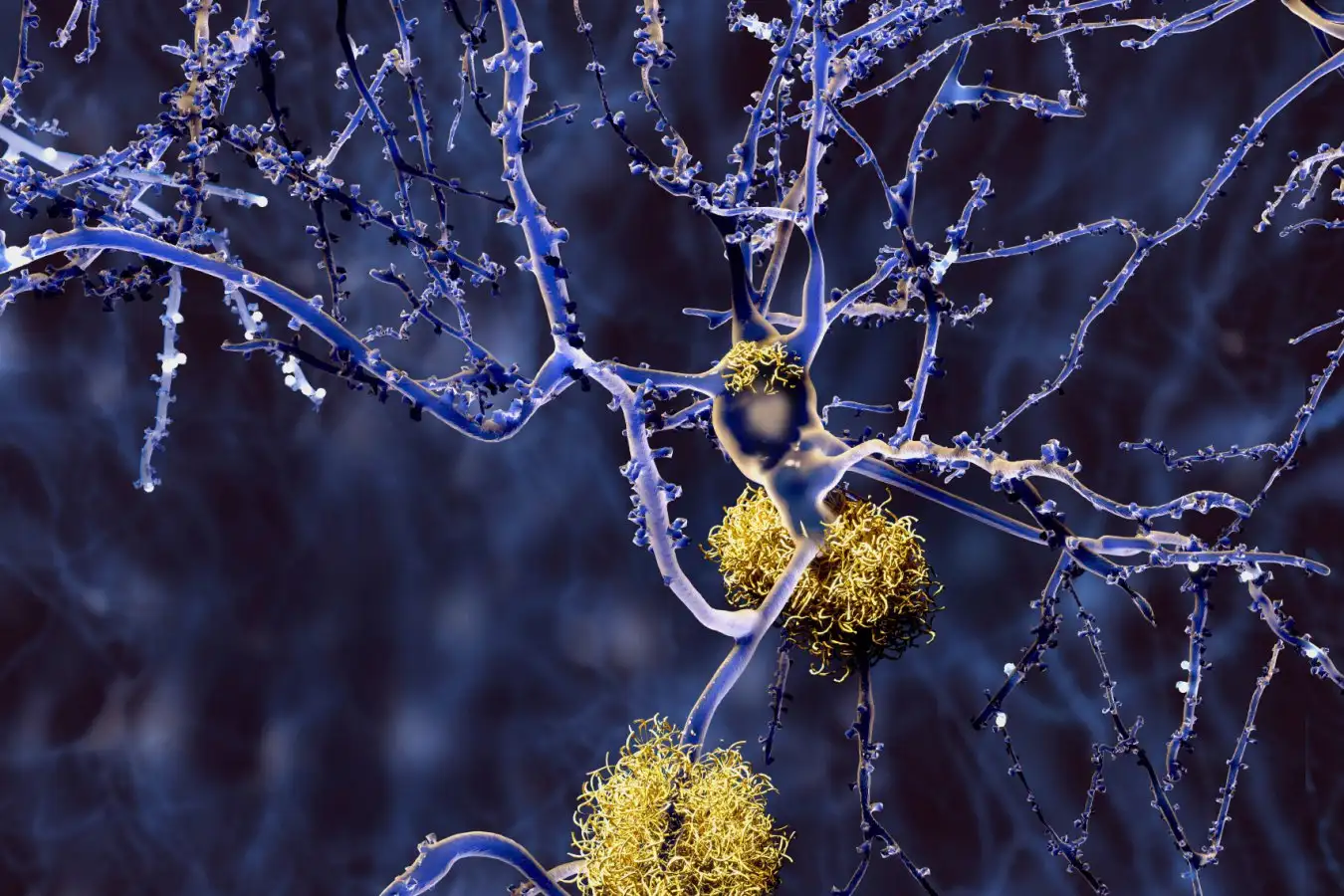
Illustration of amyloid plaques, which build up around brain cells in Alzheimer’s diseaseJUAN GAERTNER/SCIENCE PHOTO LIBRARY/Alamy
The biggest genetic study of Alzheimer’s disease so far has identified 127 gene locations that are associated with the condition, of which 48 are new. The study also pinpoints several genes that could be prioritised as drug targets and cell types linked to a higher genetic risk of the condition.
“It’s an exciting time for Alzheimer’s genetics,” says Rudolph Tanzi at Massachusetts General Hospital, who provided evidence of the first Alzheimer’s-linked gene, APP, in 1987.
Alzheimer’s disease, the most common cause of dementia, is highly heritable, with twin studies showing genetics can account for about 60 to 80 per cent of a person’s risk. Many genes have been found to play a role, chief among which is APOE. Inheriting one copy of a variant of this, known as APOE4, from a parent makes someone two or three times as likely to develop Alzheimer’s as someone without the variant, and getting a copy of APOE4 from both parents can increase risk up to 12-fold.
But health and lifestyle also play a big part and even people who seem genetically destined to develop Alzheimer’s sometimes avoid it. “There are people who have those two risk variants and never develop Alzheimer’s,” says Danielle Posthuma at the Free University of Amsterdam.