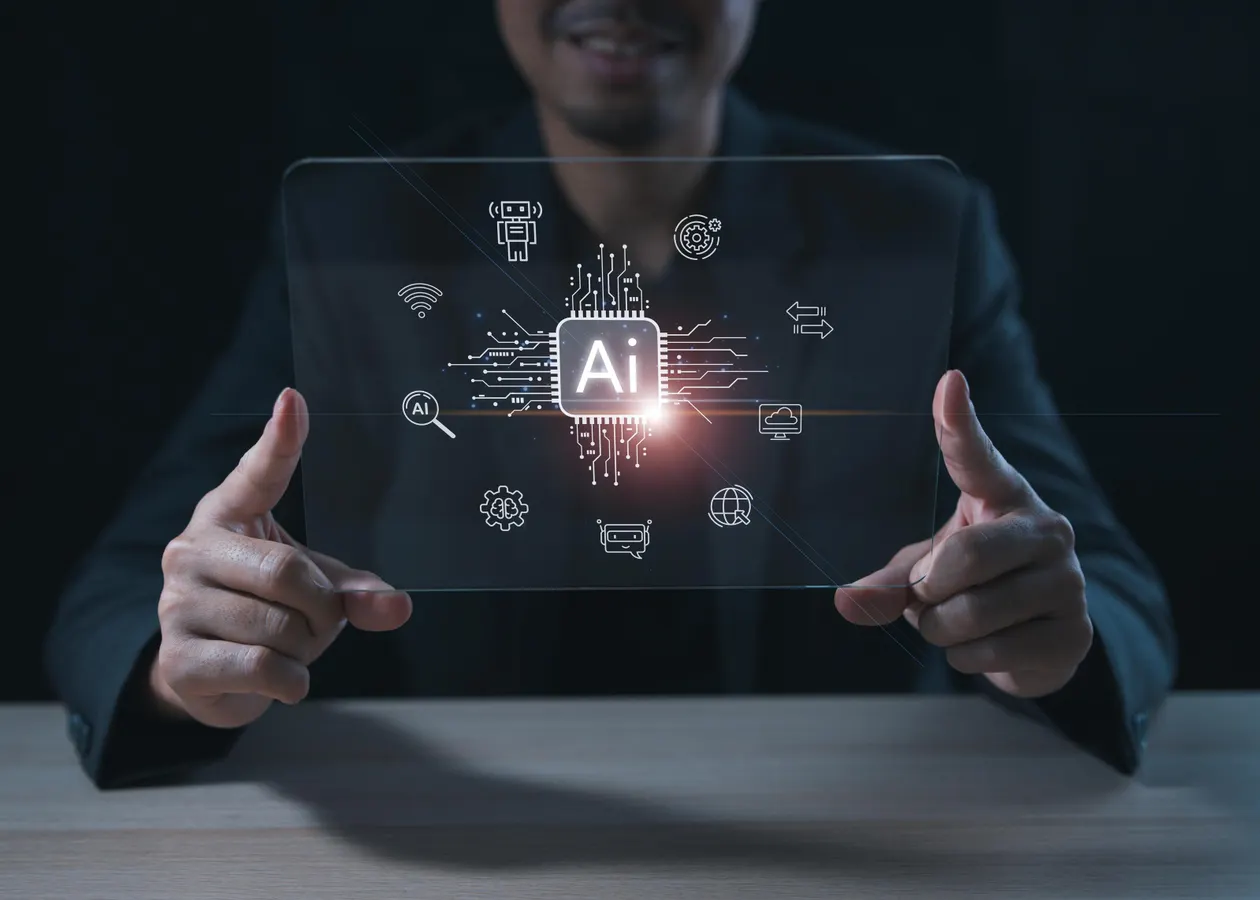
gettyInternet of Things devices have long helped organizations collect and report real-time data from equipment, environments and products. As agentic AI systems become more capable of reasoning, planning and acting within defined guardrails, IoT devices can become part of systems that don’t just flag problems but help resolve them.Pairing agentic AI with IoT can give organizations a faster, more adaptive way to respond to changing conditions while still keeping human oversight in place where it matters most. Below, members of Forbes Technology Council share promising ways organizations can combine agentic AI and IoT to solve real-world problems.Autonomous Predictive MaintenanceOne promising use is pairing agentic AI with IoT for autonomous predictive maintenance. Sensors stream data, then AI agents identify anomalies, predict failures and trigger work orders or adjustments automatically. This turns raw data into actionable intelligence, cutting downtime, cost and risk while enabling smarter, faster decisions. - John Healy, Intel CorporationProactive Customer ServiceProactive service opportunities are an excellent use case for agentic AI with IoT. Organizations will be able to use AI to understand a customer’s lived experience and proactively alert them to end-of-life device needs, updates and warranty opportunities. They can even create upsell moments to improve their home experience. - Eitan Cohen, TechSeeForbes Technology Council is an invitation-only community for world-class CIOs, CTOs and technology executives. Do I qualify?Self-Optimizing Factory OperationsPairing agentic AI with Industrial IoT can help factories run smarter on their own. AI agents can use sensor data to adjust schedules, reduce energy waste, spot equipment issues early and redirect production when problems happen. The result is lower costs, fewer delays, lower emissions and more reliable operations. - Lesia Yanytska, LuxoftSmart Grid Demand ResponseThe evolution from simple sensor reporting to agentic IoT represents a shift from reactive monitoring to autonomous problem-solving. A promising application of this pairing is in smart grid demand response management, where AI agents replace static, rule-based triggers with real-time reasoning to stabilize energy consumption. - Joey Ahnn, AmorepacificReal-Time Production Line AdaptationOrganizations can pair agentic AI with IoT in production lines to autonomously adjust operations in real time. Instead of relying on humans, agents replan instantly using live data, turning disruptions into manageable variables. This closes the execution gap, enabling resilient, self-healing, auto-adapting workflows that optimize performance, reduce downtime and maintain SLA-critical operations. - Charles Crouchman, Redwood SoftwareWater System Leak Detection And ResponseIn water systems in aging cities, pipes leak billions of gallons daily while crews chase the loudest break. Pair agentic AI with existing pressure and acoustic sensors, and the system can triage leaks, dispatch repair orders and reroute flow before residents notice. The infrastructure is already instrumented. What was missing was judgment at the edge. - Sarah Choudhary, Ice InnovationsAI-Guided Human Decision-MakingA promising use is pairing agentic AI with IoT to augment human decisions, not just automate actions. While many focus on self-healing systems, the real value lies in guiding high-stakes decisions with real-time context. This ensures speed without losing judgment, making AI a partner in critical environments, not just an operator. - Arun Goyal, Octal IT Solution LLPMass Customization At ScaleAs Industry 4.0 evolves, the real breakthrough is pairing agentic AI with IoT to enable systems that think and adapt in real time, delivering true mass customization at scale. This shifts the model from standardized production to dynamic, need-based outcomes, where intelligence at the edge continuously aligns products and processes with individual demand. - Motaz Agamawi, PwCAutonomous Renewable Energy ManagementA promising use is pairing agentic AI with IoT for renewable energy management. Real-time sensors can monitor generation, storage, demand and equipment condition, while AI adjusts loads and storage automatically. This can reduce waste, improve stability and make energy systems more resilient where resources and energy access are major challenges. - Gregory Shahnovsky, Modcon Systems Ltd.Self-Optimizing Digital Billboard AdvertisingEmbed IoT sensors on digital billboards—cameras, weather, LiDAR. Pair that with agentic AI that reads real-time traffic, weather and context and then autonomously bids and serves the highest-value ad creative in milliseconds. No human in the loop. Every second an irrelevant ad runs on DOOH inventory is lost revenue. Agentic AI turns passive billboards into self-optimizing ad endpoints. - Vasu Raj Jain, Amazon AdsAutonomous Supply Chain RecoveryPair agentic AI with IoT for autonomous supply chain recovery. Sensors detect disruptions—delays, temperature shifts or inventory gaps—and AI agents trigger actions like rerouting shipments or switching suppliers. This is powerful because it moves operations from reactive tracking to real-time decisioning, reducing risk and preserving continuity without manual intervention. - Prajkta Waditwar, Box Inc.Proactive Home Emergency ResponseHome sensors already detect smoke, wind shifts and ember strikes. Pair that with an agent, and the system stops just alerting and starts acting. It can presoak the roof, close vents, shut gas lines and hand a structured brief to responders before sirens reach the street. Minutes decide whether a house survives. Removing the human bottleneck on those minutes is the whole game. - Marc Fischer, Dogtown Media LLCAdaptive Urban Traffic ManagementPair agentic AI with IoT in urban traffic systems. Sensors track flow, signals and microdelays; the agent continuously rewrites signal timing, lane usage and routing incentives in real time. The shift isn’t congestion management. It prevents traffic from forming by reshaping system dynamics before bottlenecks emerge. - Deep Narayan Mishra, Walmart Inc.Continuous Commercial Kitchen CompliancePair IoT temperature sensors and cameras in commercial kitchens with agentic AI that continuously monitors food safety compliance, logs violations automatically and triggers corrective action before an inspector or a customer encounters the problem. Most health violations are detectable before service. The gap is that nobody’s watching constantly. - Luke Wallace, Bottle RocketIndustrial Knowledge PreservationAI is preserving critical expertise for complex industrial equipment as the “silver tsunami” drives deeply experienced pros into retirement. Leading companies are racing to capture it with IIoT tools like cameras, blueprint scanners, VR headsets and agentic AI that records, analyzes and stores it. Next-gen technicians get visual guides, expert audio and curated clips from veteran techs. - Kostiantyn Gitko, Devox SoftwareFaster Senior Fall ResponseSenior living providers can couple ambient activity and location sensing with agentic AI to identify falls amongst a senior population. Specifically, once the sensors identify a sudden and unexpected stop of movement, a voice-based, in-room agent can ask if the individual has fallen and needs help. This immediate interaction closes the response loop, leads to faster recovery and lowers liability. - Mark Francis, CaregiverZoneProactive Hotel Room MaintenancePair agentic AI with IoT in hotel rooms for “silent recovery.” When sensors catch a failing AC, leak or minibar issue, the AI should open a ticket, reshuffle staff and alert the guest before they ever call downstairs. In hospitality, loyalty is often won by the problem guests never had to report. - Joel Frenette, TravelFun.aiContext-Aware Business AutomationIoT devices generate massive amounts of real-time data, but turning it into action is the challenge. Agentic AI uses business context and guardrails to interpret data and act autonomously, improving over time. Combined with automation, it enables real-time decisions like adjusting pricing or resolving disruptions, driving faster, smarter outcomes. - Ann Blakely, Baker TillyReal-Time Health Monitoring And ResponseIoT tells you what’s happening. Agentic AI decides what to do about it. Wearables already track vitals; pair that with AI that acts, and you have a system detecting patient deterioration before collapse. No human watching a dashboard. No delayed response. The device senses, the agent responds and humans intervene only when it matters. That’s not automation. That’s a safety net. - Aruna Veerappan, UpworkCold Chain Intervention For Food And Pharma Use agentic AI with IoT for cold chain intervention in food and pharmaceuticals. When sensors detect a temperature excursion or handling breach, the agent should not just alert. It should reroute shipments and quarantine exposed lots before spoilage, recall or stockout. The breakthrough is not more visibility. It is delegated action under time pressure. - Rishi Katdare, Amazon Web Services
Agentic AI And IoT: Real-World Use Cases To Watch
Pairing agentic AI with IoT can provide faster, more adaptive ways to respond to changing conditions while still keeping human oversight in place where it matters most.
1,302 words~6 min read