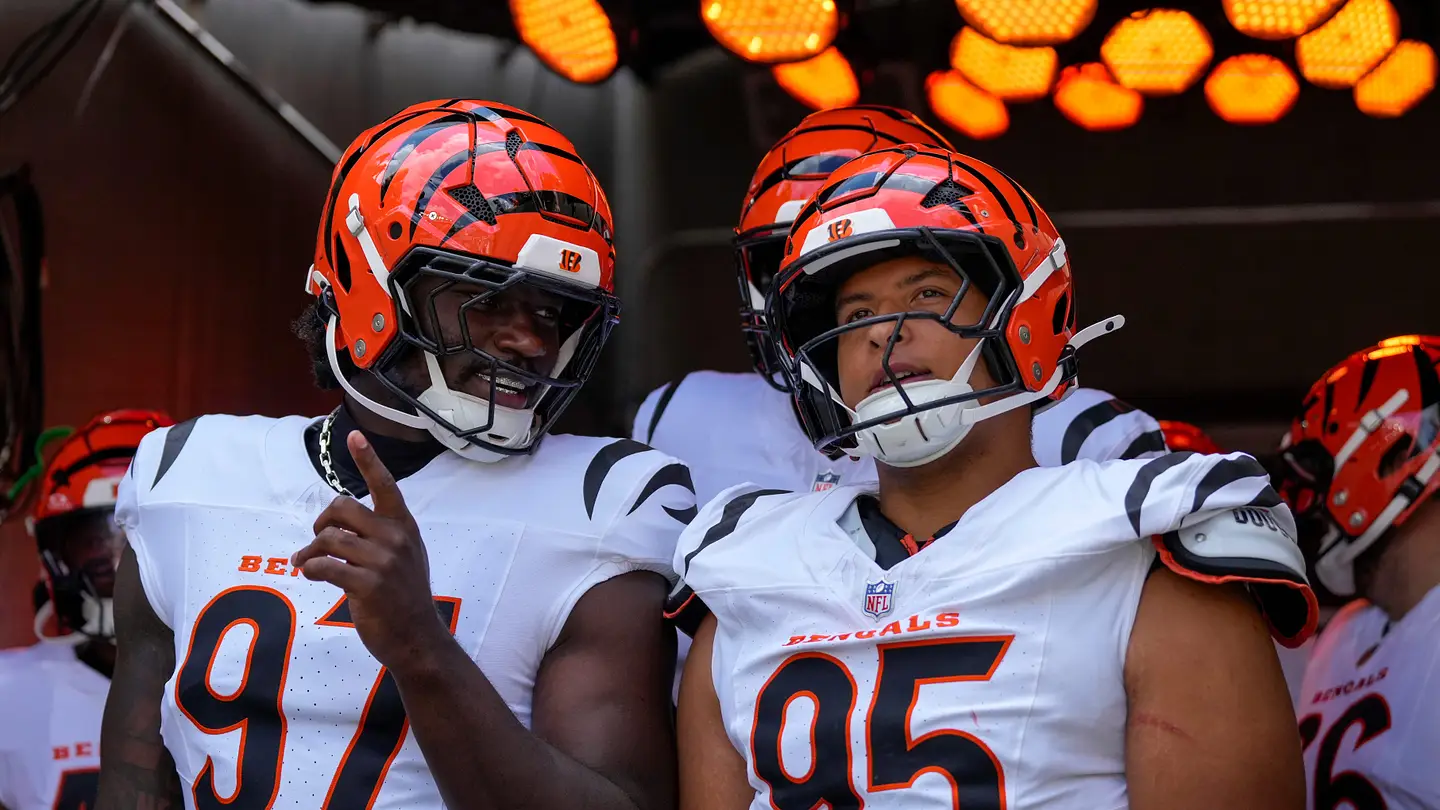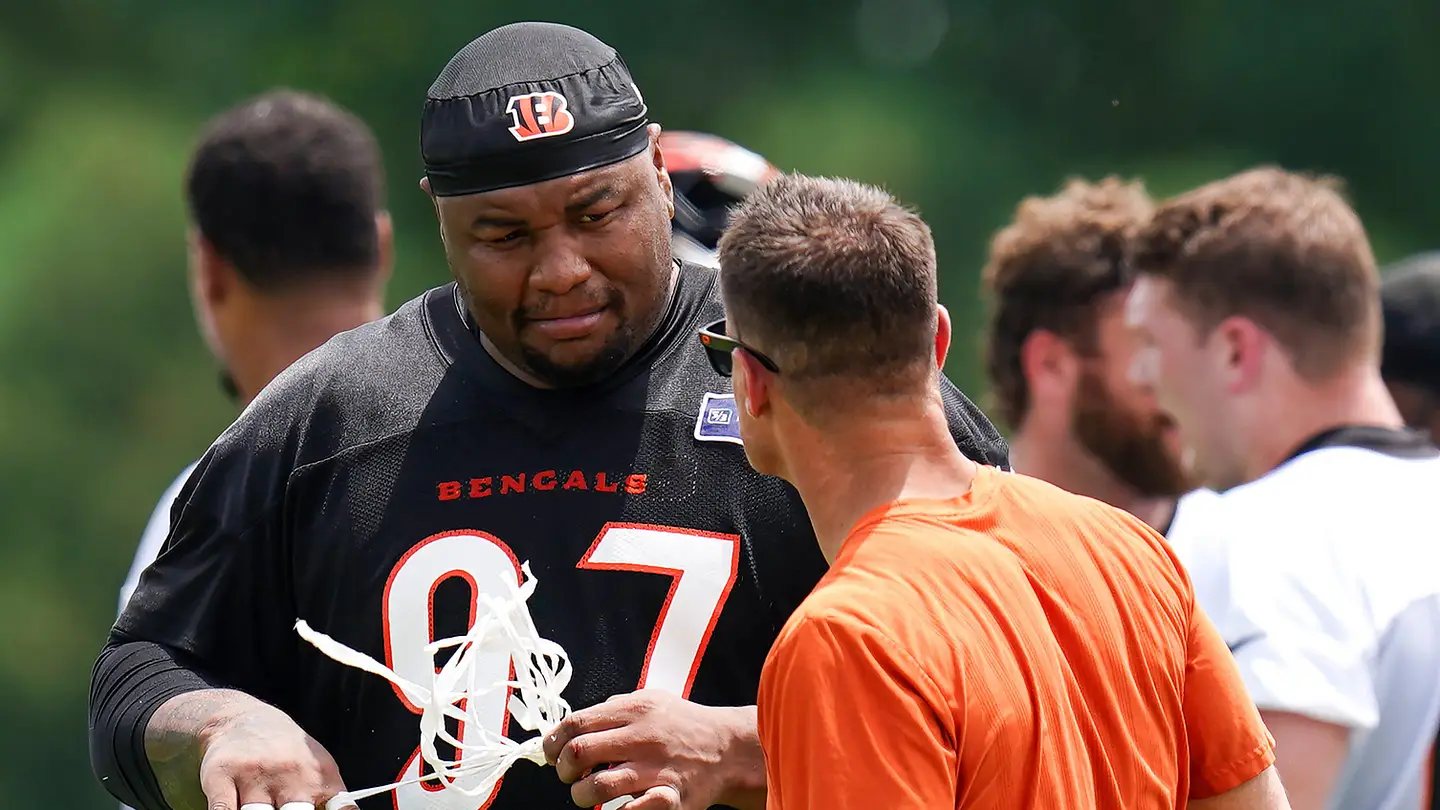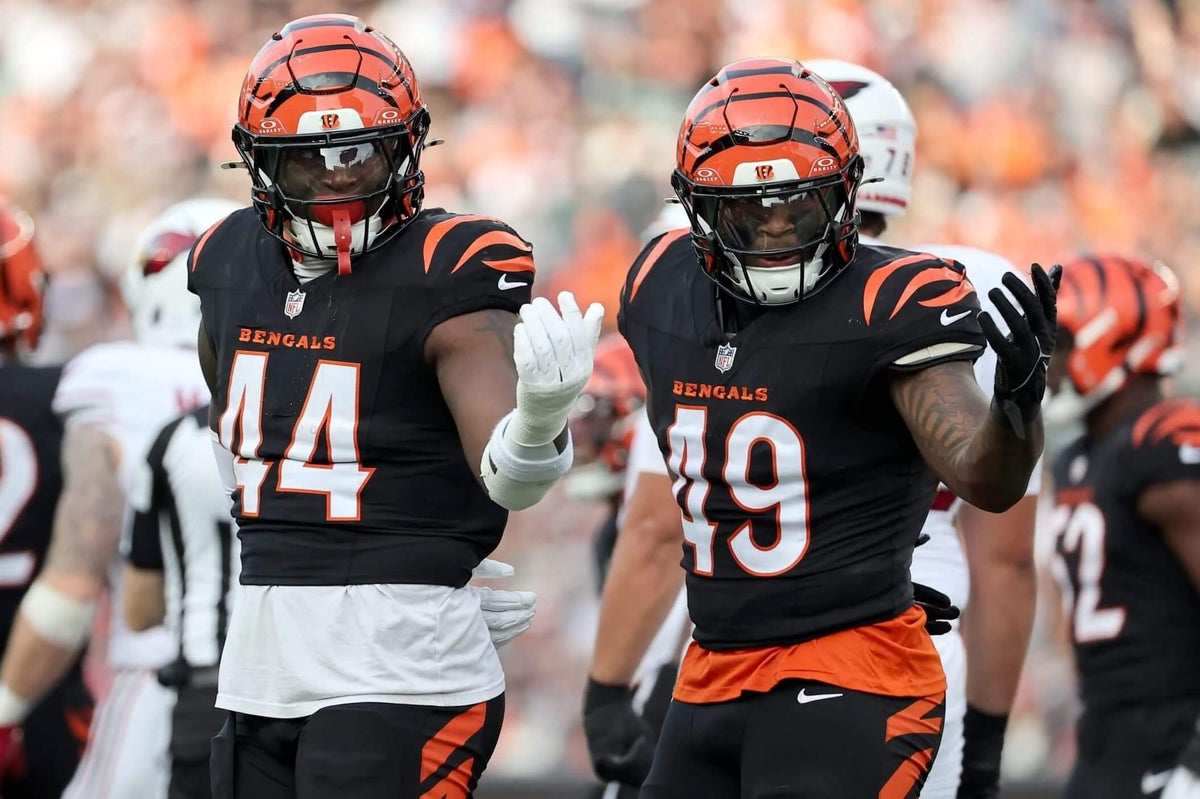
A recurring question followed every move throughout the Cincinnati Bengals’ offseason as they overhauled their defense.After the Bengals opened free agency by dropping $100 million on edge Boye Mafe and safety Bryan Cook.After they added former Pro Bowl defensive tackle Jonathan Allen to supplement B.J. Hill.After they drafted SEC Defensive Player of the Year Cashius Howell and cornerback Tacario Davis on Day 2.Even after they pulled off the blockbuster trade for All-Pro defensive tackle Dexter Lawrence.The momentum fizzled with an inevitable recalibration.So … when does the linebacker come?Now six months into the offseason, and the vast majority of the typical transaction avenues dried up, no rookie linebacker was drafted and no veteran with an NFL start to his name was added. The worst position group on a defense that set the franchise record for points allowed remains largely untouched.Barrett Carter and Demetrius Knight Jr. are still presumed starters after finishing in the bottom 10 percent of all linebackers in PFF grades as rookies. Journeymen Oren Burks and Joe Giles-Harris supplement 2024 undrafted free agent Shaka Heyward as backups.How does that happen?“I don’t think we went into it saying we’re not going to add at any position,” de facto general manager Duke Tobin said. “Again, it’s opportunities that come up. Probably the best thing we did for our linebacker room is what we did for the D-line room, and that’s going to elevate those guys. And I have real belief in the guys that we have.”What if I told you the Bengals were almost exactly following the template of some of the NFL’s best defenses?Ran Carthon understands modern roster construction. He spent 15 years working his way up from scout to director of player personnel with the Atlanta Falcons, St. Louis / Los Angeles Rams and San Francisco 49ers. By 2023, he was named general manager of the Tennessee Titans, a role he held for two seasons.When he would do draft prep each year with the Titans, he’d make the same note: “Rams, they got to take a backer.”Each year, they never did. Instead, they kept investing in the defensive front. The three linebackers over the last two seasons were all undrafted and relative unknowns: Omar Speights, Nate Landman and Christian Rozeboom (who moved to the Panthers last season).Los Angeles ranked sixth in defensive EPA per drive last season.“They just continue to build up front,” Carthon said. “It goes back to the system. Is having the backer really the focus of that system?”For many of the NFL’s most dominant defensive teams, the answer to Carthon’s question is no.Look at the Super Bowl champion Seattle Seahawks, who led the NFL in defensive EPA per drive (and nearly every other relevant defensive category).Seattle started Ernest Jones and Drake Thomas at linebacker. Jones earned a three-year, $28 million free agent contract before the year, a solid investment, but on his third team in five years.Drake Thomas breaks up a pass that Ernest Jones intercepted in a Seahawks’ win against the Cardinals. Thomas and Jones combined for 222 tackles, six interceptions and four sacks in Seattle’s 2025 Super Bowl-winning season. (Joe Camporeale / Imagn Images)Thomas entered his third NFL season last year. He was undrafted with 42 defensive snaps to his name. He finished starting 17 games, all the way through the Super Bowl, with a 72 grade from Pro Football Focus.The defensive line in front of them wrecked the league and became the template for every general manager in football.They followed in the footsteps of the Philadelphia Eagles, the 2024 champs.Their loaded defensive front entered the season with Zack Baun, Nakobe Dean and Burks at linebacker. Baun spent four years in New Orleans, never with more than 303 snaps in a season and signed for just $4.5 million. He ended the season as an All-Pro.Dean was a third-round pick entering his third season with only 229 career defensive snaps. Burks was on his third team in seven seasons with 15 career starts. He ended as a hero of their playoff run, with a ring on his finger.Last year, the Houston Texans started Azeez Al-Shaair and Henry To’oTo’o at linebacker behind a dominant front and led the AFC in defense. They enjoyed shades of success before but were far from the top players at the position.Second in the AFC in defense were the Cleveland Browns, who put second-round pick Carson Schwesinger next to Devin Bush, who played for three teams in the previous four seasons and signed for near the veteran minimum. Schwesigner was named the NFL Defensive Rookie of the Year, and Bush parlayed his season into a three-year, $30 million contract.“All those dominant linebackers we have in our league, nine times out of 10, they are playing behind dominant defensive fronts,” Carthon said.Most of the league’s best defenses didn’t invest heavily in linebackers, but rather in defensive lines capable of producing quality linebackers.“One hundred percent,” Carthon said. “Honestly, I think that is the way to build it. Everybody would like a bona fide Fred Warner-type. You look at what we did in San Francisco, what DeMeco (Ryans) is doing in Houston, what Robert Saleh is now doing. Everybody wants to have the dominant defensive front because it starts there.“When I am evaluating defensive linemen, the No. 1 thing I am looking at is: Can you maintain the point and keep the linebackers clean on the second level and allow those guys to run, chase and hit?”Crowds of media gathered around Carter and Knight Jr. with many different versions of the same question in the days after the draft that only featured the addition of undrafted free agents Jack Dingle (Cincinnati) and Eric Gentry (USC), and a later addition of Swayze Bozeman, on his third team in three NFL seasons.Can you believe how much they believe in you?They recognize the perception.“There’s a ton of talk,” said Knight, Cincinnati’s 2025 second-round pick. “We don’t look at it because it can be hit or miss. There can be comments out there that bring you up, and then two comments later, it brings you down. That’s what this sport is. People have their opinions. Bring them on. We don’t read them for mental health reasons.”The two rookies improved throughout the season, but they must make a significant leap to reach a serviceable level.Each had at least 700 snaps and 100 tackles as rookies. For perspective, there have only been 19 rookie linebackers over the last 10 seasons to cross those thresholds.Knight and Carter were the only teammates on the list.The Bengals were the first team with two rookie off-ball linebackers logging at least 700 snaps since the 2012 Atlanta Falcons.By all standards, Knight and Carter failed. The problem is they were unequivocally set up to do so.“We were both in the fire together,” Carter said. “Usually, if you have a rookie out there, you are with a vet or alongside a vet. We were learning at the same time. I can speak for the both of us, we never saw a fullback. We never saw a QB under center. In college, that’s just not where the game is right now.“Coming into the league, you see that so frequently. We both were trying to lean on each other with that and get in the film room and try to give us an edge any way we possibly could come Sunday.”Think about that for a moment. Never saw a fullback or QB under center? Now, much of their job is predicated on reading the under-center play action specifically devised to cook them each week. The rookies were flying blind and crashing once Carter was inserted in place of veteran Logan Wilson in Week 5.“Whatever we are going to see this year, we are going to be prepared for because we have seen it in the past,” Carter said.Glimpses showed as the season progressed, with a clear uptick starting in Week 12 against the Patriots.
Why the Cincinnati Bengals’ trust their young linebackers despite last year’s struggles
A look at some of the NFL's best defenses shows inside linebacker success is often contingent upon strength up front.
2,372 words~11 min read