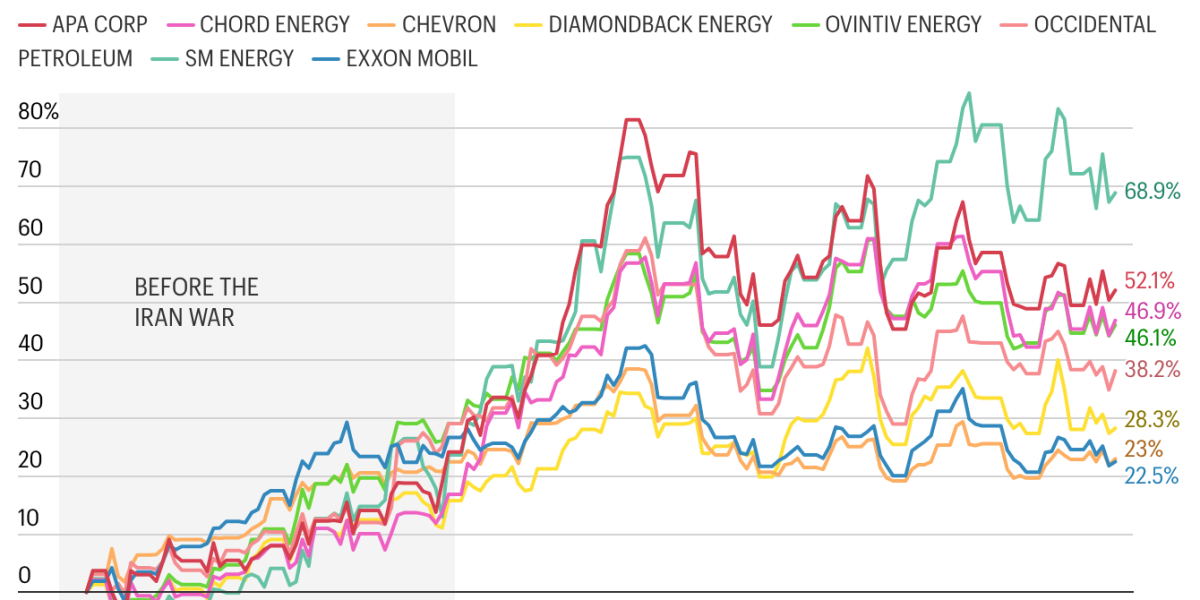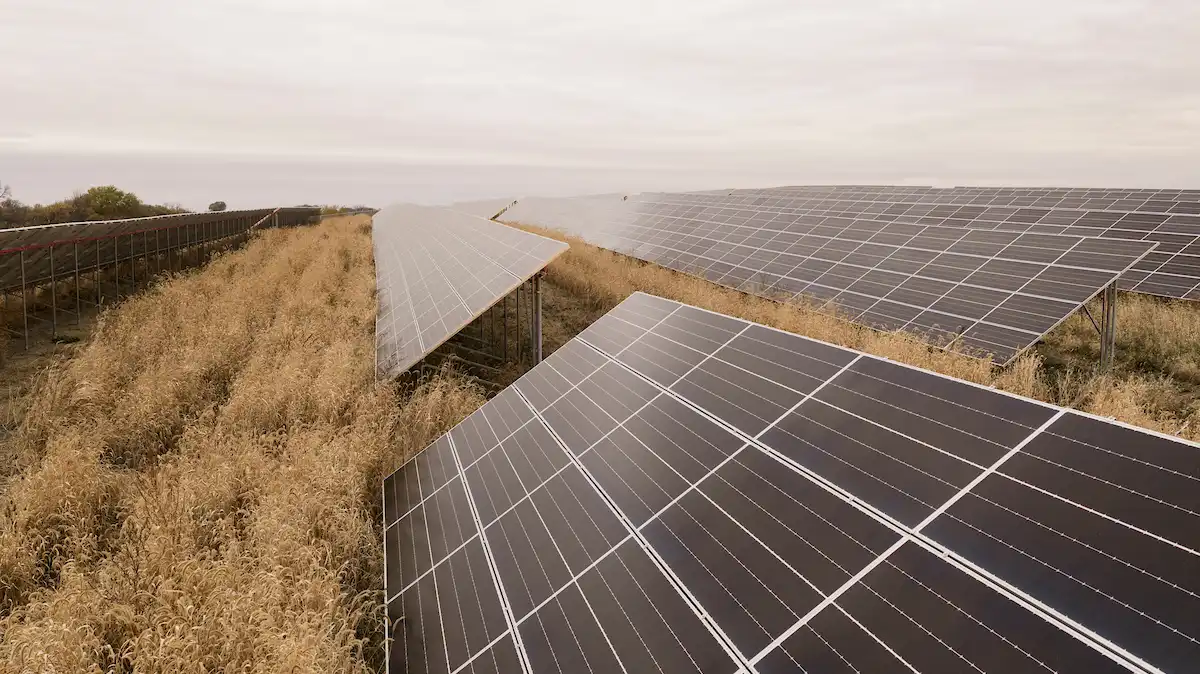
The price of oil has gone up significantly since late February, when the U.S. attacked Iran. Any time oil prices see a crazy rise, it makes other sources of energy look more attractive. We’ve had these inflection points before in U.S. history. Back in the 1970s, oil prices skyrocketed, and people started to innovate. But, for a few reasons, it didn’t stick. “We had all of this innovation that came off the sidelines,” said Deborah Gordon, who works at the energy think tank RMI. In the late ‘70s, she was in college, studying chemical engineering, at the University of Colorado, and she said alternative forms of energy were the hot thing to work on. “I was working in a hydrogen catalysis lab in undergrad. Now, we're talking about hydrogen again, as if we weren't talking about it 50 years ago, which is kind of crazy,” she said.Gordon was working on ways to store hydrogen. This was one of many ideas people were working on. “People were trying everything they could,” said Cyrus Mody, who studies the history of science, technology, and innovation at Maastricht University in the Netherlands. “They were putting money into wind, solar, regular nuclear fission, biofuels, fuel cells, you name it.”Mody said there was research being done by oil companies — but also, any company that could try to gin up some energy using whatever it had, went for it. “Aerospace companies were getting into it,” said Mody. “So, Grumman, for instance, got into wind power. Some of the satellite companies got into solar power because they already had some expertise in that.”Even the potato brand Ore-Ida, maker of Tater Tots, according to a news report from 1979, was trying to figure out how it could get into geothermal energy, using its land in the Pacific Northwest.“I think they did have some view to making money off of the geothermal hotspots that they owned,” Mody said.This is also the point when the modern solar panel, which until then had mostly been used up in space, really starts to have its moment.“Prior to the 1970s, government funding for solar technologies is a couple million dollars a year,” said Dante LaRiccia, an energy historian studying at Yale. “Now after the oil shock, especially under President Carter, the government is starting to commit hundreds of millions of dollars a year.” The government funded solar research and education. Congress passed a law providing tax credits for people who wanted to put solar panels on their homes. President Jimmy Carter had 32 solar panels installed on the White House.“No one can ever embargo the sun or interrupt its delivery to us,” he said at the dedication ceremony in 1979. President Carter said by the end of the 20th century, he wanted the country to derive 20% of its energy from the sun. This … didn’t work out. So, what happened instead? “There's this muddle of federal energy policy,” said LaRiccia.Jimmy Carter had been all in on renewables. His successor, Ronald Reagan, did away with that, and even removed the solar panels Carter had installed on the White House. Essentially, the federal government couldn’t pick a horse to back in the energy race, and that kept these new alternative technologies from really taking off. Then, the price of oil fell.“It, in a sense, recommits the United States to oil. We come out of the ‘70s, and by the mid-’80s and late ‘80s pretty much back to our old ways,” said LaRiccia.There were some lessons that came out of this period. One is the idea that communities could create their own energy through things like solar co-ops. “This idea that communities can take control of their energy autonomy -- this is going to be something that's quite important,” said LaRiccia.There were also technological advancements during the time: For example, a researcher at ExxonMobil, Stanley Whittingham, eventually won the Nobel Prize in Chemistry for his work on lithium ion batteries that took place in the 1970s. Also, this era planted the seeds for renewable energy, which has grown dramatically in the U.S.. In 2025, solar and wind energy generated 17% of electricity in this country. Twenty years ago, it was under 1%. It’s interesting - and a little poignant - to think about where it could have been.
What happened to alternative energy investments from the 1970s?
When oil has a crazy rise, it makes other sources of energy look more attractive. But the switch from fossil fuels is hard.
713 words~3 min read