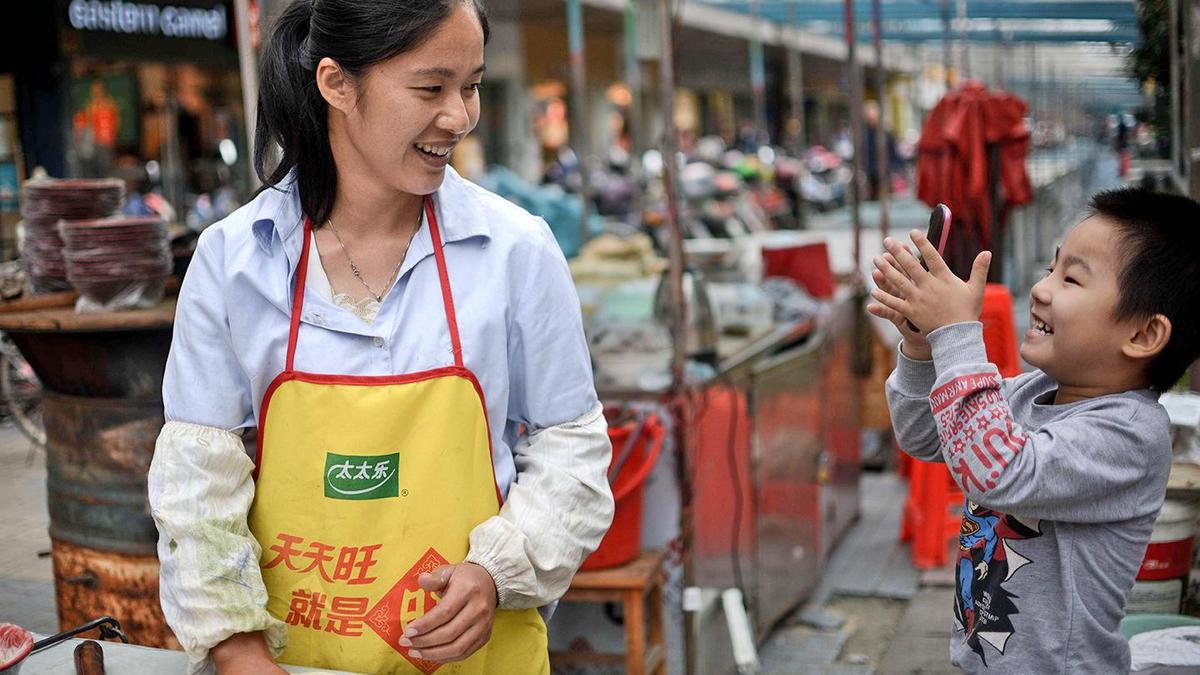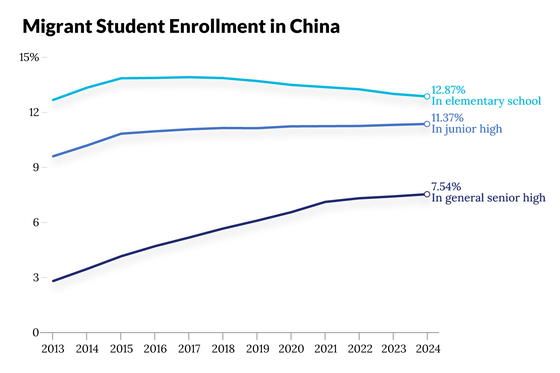
1. China's State Council recently issued the first national-level document specifically dedicated to providing basic public services in places of permanent residence, rather than where people are from. This policy aims to eliminate the link between basic public services and household registration (hukou), which is considered conducive to meeting people's growing needs for a better life and significant for improving urbanization quality, unlocking domestic demand, and building a new development pattern. [para. 1][para. 2]2. The guidelines' first key task is strengthening educational protection for children who accompany migrant families, a matter affecting tens of millions of households and a central concern for mobile families. Providing fair schooling for migrant children has been a consistent national goal, and progress has been steady, with several important policies issued in the past three years. [para. 3][para. 4]3. In 2023, the general offices of the Communist Party Central Committee and the State Council issued opinions calling for improving enrollment guarantees for migrant children based on residence permits and bringing them into the compulsory education system of destination cities, with public schools as main providers. In 2025, the same offices released further opinions urging cities with large population inflows to formulate "one city, one policy" plans for providing basic public services and helping eligible rural migrants enjoy the same rights as local household registration holders. [para. 5][para. 7]4. Data from the Ministry of Education shows real gains: by 2023, more than 95% of migrant children in cities attended public schools. By 2025, more than 97% of migrant children were studying either in public schools or in schools receiving government subsidies, up 11.2 percentage points from 2020. Shenzhen serves as a useful example, where the slogan "Once you come, you are a Shenzhener" and its compulsory education policy for children without local hukou have helped bring continuous vitality to the megacity. [para. 8][para. 9]5. The State Council guidelines call for increasing the share of migrant children attending public junior high schools, requiring nine-year schools with direct advancement from primary to junior high to treat migrant and local students equally, and including migrant children in preschool and senior secondary education in their places of permanent residence. City governments receiving large numbers of school-age children should better tap and integrate existing school-seat resources, add seats as needed, and consolidate gains. Where public seats cannot yet be guaranteed, local governments must purchase seats and reduce the education burden on migrant families. [para. 10][para. 11]6. Achieving these goals will require better student data, more school capacity, stronger fiscal support, and closer coordination among agencies. Policies must be refined, mechanisms improved, and implementation strengthened, with the simple goal that every child can study with peace of mind near his or her parents. [para. 12]7. Supply is only half the challenge; migrant children also need a less cumbersome enrollment process. At a State Council policy briefing on May 26, an education ministry official said procedures would be simplified to make enrollment more convenient. The ministry has also launched a special campaign for transparent admissions, urging localities to base compulsory-education admission policies for migrant children mainly on residence permits. [para. 13][para. 14]8. As these measures take effect, the education of migrant children should take another important step forward. Educational fairness is an essential foundation of social fairness, and local governments should put people first, uphold equity in education, and adapt implementation to local conditions. By making it possible and easier for migrant children to attend school, cities will gain not only classrooms filled with students but communities filled with promise, allowing cities and workers to rise together. [para. 15][para. 16]AI generated, for reference only
Opinion: China’s Cities Need Classrooms for Every Migrant Child
Education access is no mere welfare policy. It is an investment in urban vitality and social fairness
601 words~3 min read