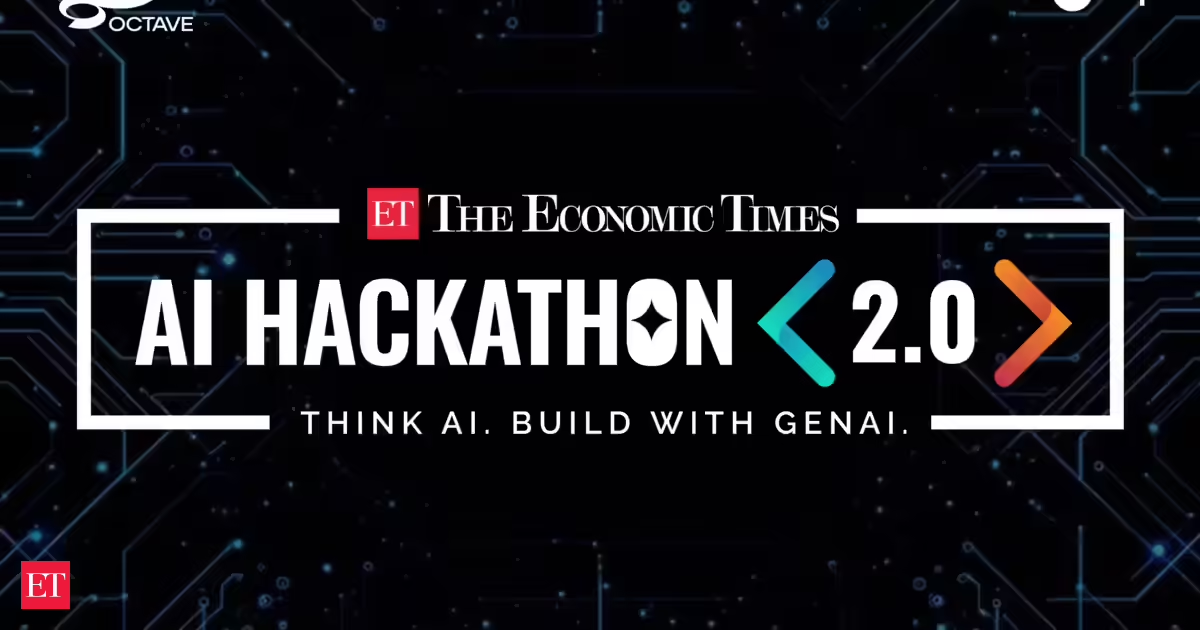
For a long time, hackathons were seen as short, high-energy competitions. They brought people together for a few intense days of building, pitching, and problem-solving. Winners were announced, prizes were given, and the event ended. While these formats created excitement, they were often limited in what they left behind. Today, that view is changing. Hackathons are no longer treated as moments in time. They are evolving into long-term ecosystems that shape how innovation and talent are discovered.This change reflects how innovation itself has evolved. The challenges businesses and societies face today are more complex and interconnected. They cannot be solved by small, closed teams working in isolation. Progress now comes from open collaboration, where engineers, designers, and thinkers from different backgrounds work together on complex problems. Hackathons provide this environment by creating shared spaces where ideas are tested against practice, not theory.Modern hackathons are designed very differently from those of the past. They are no longer defined by speed alone or technical brilliance. Instead, they are structured around depth, relevance, and long-term value. Participants are expected to show clear problem understanding, build thoughtful solutions, and explain their potential impact. Evaluation focuses on scalability, value creation, and clarity of thought. In this form, hackathons operate as platforms for innovation discovery rather than standalone competitions.Over time, this shift has turned hackathons into meaningful talent and product pipelines. For companies, they offer insight that traditional hiring rarely provides. Instead of relying on resumes or interviews, organisations can observe how individuals and teams build, collaborate, and respond to constraints. They see how ideas evolve through feedback. Many solutions that begin as early prototypes continue beyond the event, developing into pilots, partnerships, or fully realised products.This evolution is also changing how recruitment works. The old model of isolated hiring, filtering candidates by degrees, titles, and experience, is slowly giving way to ecosystem-led discovery. Hackathons play a central role in this shift. They allow organisations to engage with builders early, observe real skills in action, and build relationships based on capability rather than credentials.It is in this context that platforms like ET AI Hackathon 2.0 represent more than a competitive format. They reflect how hackathons are now designed as structured journeys. With multiple phases, problem-led building, and exposure to industry leaders, such platforms show how innovation, learning, and opportunity can exist within a single system.Companies are investing in these builder platforms because ecosystems create lasting value. A single event delivers short-term outcomes, but an ecosystem continues to generate ideas, talent, and insight over time. It allows organisations to stay close to emerging skills without needing to control every step, making innovation more flexible and sustainable.Looking ahead, the future of enterprise innovation is likely to be community-driven. As technology moves faster, companies will depend on open networks of builders who can adapt quickly and think creatively. Hackathons, in their evolved form, will serve as the bridge between these communities and the organisations that need them.What began as weekend competitions has become innovation infrastructure. Hackathons are no longer just about prizes. They are about building ecosystems where ideas grow, talent is discovered, and the future quietly takes shape.ET AI Hackathon 2.0 shows how emerging AI capability is identified, tested, and scaled.
From coding events to innovation ecosystems: The changing role of hackathons
Hackathons are evolving from short-term competitions into strategic innovation ecosystems. Modern AI hackathons now act as talent discovery platforms, product pipelines, and community-led innovation hubs. As companies shift toward ecosystem-based hiring and open collaboration, initiatives like ET AI Hackathon 2.0 highlight how hackathons are shaping the future of enterprise innovation.
533 words~2 min read