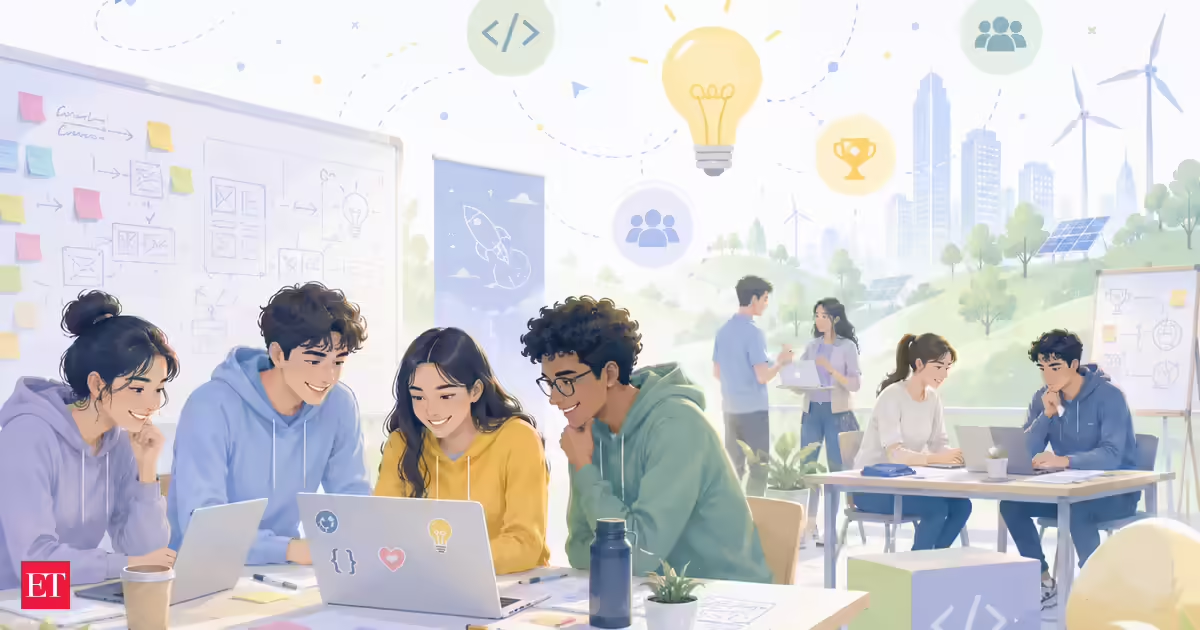
For decades, enterprises believed innovation had to originate from within. Large internal teams, structured research and development divisions, and tightly controlled development cycles defined how companies built products and solved business problems. Today, that mindset is rapidly changing.The rise of AI, rapid digital transformation, and evolving customer expectations have created an environment where innovation moves faster than traditional enterprise structures can often support. Increasingly, companies are recognising that some of the most transformative ideas emerge not inside corporate walls, but within external innovation ecosystems filled with developers, students, engineers, designers, and product thinkers experimenting in real time.This shift is fueling the rise of an open innovation culture.Hackathons, innovation challenges, and collaborative build environments are no longer viewed as side initiatives or branding exercises. They are becoming strategic platforms for enterprises to identify scalable ideas, discover emerging talent, and gain visibility into how the next generation approaches problem-solving. These environments encourage rapid experimentation, fresh thinking, and unconventional approaches that large organisations may struggle to produce internally.What makes these ecosystems particularly valuable is their diversity of perspective. Developers bring technical depth, product thinkers contribute user-centric innovation, and young builders often challenge legacy assumptions with speed and creativity. Together, these communities create solutions that are practical, scalable, and closely aligned with real-world challenges.Enterprises are also paying closer attention because innovation today is increasingly interdisciplinary. AI solutions are no longer built only by engineers. They require collaboration between business strategists, designers, coders, and domain experts. Open innovation platforms naturally bring these skill sets together in ways traditional enterprise workflows often cannot.This evolution is changing how organisations think about hiring, product development, and competitive advantage. Companies are no longer only evaluating resumes or academic credentials. They are looking at working prototypes, live problem-solving, and the ability to build under pressure. Innovation communities are becoming real talent pipelines.Platforms like the ET AI Hackathon 2.0 reflect this larger transition, bringing together emerging AI talent to solve real-world business and innovation challenges through collaborative problem solving and rapid prototyping.The future of enterprise innovation will not belong to organisations that innovate in isolation. It will belong to those willing to collaborate, experiment openly, and build alongside the communities shaping the next generation of technology.
Why enterprises are turning to hackathons and open innovation ecosystems for the next big breakthrough
As AI adoption accelerates, organisations are increasingly turning to builders, developers, and innovation communities for breakthrough ideas. Hackathons are emerging as powerful ecosystems for discovering talent, testing new technologies, and shaping future-ready solutions collaboratively.
365 words~2 min read