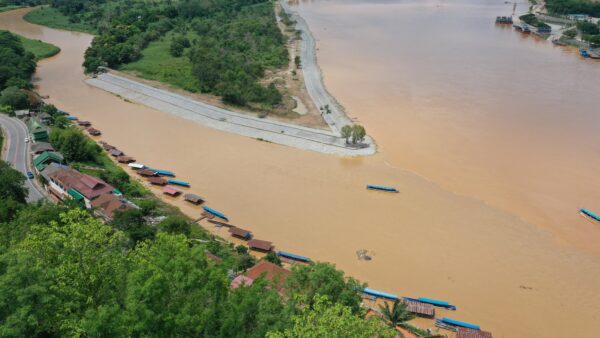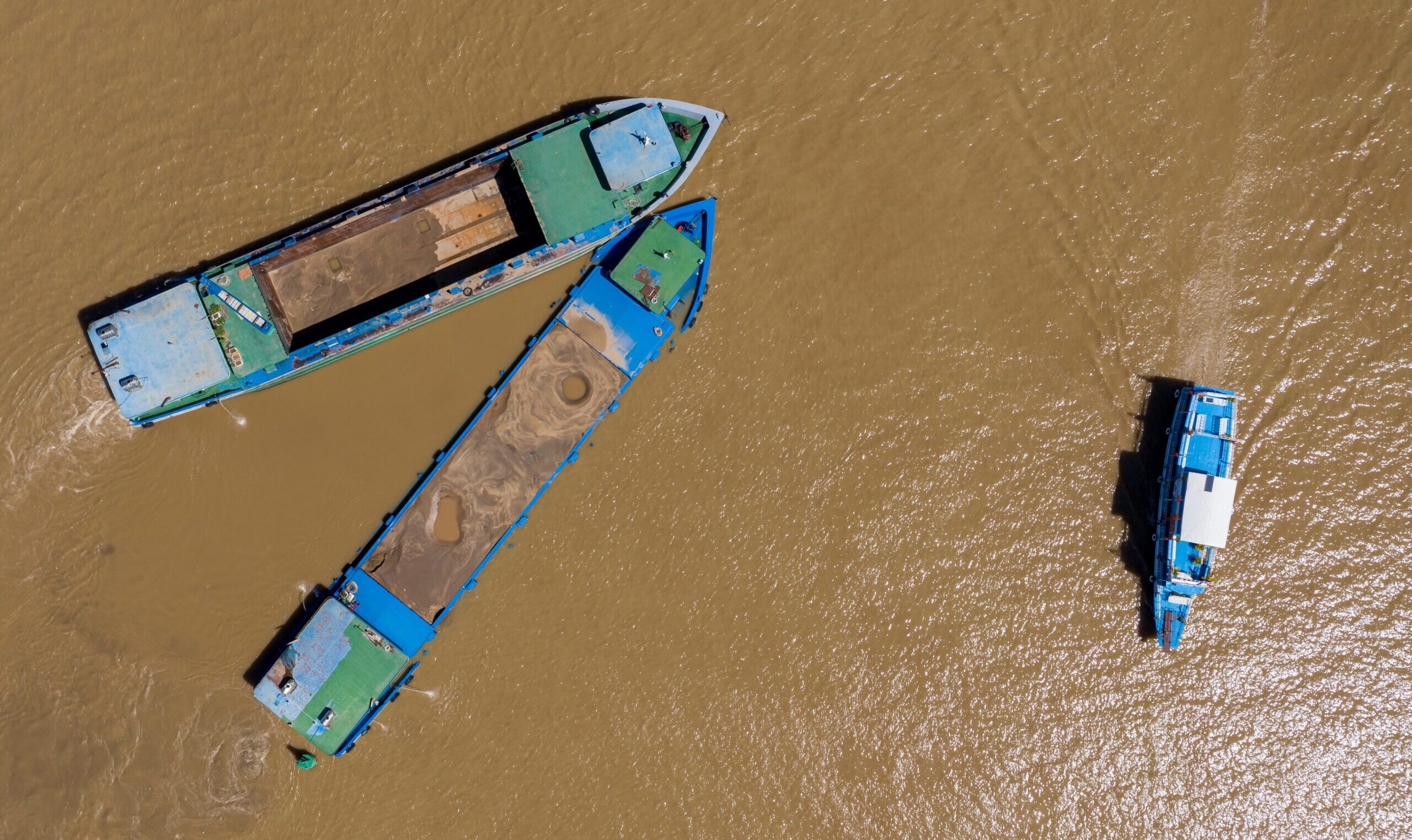
Surging demand for sand used in construction projects poses an existential threat to Southeast Asia’s largest freshwater lake, new research indicates.The seasonal expansion and contraction of Cambodia’s Tonle Sap Lake is often referred to as the Mekong River’s “heartbeat” due to its fundamental role in sustaining ecosystems and human lives across the region.Sand mining in the Mekong River, particularly in Cambodia and Vietnam, has deepened the river channel, effectively halving wet season flows into Tonle Sap Lake between 1998 and 2018, the study found.The stark findings underscore the severity of sand mining impacts, adding urgency to calls for improved and coordinated river governance throughout the Mekong Basin.
Rampant sand mining in the Mekong River is directly weakening critical seasonal river flows that sustain Southeast Asia’s largest freshwater lake, new research indicates.
The Mekong’s annual wet season flood pulse that feeds water into Cambodia’s Tonle Sap Lake has been dwindling year by year.
Experts have long pointed to upstream hydropower dams in China and Laos that trap sediments and alter the Mekong’s flow, combined with droughts intensified by climate change, as major drivers of the gargantuan river system’s declining vitality.