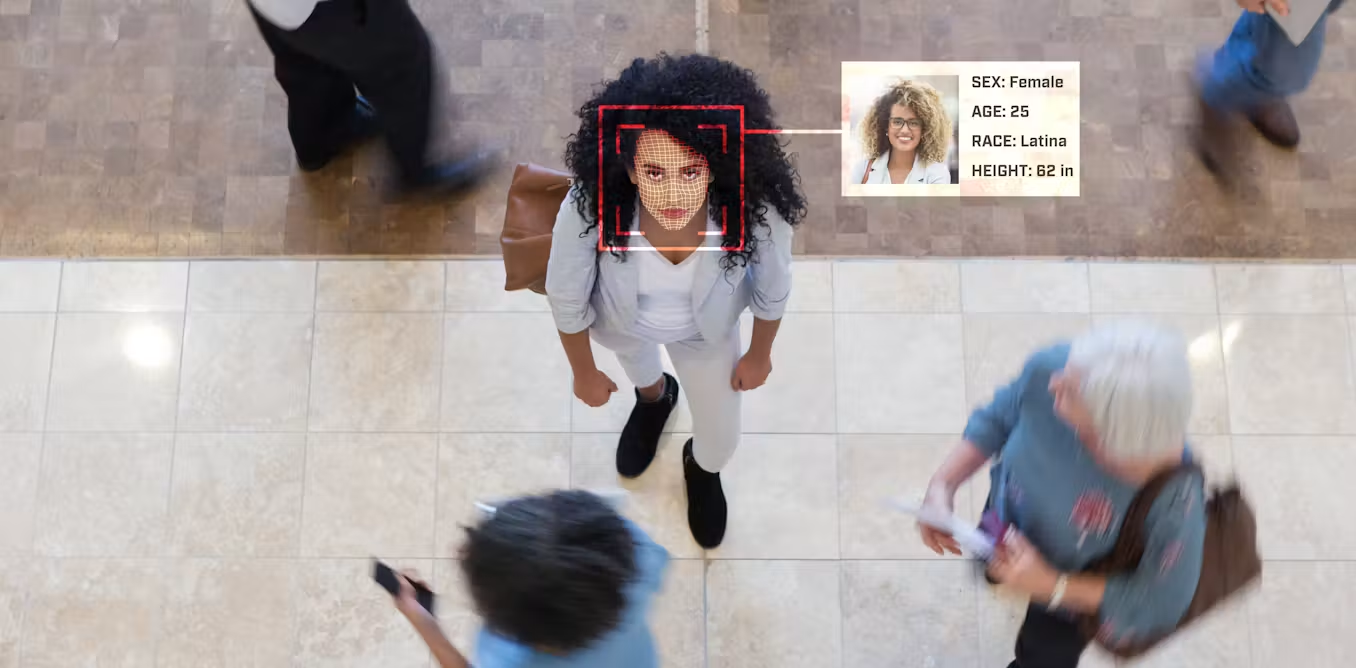
A new study has found that artificial intelligence tools used to screen job applicants in the United States exhibit significant racial bias against Black and Asian candidates, raising concerns about algorithmic discrimination at a moment when the US labor market is already under strain.
Researchers from Stanford University, Chapman University and Northeastern University tracked 3.4 million people who submitted 4 million job applications to 1,700 job postings across 150 employers and 11 industry sectors. Every application in the dataset was assessed by an AI hiring tool built by a single third-party vendor.
The authors describe their paper as the first to offer large-scale empirical evidence of racial disparities in high-stakes hiring decisions made by algorithmic systems.
"Our new paper offers a rare look inside the 'black box' of algorithmic hiring, showing that these tools increase racial bias and shut the same people out of jobs everywhere they apply," they wrote in an article published on the website of the Stanford Institute for Human-Centered Artificial Intelligence.
The researchers explain the hiring AI pipeline as follows: job seekers submit applications, which are routed to a hiring AI vendor; the vendor's machine learning models generate predictions; and the resulting labels of "recommend" or "do not recommend" are sent back to the employer to guide decisions.