You can get a working demo out of an AI coding agent in an hour. That first hour is the trap.
The speed is real. A prototype or a small script comes together in front of you, and it is easy to believe the whole project will go like that. It will not. Most vibecoding failures get blamed on the model. In my experience few of them are the model's fault. The bottleneck is almost always the person driving it, and the bill arrives later, on the long distance, where it is expensive to undo.
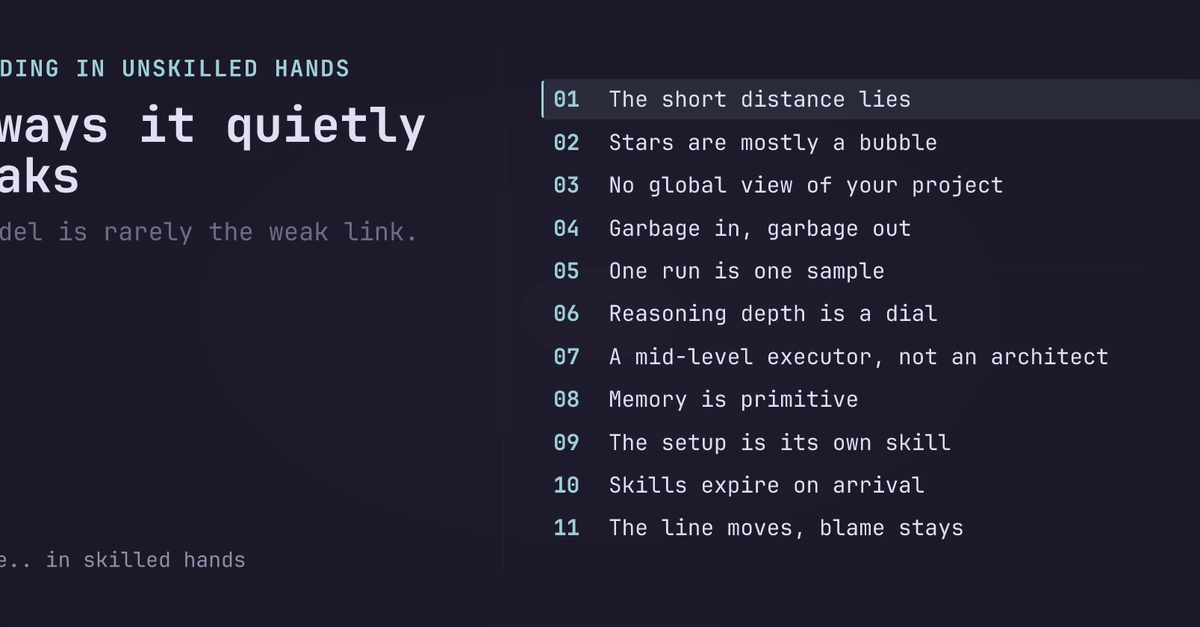
Here are eleven places I keep watching it break, and what actually causes each one.
1. The short distance lies
The first hour is genuine productivity. The curve flips after that. What sped you up early starts to slow you down: duplicates pile up, earlier decisions quietly contradict each other, and there is no single architecture holding it together. "Almost done" turns into months of patching loosely connected code. The beginner reads the easy start as a property of the whole road, and plans nothing for the tenth iteration or for coherence over time.