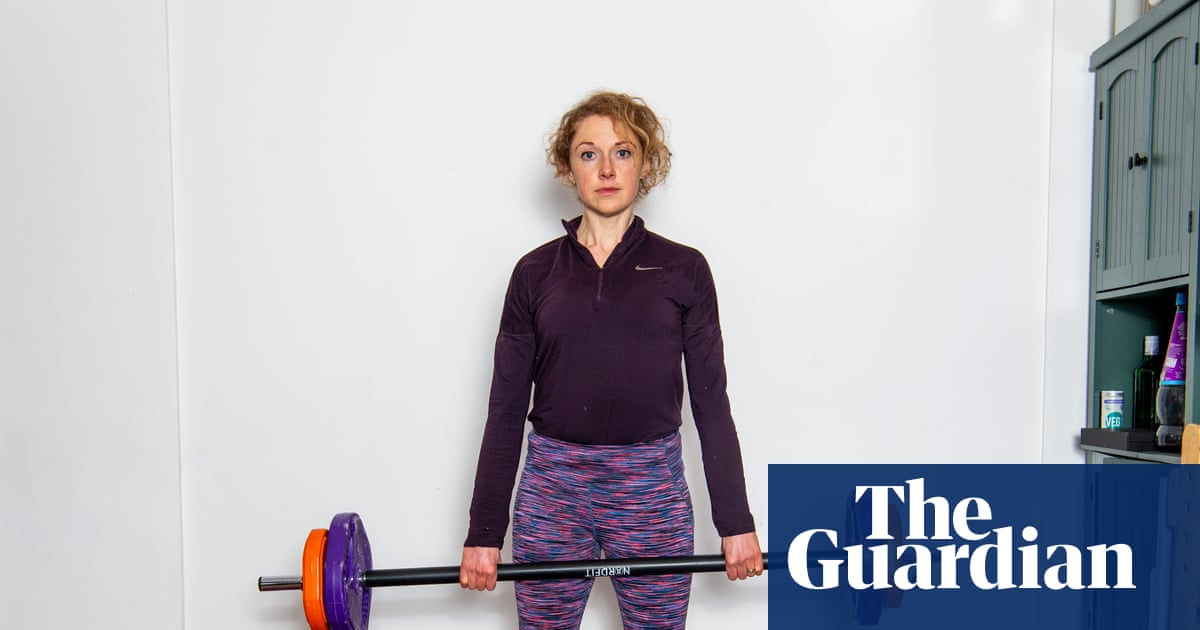
Though I have never used social media, I listen to enough podcasts for some algorithms to have an eye on me. Lately they’ve been suggesting that I might like to get into weightlifting; sometimes it’s more than suggesting, it’s commanding me. The latest edict is menopausal women must “lift heavy”. “Cardio” is discouraged; by some experts it is actually forbidden. Yoga is for wimps who care more about feeling good than succeeding at perimenopause.These new rules reach me between the podcasts I listen to while running. (I don’t listen to podcasts while doing yoga because it wouldn’t be yoga if I did; I breathe, sometimes count, focus on movement and stillness.) At times in my life, rigid rules about diet and exercise have made me unwell, so I’m deeply sceptical. Listen for a new set of rules to manage your routine, one voice demands, and I think absolutely not and what part of “menopausal woman” makes you think we’re looking for new sets of rules and routines?I like running. I like being outside, alone, moving fast. (Well, slightly fast. Faster than walking.) Just passing the gym on the way to yoga makes me feel queasy. Nothing about floor-shaking music, other people’s sweat and alarming metal contraptions invites me to go in.I like yoga. I like the ritual of studios and classes. Despite reservations about cultural appropriation – rife and maybe inevitable in European yoga – I like the incense, the music and giving over my mind and body to following predictable instructions for an hour. The kind of yoga I do makes me stronger than I would be if I didn’t do it. A serious practice has certainly coincided with the end – touch wood – of running injuries. I’m more flexible, have better balance and posture and a more forgiving relationship with my body than I used to. I don’t need to start counting the kilograms I can lift or getting competitive about muscle mass.One well-qualified expert suggests that middle-aged women runners are “skinny fat”. (Male runners, apparently, are allowed to keep doing what they enjoy without being secretly “fat”.) The body mass index (BMI) was designed around the population-level analysis of white men in 19th-century Belgium, never intended for individual use in other groups, so the categories are anyway dodgy, but “skinny fat” means that even if you meet the arbitrary cut-off points for acceptability you might still be invisibly wrong. The expert is very much having her cake and eating it – all puns intended – suggesting that even if we seem to be following the rules and the rules seem to have the intended effect, there’s now a new set of rules to catch women and their apparently healthy bodies pretending to be good enough.[ I started strength training in my 60s - here are the seven things I learned in one year ]I don’t care. After decades of difficulty, I’m mostly okay with space I occupy. I’ve found kinds of movement that make me feel good, which means I keep doing them because I want to rather than for fear of what will happen if I don’t or longing for a body I’ll never have or one I’ll briefly achieve but never be able to sustain.If you enjoy going to the gym and “lifting heavy”, and you have the time and money to keep it up, that’s great for you. But for those of us who have come to other accommodations with our bodies and our lives in midlife, new sets of rules based on the usual fearmongering are not constructive.In the last few years, a whole industry has sprung up around monetising the menopause. There’s temptation in the idea that women at this time of life are uniquely fragile and special, because so much else in culture and society tells us that we’re invisible, disposable, undeserving of care and attention. But the attention given to fragility can be a poisoned chalice. If the cost of receiving care is declaring deficit then we’re making a dangerous bargain. Women in midlife are not intrinsically broken. This is not the same thing as saying that women in midlife don’t need care and attention or that some women in midlife don’t need care and attention because menopause is making them unwell. But the last things we need are new regimes of rules and instructions on how to be women, especially in relation to diet and exercise where, you may have noticed, the proliferation of rules and instructions has not brought health and happiness to anyone except those who make money from it.
Sarah Moss: Women are now being commanded to ‘lift heavy’ in the gym by algorithms
Nothing about floor-shaking music, other people’s sweat and alarming metal contraptions tempts me
764 words~3 min read