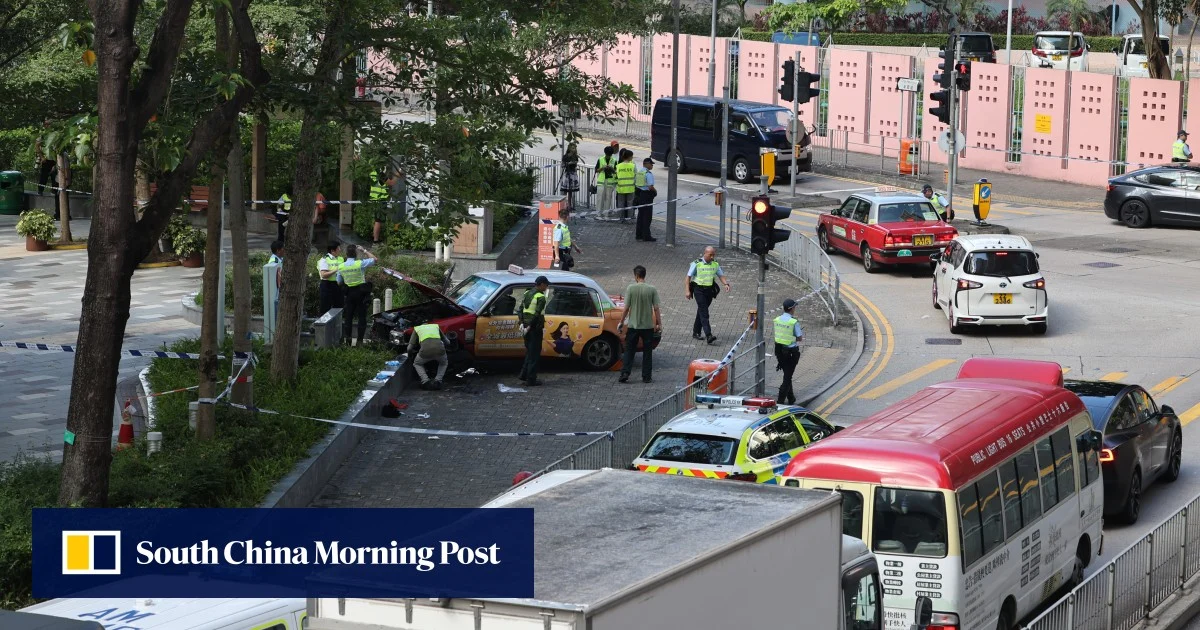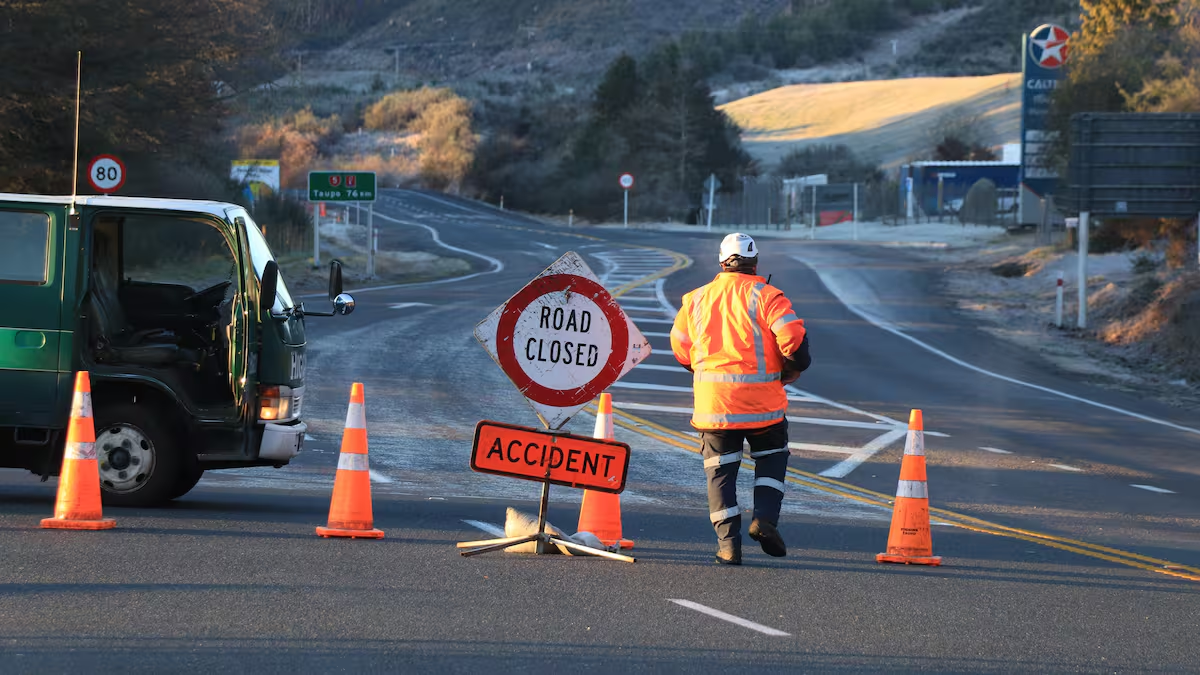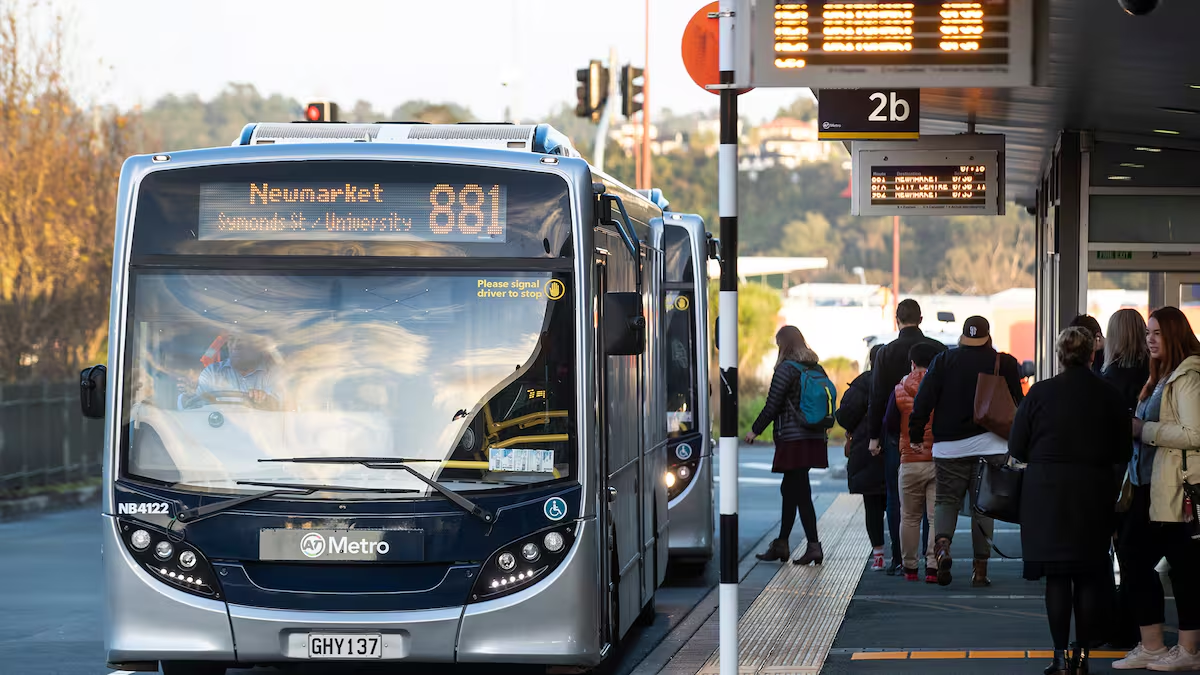
Sir, -While the public inevitably focuses on unacceptable rates of Irish road fatalities, much less attention is paid to the far more numerous survivors of such accidents. A great many are left with life-changing injuries and disability.According to Road Safety Authority and An Garda Síochána data, these numbers run into thousands in recent years. We as doctors specialising in physical and rehabilitation medicine encounter first-hand the consequences, short and long-term. Traumatic brain injury, spinal cord injury, amputations, chronic pain, psychological trauma, and loss of independence are frequent sequelae. Yet in the context of deaths averted these can be recorded as forms of success. Behind every serious injury lives a person permanently altered, often with a family abruptly rendered as long-term carers.European estimates suggest that road collisions impose socioeconomic costs approximating 2 per cent of GDP annually, or over ¤10 billion annually in Ireland.Serious road injury constitutes a big but underreported public health issue. Preventing disability warrants similar urgency to the reduction of deaths. International evidence that safer road design, lower vehicle speeds, stronger enforcement, and improved infrastructure for pedestrians and cyclists reduce both fatalities and serious injuries is overwhelming.Although laudable, our commitment to Vision Zero (whereby nobody should be killed or seriously injured on our road network) necessitates greater investment not only in road safety measures, but also in timely rehabilitation services for the injured. Despite recent investment, Ireland still experiences some of Europe’s worst levels of access to specialist rehabilitation services.Every serious injury prevented enhances the future, not simply for an individual but for a family. – Yours etc,Dr John Macfarlane, MB MRCPIConsultant in Rehabilitation MedicinePresident of the Irish Association of Physical & Rehabilitation Medicine,Cork.War: what is it good for?Sir, – War is woefully wasteful. As a way of settling disputes, it is cruel, unfair, and of little benefit to either side.From structured battles during the Greco-Persian Wars, through to feudal disputes like the Hundred Years’ War dynamics, it seems we have learned nothing from experience and every war is a retrograde step in how civilised we deal with disputes.Early warfare happened on land and sea, but aerial warfare, as a sustained and integral part of military operations, began during first World War (1914-1918) with bombs and drones the weapons of choice. In these wars, human casualties, armed and civilians have less chance of survival.No location is spared, hospitals, schools, places of worship, transport stations, and essential services are preferred targets. Homes and beautiful buildings are destroyed, power is cut off, and human suffering is on a worsening scale with every new attack.When will we be civilised enough to realise that this is moronic behaviour that should be confined to a past, that it is doomed to failure?Experience, even here in Ireland, tells us that peaceful negotiation is the best way to resolve disputes.Sadly, war and its instruments is a huge industry, capable of making millions for those involved and promoting it, and no government seems willing to change that.It takes years for any country to undo the damage to its economy and infrastructure.Are humans’ lives, men, women, and children, so expendable that we allow armies to casually destroy them?There must be a better way. – Yours, etc,SHEILA DEEGAN, Dublin 3. A White House spectacleSir, – The White House has been referred to as the greatest home field advantage in politics. Visiting dignitaries, no matter how experienced, cannot help being a little intimidated as they approach the building, so familiar from news stories, films and TV shows and so steeped in history. It has always been an imposing physical manifestation of American authority and might. The carefully manicured White House lawn now contains a gigantic metal cage-fight arena as it prepares to host an Ultimate Fighting Championship event. The photograph of the crude structure taking shape in front of the famously elegant building (Foreign News, May 29th) conveys, perhaps better than any lengthy political commentary, the degradation of American dignity, credibility and prestige under the current US administration. – Yours, etc,MICHAEL McDERMOTT, Rathgar,Dublin 6.Electricity price increasesSir, – Regarding the news that Electric Ireland to increase electricity prices by 8 per cent and domestic gas costs to climb by 7.7 per cent: Rather than accepting that this is more bad news, I suggest it presents a huge opportunity to accelerate transition to renewables and distribute power generation to homes and businesses. A few key actions to trigger this: The Government must facilitate everyone that has a vaguely south facing roof to acquire solar panels with zero interest long term loans. Electricity companies must be encouraged to change the feedback price for power sent back to the grid to be the same as the regular consumption price. If the companies resist, the Government should compensate the difference and levy a penalty on the companies to compensate. Grants for solar panels should be significantly increased. Those who have installed solar panels already know the huge difference it makes. For most of the year we are in credit. We have the technology, we have many companies that will facilitate this. If we act now, the outcome will have a hugely positive impact on our 2030 targets. – Yours, etc,DAVID SPROTT,Ballincollig, Cork.Sir, – Sitting in a poorly air-conditioned office in the centre of Paris, I find myself pining for the Irish Mays of old, when we daren’t cast a cloud till the month was out, however much we tried to embrace the gentler weather that came with the changing season. It is sobering, then, to think of Ireland experiencing temperatures of 30 degrees in May.In the 12 years I have lived in Paris, anecdotally at least, the winters seem to have become less crisp and the summers an awful lot crispier. Temperatures above 30 degrees were once something of a rarity, generally confined to a few weeks in July and August, when most Parisians wisely abandon the city for less stifling climes elsewhere. Now, such heat increasingly seems to bookend the traditional summer, arriving earlier and lingering later, making working, sleeping and ordinary daily life generally more difficult. Adjustments are already being made here, with more residential buildings are being fitted with air conditioning, and those who can are working remotely from the countryside, but these measures are really only tinkering at the edges.While the longer-term implications of climate change are not yet fully understood, we should be under no illusion but that it is coming for us quickly, and we need to adapt now. – Yours, etc,CONOR MOONEY,75016 Paris,France.Planning and residentsSir, – The decision by An Coimisiún Pleanala to approve a 463-bed hostel for Camden Street, Dublin, is bewildering and depressing. Is it simply the case now that the remit of the planning authority is to ensure the growth of visitors to Dublin city, regardless of the quality of life of the people who actually live there. Why are the wishes of the people who actually live there not listened to, is it the case that business interests are shaping Dublin city to their financial advantage and the residents of Camden Street and other areas in the city are of no relevance ? DAVID HARDING,Marino,Dublin.Women’s museumSir, – Harry McGee’s recent article about the proposed women’s museum in Limerick was disappointing. As chair of the Government’s Advisory Committee on Women’s Stories I can clarify that the committee in calling for the creation of a women’s museum as a “long-term vision” did not mean that it should take a long time, and in commissioning a report on international best practice did not recommend that the lowest ambition level should be the goal.Minister for Culture Patrick O’Donovan’s commitment to act on the report’s recommendations was welcomed and appreciated by the advisory committee. One could read the article as a criticism of O’Donovan’s fast action and level of ambition, which is surely a clear case of “damned if you do and damned if you don’t”. – Yours, etc,DR SANDRA COLLINS,University College Dublin,Dublin 4.Lionel Messi and Liam BradySir, – I could take issue with the sweeping generalisations put forward by Finn McRedmond in an article (“Arsenal is the club of the Irish diaspora”, Opinion, May 28th), which offers a class-based analysis of Arsenal FC’s support base. However, I shall resist taking the bait on such frivolous matters because McRedmond raised a more serious issue by casting doubt on Liam Brady’s reputation.McRedmond dismisses as “swivel-eyed devotion” an analogy between Lionel Messi and Liam Brady. One should be cautious when comparing athletes across different generations. Messi’s status in the modern game is richly deserved. However, in his era, Brady possessed similar technical skill and a rare football intelligence.An elegant midfield master on pitches far less manicured than today’s, he was brave, resilient and tactically astute. At his peak, he would have been a strong contender for a place on a world XI. During the Italian phase of his distinguished career, Brady was a pioneering figure on an evolving international stage. He was as significant in the history of Irish football as Messi is to the game in Argentina. – Yours, etc,ALAN SWEETMAN,Ovoca Road,Dublin 8.Sir, – I was so heartened to read Finn McRedmond’s article on Arsenal FC. As a life-long supporter of the club, her description of its diverse fan base is pitch perfect. I had a season ticket in the 80s when Arsenal did not have the same following. To obtain a season ticket in those days, all that was required was to write to them and ask. Today, there is a 30 year waiting list. The commercial demands have not altered the multicultural dimension that has been an ever present at Arsenal. It that sense, the club reflects the best qualities of London where residents coalesce around the privilege of living freely in one of the great, open cities.In a climate of heightened identity politics and widespread calls for every kind of boycott, Arsenal is a shining example of the unifying power of sport. As Boy George might call it, the Culture Club. – Yours, etc,OLIVER SEARS,Dublin 2.An encounter with a foxSir, – John Fitzgerald’s excellent letter (May 28th ) about the barbaric nature of fox-hunting reminded me of a recent encounter I had with a fox. One evening a few months ago, I came face to face with an adolescent fox that had jumped from a wall and landed on the pavement about ten feet from where I was. Instead of beating a hasty retreat as an adult fox might have done, this youngster stood his/her ground – and eyed me up and down with what seemed to be a mixture of bravura and curiosity. Although foxes are common in the area, I had never been so close to one. Our rendezvous lasted for less than a minute – but it was long enough for me to have been awestruck by the beauty of the animal. For the last thirty seconds, we were joined by a second human pedestrian whose reaction was to record a video on her phone. As the fox turned to go, the person whispered “pure magic” loudly enough for me to hear and to nod in agreement – even though one of its ancestors had once eaten the family pet rabbit and other relatives had dug up flowers in the garden over the years.In a world in which wild animals are most frequently encountered in zoos or on television documentaries about their disappearance or in children’s storybooks, we should have the decency to stop torturing and killing them for entertainment and sport or under the guise of tradition or as a sadistic form of culling and, instead, to stand back and to appreciate the intrinsic, magical beauty of wildness before it’s too late for them – and us. John Fitzgerald is right: it’s time to consign fox-hunting to the pages of Irish history – both north and south of the border. – Yours, etc,CHRIS FITZPATRICK,Terenure,Dublin 6.Censorship apologySir, – Edna O’Brien’s writing and contribution to Irish literature was celebrated in a festival in her native Tuamgraney at the weekend. Isn’t it time for the State that censored her to apologise for all the censorship – in literature, in politics – it inflicted on us all? – Yours, etc,EOGHAN MacCORMAIC,Cill Chríóst,Gaillimh.Annoying expressionsSir, – “You should write a letter to The Irish Times,” – Yours, etc,KEN FENTON,Donnybrook,Dublin 4.Sir, – Yours, etc, – Yours etc,GARY DOYlE,Straffan,Co Kildare.Sir, – One of the expressions that irritates me is “lived experience “. – Yours, etc,TOM FARRELL,Swords,Dublin.Sir, – How’s about “get a life” to those still corresponding on the subject,?– Yours, etc,TOM O’DRISCOLL,Cobh,Co Cork.
Letters to the Editor, June 1st: On road incidents and traumatic injuries, war, electricity prices and annoying expressions
Behind every serious injury lives a person permanently altered, often with a family abruptly rendered as long-term carers
2,083 words~9 min read