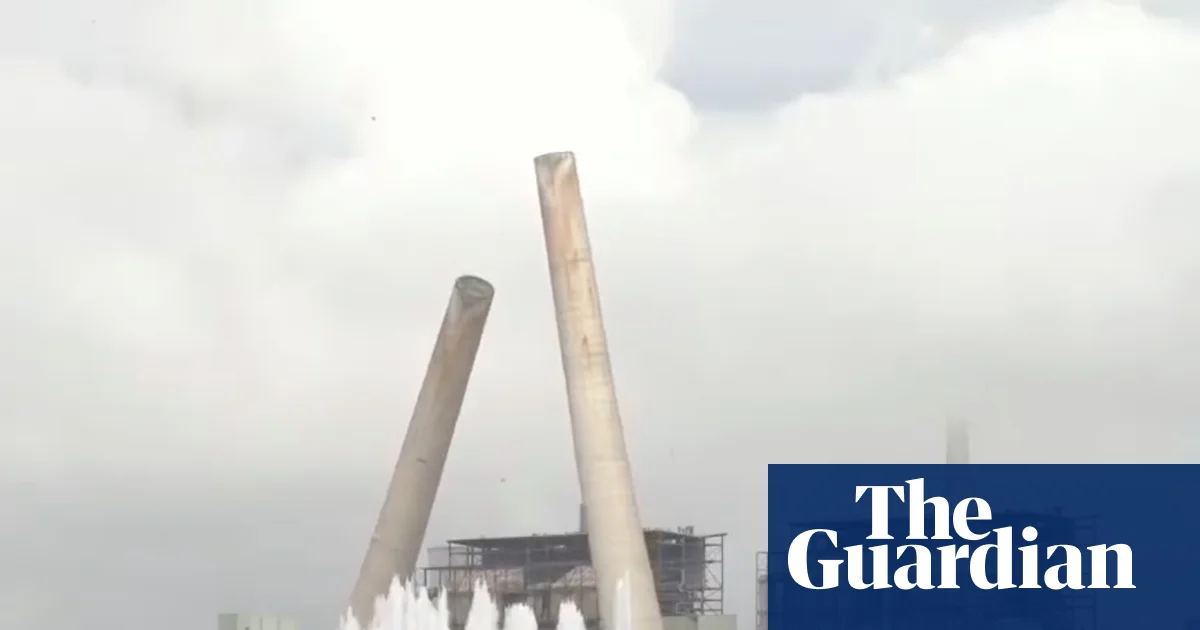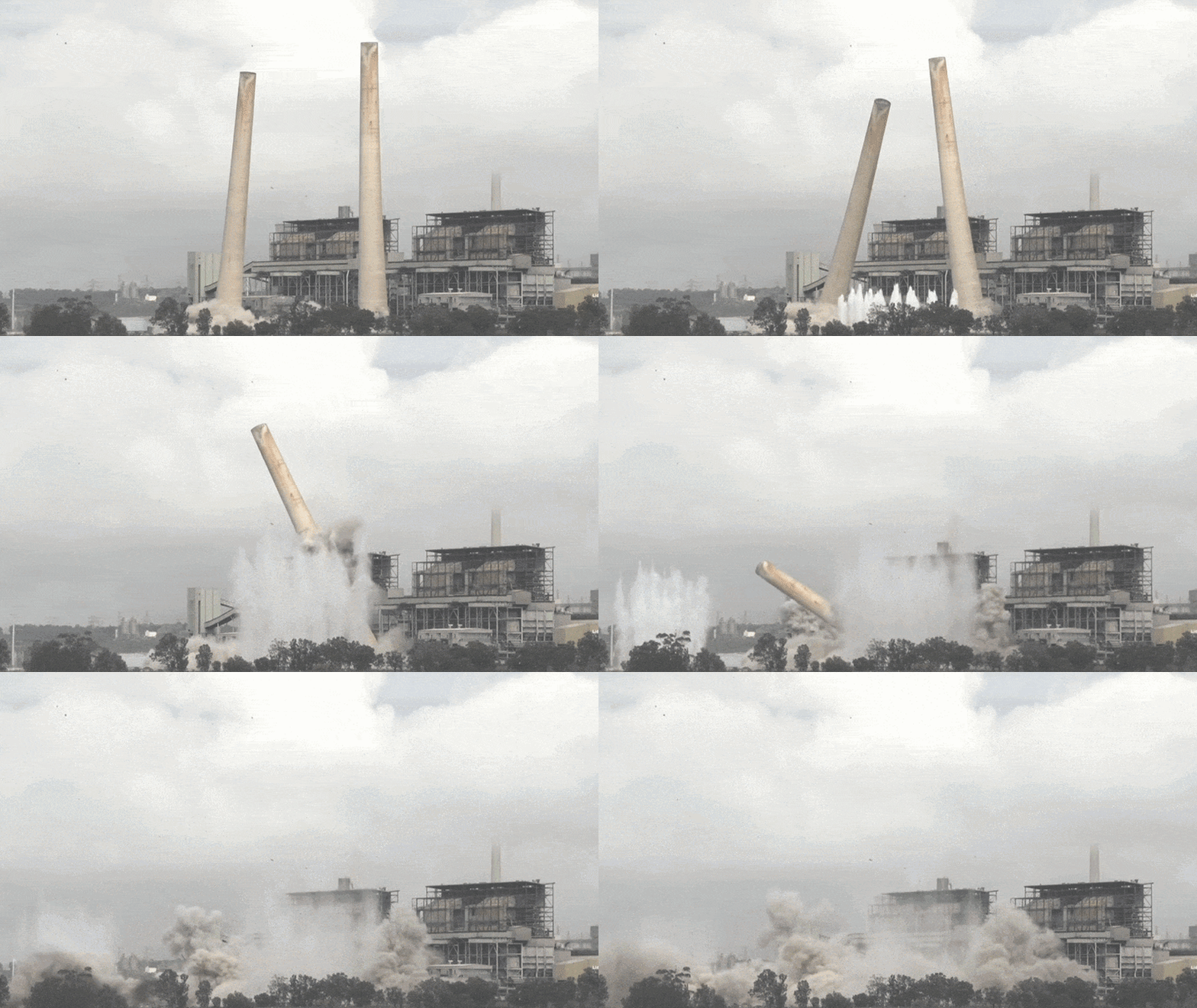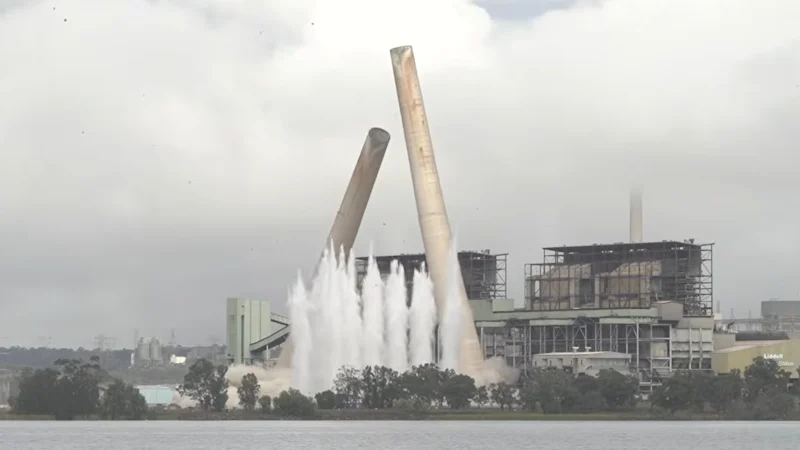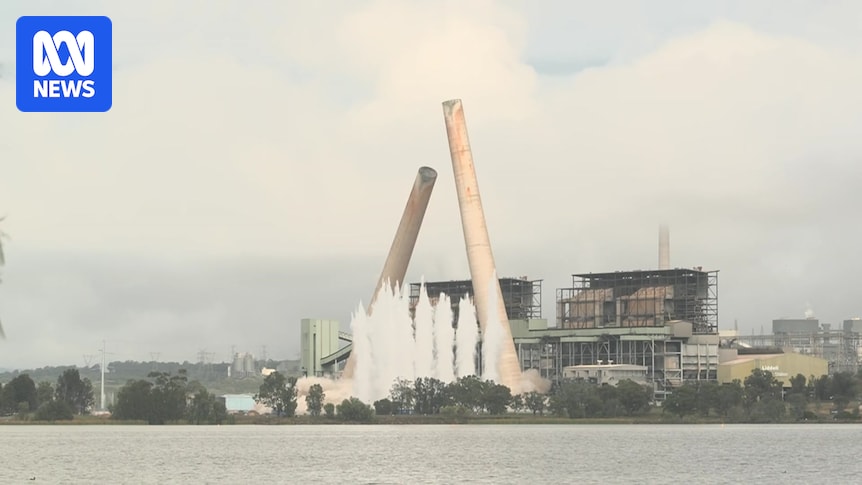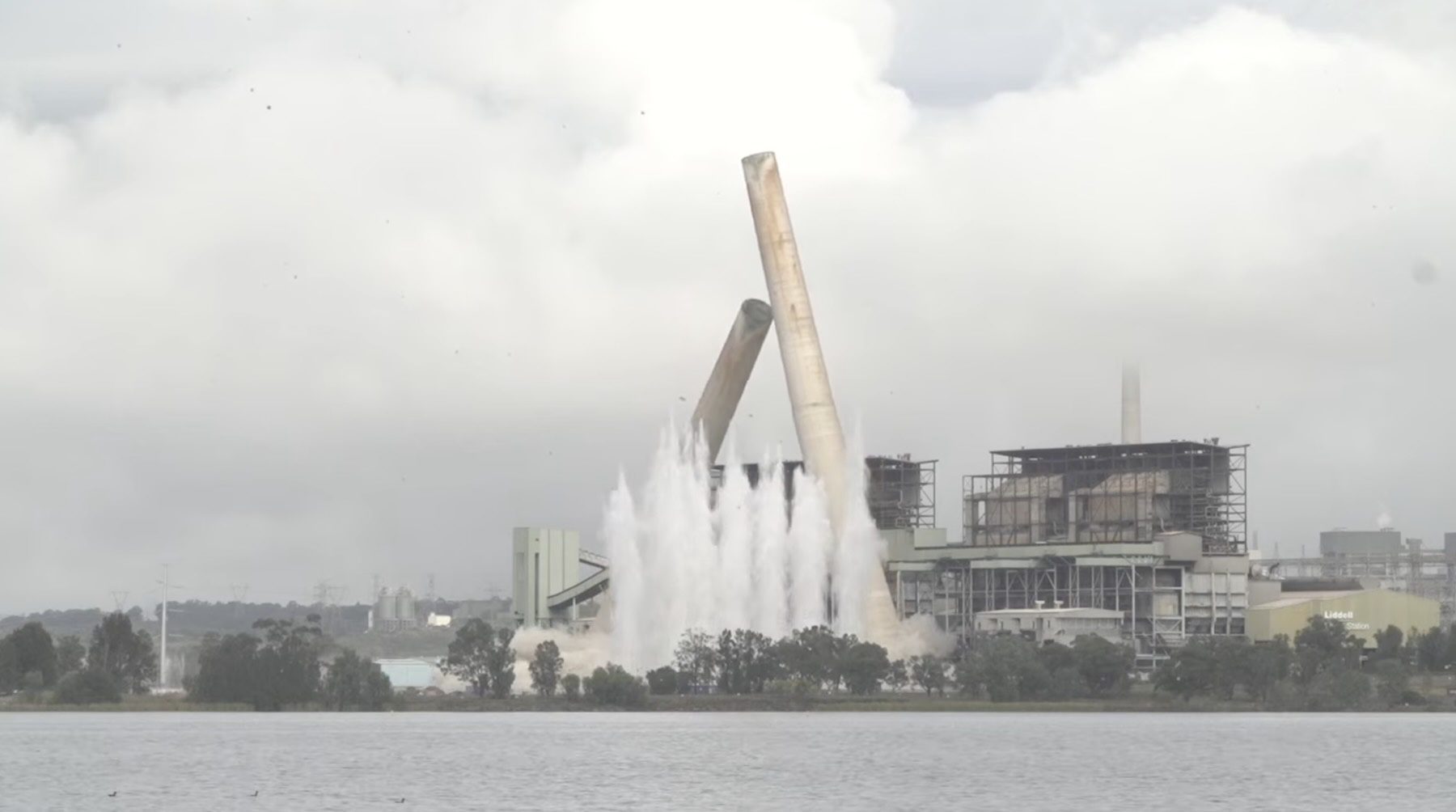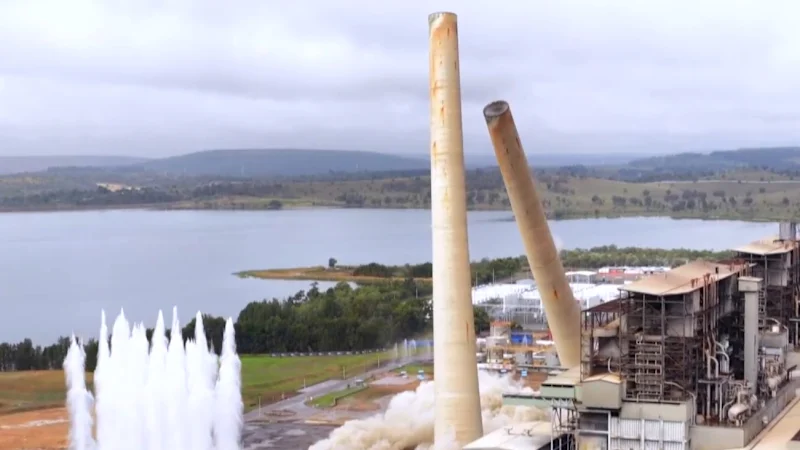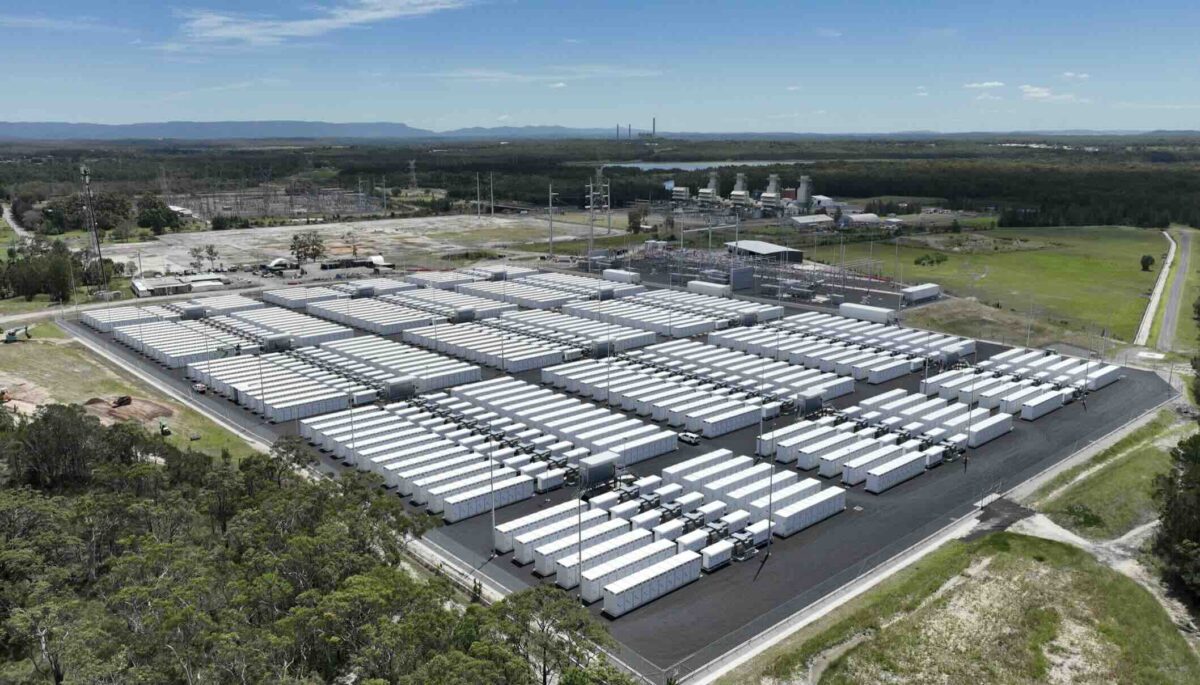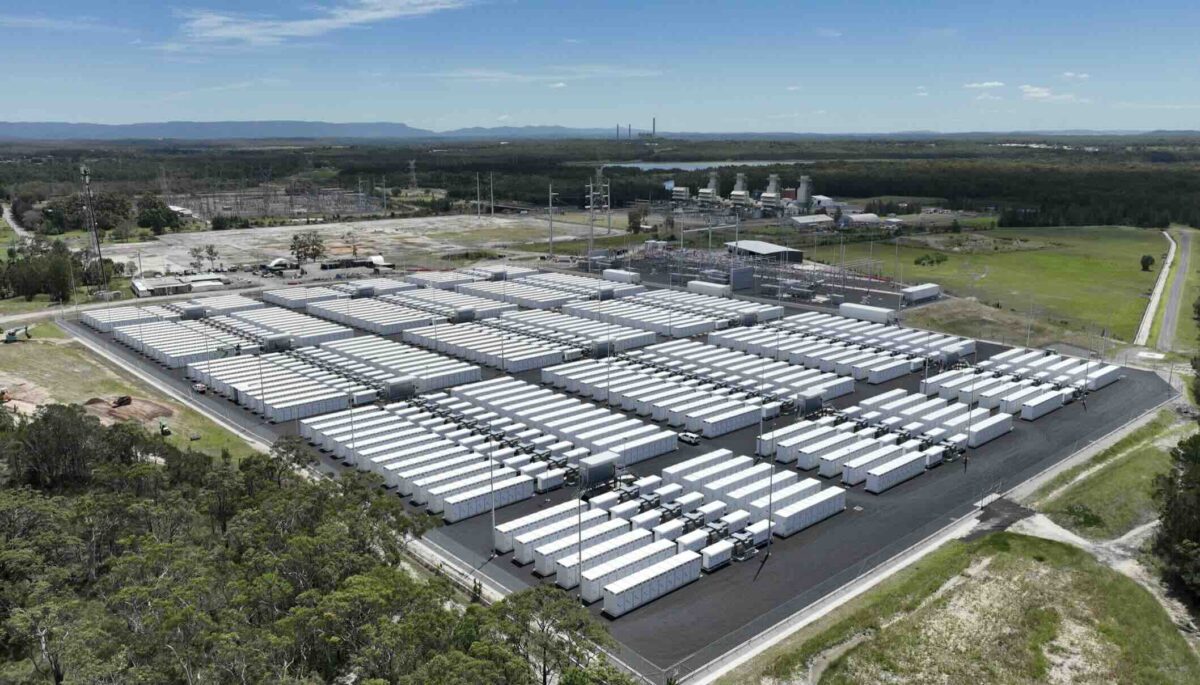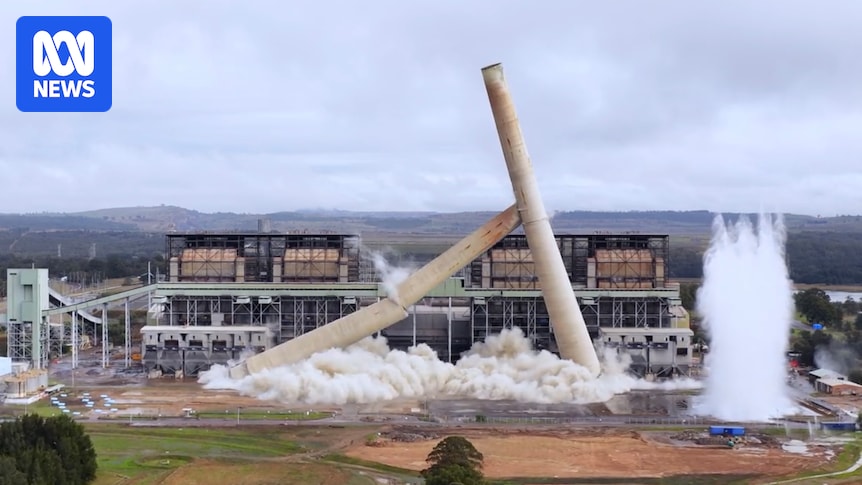
After 18 months of meticulous planning, it was all over in about 20 seconds.The iconic towers at AGL's Liddell Power Station came crashing down in a controlled demolition last Tuesday, bringing an end to more than half a century of coal-fired history.The company's general manager of site transition, Brad Williams, likened the demolition to "felling a tree", although in this case the two "trees" were 170 metres tall and about 20 metres in diameter."Rather than using an axe, we use explosives," he said."There are about 700 holes drilled in the side of the chimney, and they're charged or packed with a small amount of explosives."We also cut hinges on either side, effectively triangular sections … and then cut through the reinforcement at the base of the stack."The two chimneys have been part of the Hunter region's skyline for more than half a century. (Supplied: AGL)The "small amount of explosives" can add up for a job of this size; about 260 kilograms was packed into each tower.Mr Williams said extensive modelling on dust, ground vibration and air pressure was done in the lead-up to the blast."Lots of planning, lots of engineering, lots of approvals have gone into it," he said."An awful lot of work for a 10-second event to safely bring them down."A 1-kilometre exclusion zone was enforced around the blast site, and charges were also placed beneath about 40 "paddling pools" designed to minimise the spread of dust.A number of blue paddling pools (bottom left) were set up on each side of the blast site to help with dust minimisation. (Supplied: AGL)"[They were] timed to go off when the chimneys hit the ground," Mr Williams said."That's designed to create a water curtain in order to bring down as much dust as possible."We need to make sure that the wind is blowing away from critical infrastructure on site … and the dust disperses as it leaves the site, so it's all about wind speed and direction."The explosion left about 14,000 tonnes of concrete rubble in its wake, which the company estimates will take three weeks to clean up.Half a tonne of explosives were packed into the base of the chimneys to bring them crashing down. (Supplied: AGL)The set-upThe Liddell Power Station was closed in 2023 after 52 years in operation.Long before the big bang that brought the towers tumbling down, work was going on to ensure the site was made "cold, dark and dry" and ready for demolition."We call it the make-safe phase," Mr Williams said."That was roughly an 18-month program of work. About a million litres of oil have been recycled."Brad Williams with the remains of Liddell Power Station behind him. (ABC Upper Hunter: Amelia Bernasconi)An estimated 30 kilometres of conveyor belts were also removed from the site before the demolition.Mr Williams said seeing the chimneys fall was exciting but also bittersweet."It's a huge milestone and very symbolic," he said.It took about 30 seconds for the chimneys to fall. (Supplied: AGL)"They've been iconic in the Hunter for decades … so it's important we honour the legacy of the site, but it's also important that we look to the future."Everything seemed to go perfectly to plan."The next part of the demolition will involve toppling four boiler towers, which will meet a similar fate to the chimneys in November.Mr Williams said the site was in a state of transition.The gutted boiler towers seen behind the crashing chimneys will be demolished later this year. (Supplied: AGL)"We've made excellent progress already at the Liddell site with the recent commissioning of the 500-megawatt battery," he said."It's still in the final stages of commissioning, but that project has been very successful."AGL wants to turn this land into a future industrial energy hub, and so bringing down the power station … does signify a landmark in terms of readying the site for future development."Email address
Beneath the rubble of Liddell Power Station towers lay 'perfect' plan
Half a tonne of explosives was needed to bring the Hunter Valley's Liddell Power Station chimneys crashing down.
638 words~3 min read