It was quiet. Very quiet. Everyone stood or sat still, and the only sound that could be heard was the gentle lapping of the water on the shores of Lake Liddell.
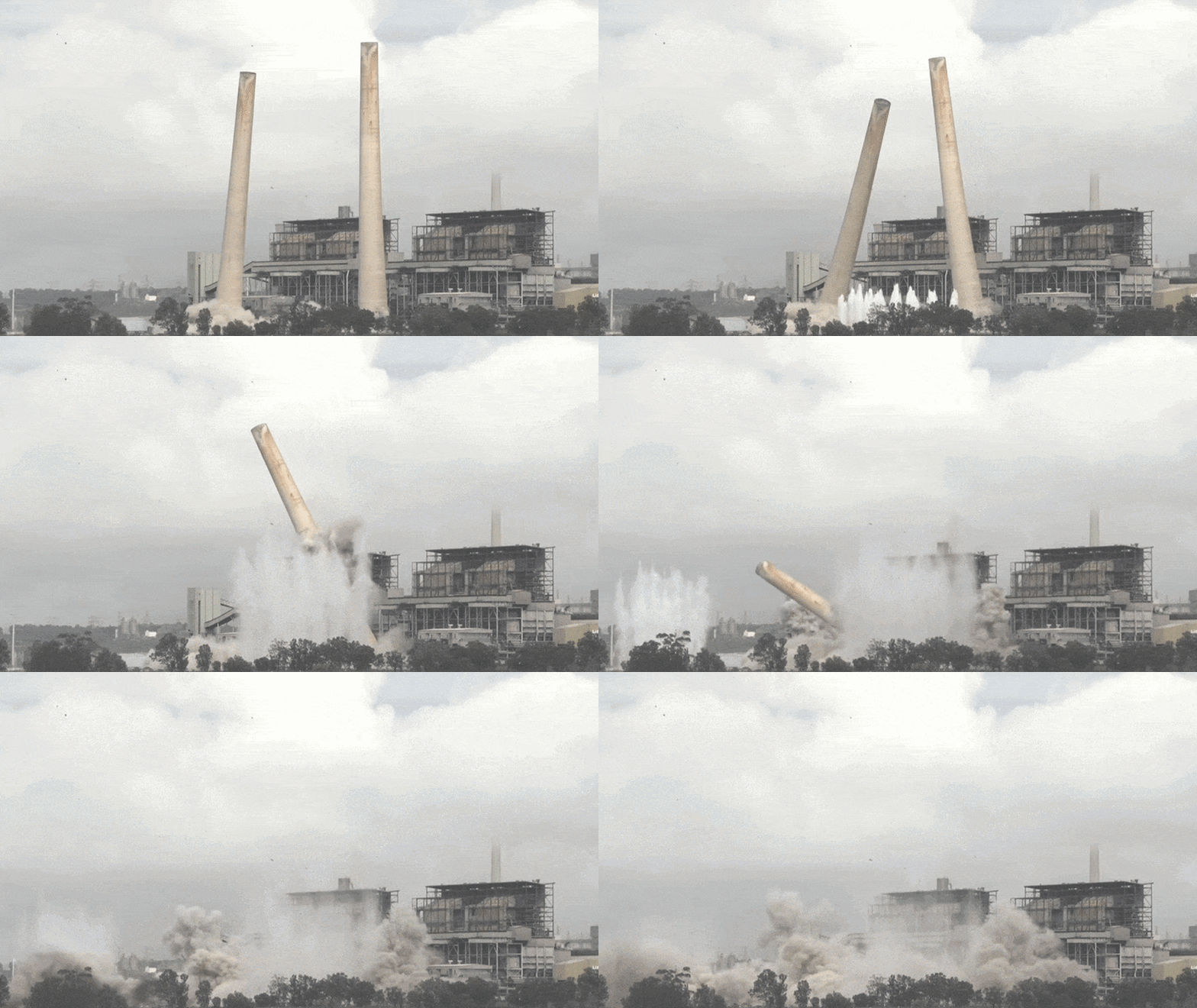
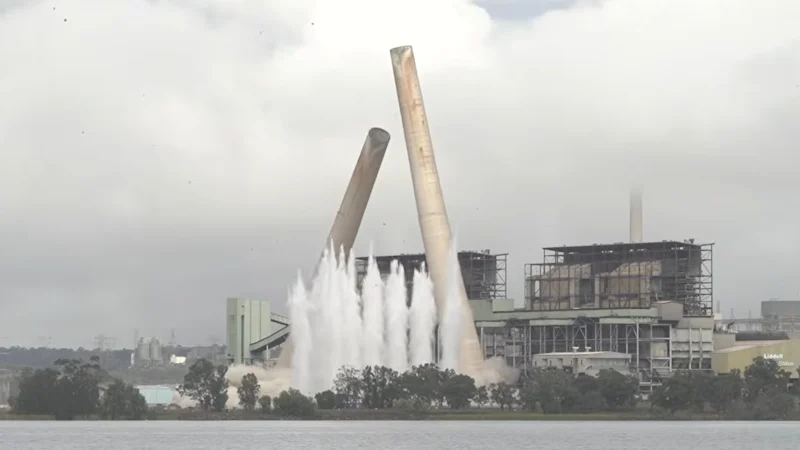
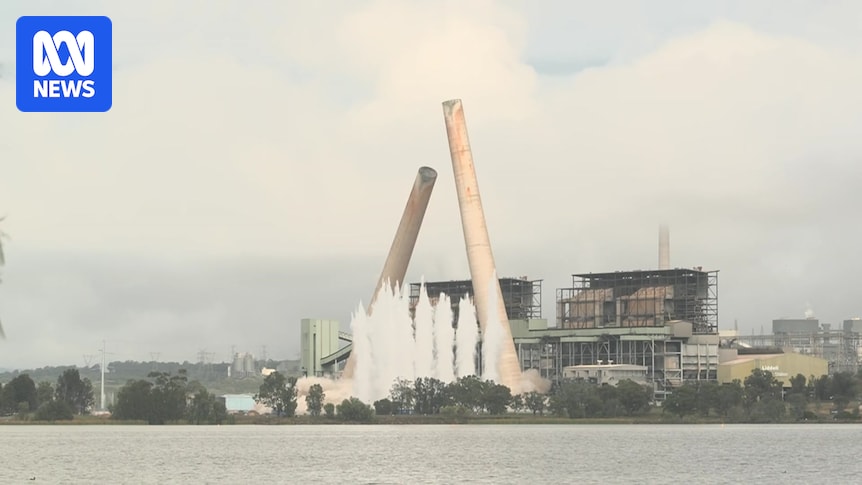
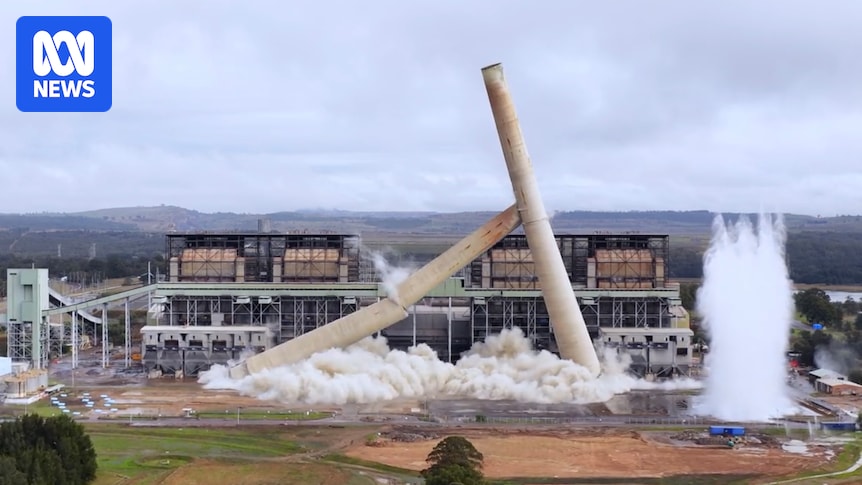
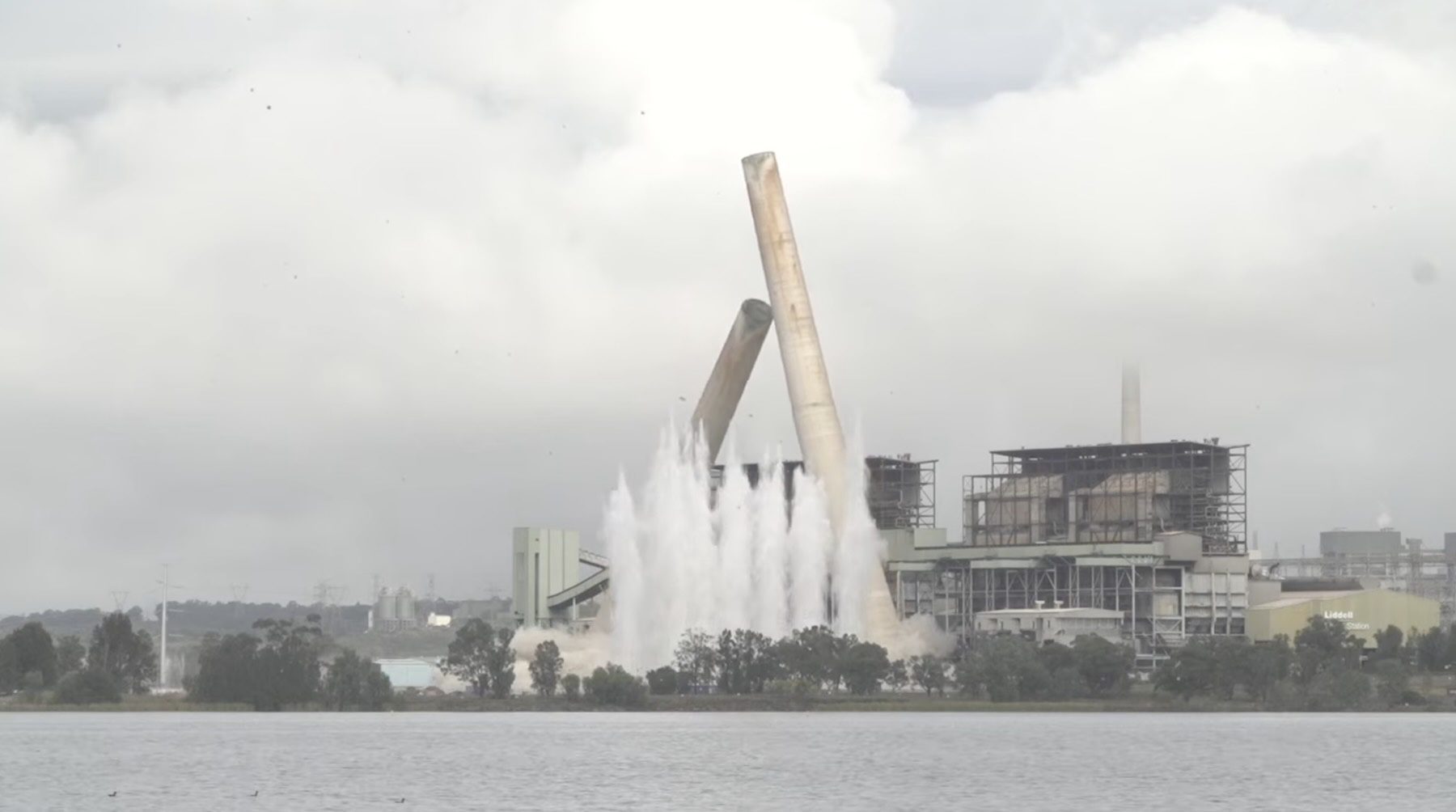
Then suddenly, across the water about 2 kilometres away, one of the 169 metre tall chimneys next to the now shuttered Liddell coal plant began to lean, and the ricochet of sound from 260 kg of explosives arrived a few second later.
After four seconds, the second tower began to lean and another volley of sound from another 260 kg of explosive arrived, followed by another volley of smaller explosives set under 38 large ponds of water that created a wall of water to help absorb the dust plume.
Then there was silence again.
“They’re gone,” whispered David Channon, standing next to his wife Margaret, whose father helped lay the concrete foundations of the chimneys more than 60 years ago, and whose son still works at the Bayswater power station on the other side of the New England Highway.