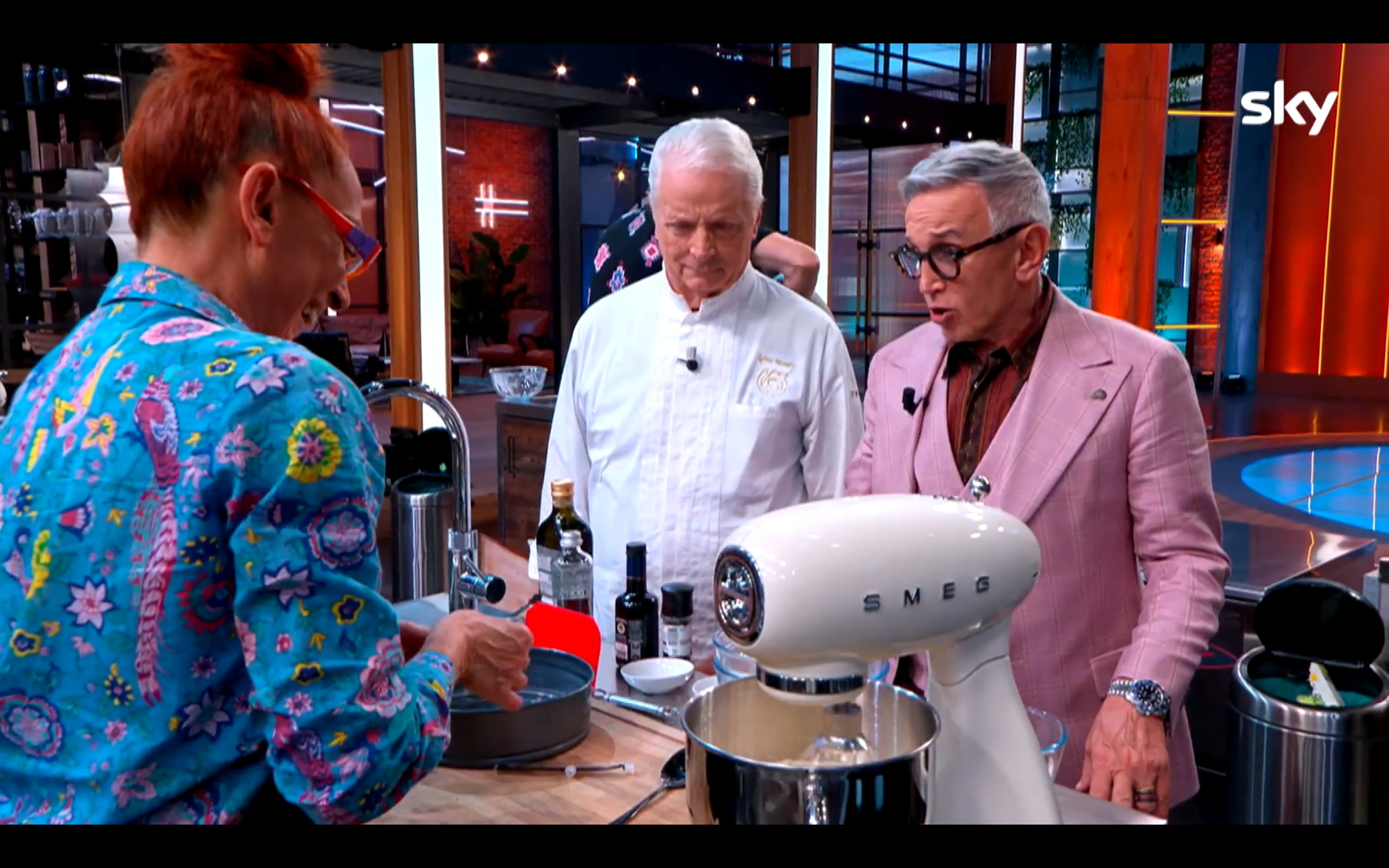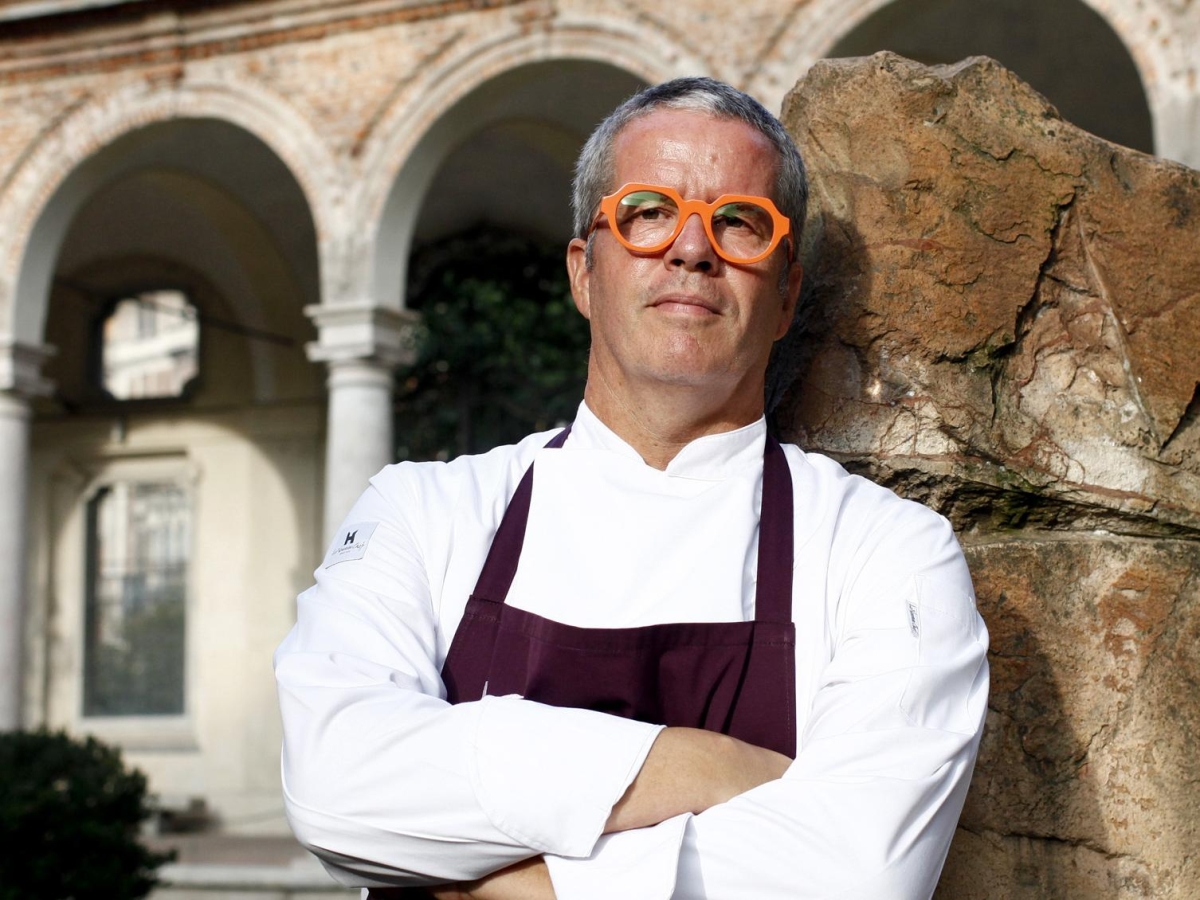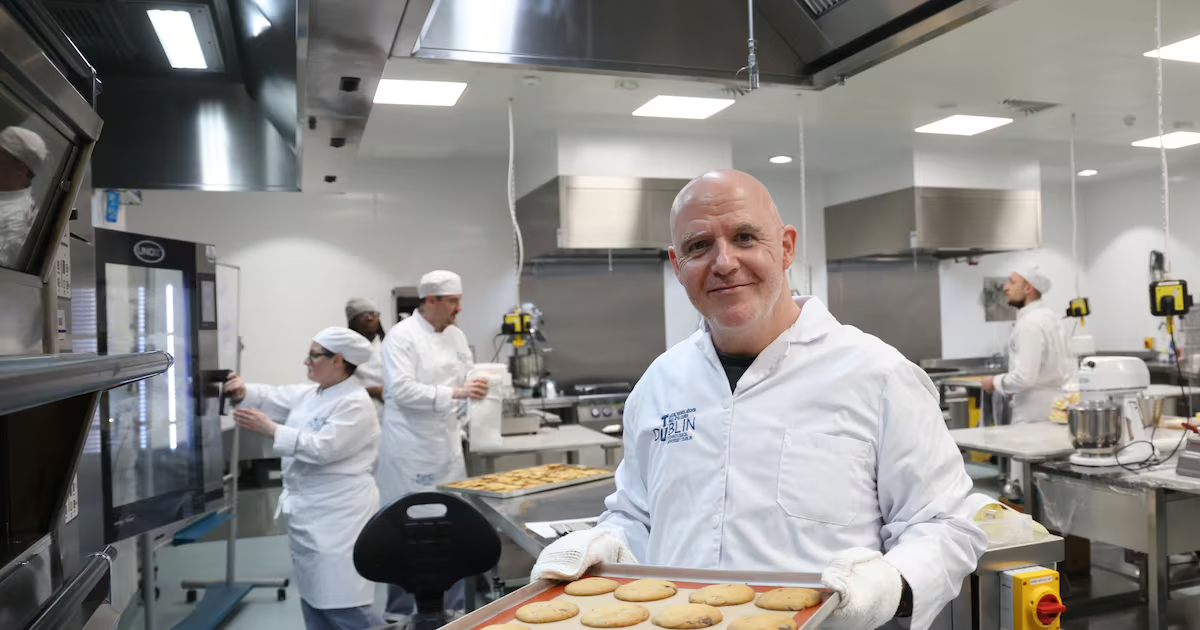
I like cooking and am not terrible, except when it comes to baking; my ineptitude in that sphere was exposed on national television during what I call “dessert storm” but others know as Celebrity MasterChef. I ended up on the programme, a long time ago, for reasons that are still beyond me, and made the mistake of telling the producers I was a bad baker. Once they knew my Achilles’ heel, they went for it and made sure I was on pastry stations and desserts on every single programme – because if there is one thing reality TV loves, it is somebody melting down when the Valrhona chocolate in their mousse does not. I did okay for a while – certainly better than even those closest to me predicted – and even reached the semi-final, where I pitched a prosecco and lavender poached pear served with a crème Anglais and home-made shortbread to Dylan McGrath as my menu option. It all went swimmingly until the end stages when I realised I‘d forgotten to add the pinch of lavender. I could have just carried on regardless but instead whacked in a massive bunch at the death to make up for its late arrival in the pot. It was all too much and I – effectively – ended up serving soap to my television guests. This is all by way of saying I hate baking, always have and always will. So, when I was invited into the TU Dublin School of Culinary Arts and Food Technology for a pastry masterclass with Paul Kelly of the Merrion Hotel, I of course said no. No, I did not say no. I say yes, big eejit that I am. [ I survived ‘Celebrity MasterChef’ but got my fingers burntOpens in new window ]And so I find myself in a basement kitchen, surrounded by students assiduously making biscotti and chocolate chip cookies under Kelly’s watchful gaze. The atmosphere is calm and far from the shoutiness you might expect in a typical restaurant kitchen, with the students ranging in age from their late teens to late 30s.Some have “a little bit of experience working in the industry and others have, basically no experience whatsoever,” Kelly says. “There’s the ones that have no idea, probably never boiled an egg – like myself when I started. And then there’s other people who just really enjoy [baking] and want to understand the more technical aspects.” Paul Kelly, executive pastry chef at the Merrion Hotel and lecturer at TU Dublin, shows Conor Pope the ropes. Photograph: Bryan O’Brien 'Reader, it’s not simple.' Photograph: Bryan O’Brien The pastry semester started with Kelly taking the students “on a journey”.“At the beginning, they get to know kitchen etiquette because it’s a hazardous place, with hot ovens, sharp knives, sharp edges. And if you don’t wear the right equipment, if you don’t have your safety shoes on, you can slip very quickly. So, from the beginning, we show them around the kitchen, introduce them to the equipment. I’m constantly watching people to see how they’re reacting with the ingredients, the machinery, how they’re holding themselves.” Given his role in Ireland’s fine-dining realm, why does Kelly bother with teaching – those who can, do; and those who can’t ... etc? “I really enjoy sharing my knowledge and watching students progress, but I’m learning too and revisiting all the old skills,” he says.The most important skill, at least when it comes to baking, is precision, according to Kelly. When cooking, you can – more often than not – correct mistakes by adding more of one thing or another thing. If you make a mistake making pastry, more often than not you have to bin it and start again. “I remember when I switched over to desserts as probably one of the hardest seasons in my career. I did three years in the hot kitchen and the chef in the Park [Hotel] in Kenmare said, do you want to come back and do pastry? I couldn’t understand how to make pastry. I couldn’t add chocolate, properly. I couldn’t even make scones. It was a tough transition to understand that, you know, the precision. But then it just kind of gelled. What I love about it is the creative side – it’s just incredible. You know, in the Merrion and here we’ve a great opportunity to be so creative – every day you’re creating.”Paul Kelly (left), Conor Pope (centre) and students at TU Dublin. Photograph: Bryan O’Brien Tanaka Muchegwa, who is in his early twenties, is in the process of creating chocolate chip cookies. He works steadily, and all the cookies he presses on to the baking parchment are uniform in size and shape. He’s working in the Carton House kitchen in Co Kildare alongside his studies but aspires to be a private chef sooner rather than later.I ask what a private chef does. “Well, I love football,” Muchewaga says, unexpectedly. “I think all the money is in football and all the top players have private chefs and they pay them like a lot of money.” And how does he get into this beautiful game? He has a plan. He’ll study in TU Dublin and work in Carton House – a place that is no stranger to high-performing sports teams. Once he has finished this course, he will study nutrition and create online content, hoping to catch the eye of football players. “I’m 22 years old and my aim is to be a private chef before I am 30. But first I want to make sure I’m really good at cooking, that I’ve mastered the skills.” Paul Kelly, Conor Pope and Tanaka Muchegwa. Photograph: Bryan O’Brien Meanwhile, Kelly explains the cookie basics and the mistakes a home baker might make. “They might make it too fast or might not chill the dough properly. They also might make mistakes weighing everything. If that is not done properly, you’re fighting a losing battle. And then you need to add your ingredients gradually and don’t overmix it; if you overmix the cookie dough it becomes very, very tough.”Stupidly, I tell Kelly I was on MasterChef and he exclaims with delight that my first task will thus be a doddle.This being the term before Easter, he and his students have made eggs and all I have to do is melt chocolate, pour it into a handmade piping bag and write Happy Easter on them. My heart sinks faster than a chocolate souffle in a draught. Kelly steers me to the microwave to melt the chocolate. “With small amounts, you can just whack it in, but you have to melt it slowly. A microwave heats from the centre out and you can be fooled very easily. It can look like it’s melting nicely on the outside but the centre could be burnt. So do everything nice and slow – 10 seconds, 10 seconds, 10 seconds.” White chocolate liquefied, I pour a small amount into a tiny piping bag Kelly has crafted out of parchment paper. “It’s very simple, left over right and under; that’s it,” he says, making another one. 'And this guy claims he was on MasterChef?' Photograph: Bryan O’Brien Reader, it’s not simple. “This is like our pencil, this is our pastry chef’s pencil,” Kelly says after he has made another 10 bags in less than a minute.He pipes a beautiful Happy Easter on an egg with the calligraphic skills of a fifth century Irish monk illuminating a manuscript. Then, it’s my turn. I write Happy Easter like a four-year-old using their non-dominant hand. Kelly and his team watch on with sadness and sympathy in their eyes. I can almost hear them think: “And this guy claims he was on MasterChef?”We move on to twice-baked biscotti and then small discs of chocolate with TU Dublin stamped on them and painted in edible gold paint. It is all far more stressful than it sounds, so I do the right thing and leave the pastry chefs to chat to Jimmy Griffin, a sixth-generation baker from Galway – many will recall his family’s bakery, which opened its doors in 1876. Master baker James Griffin. Photograph: Bryan O’Brien The bakery is closed now, and Griffin is the last in the line. Not only is he a baker, incidentally, he also has a black belt in Judo – handy for kneading dough, I wonder? On top of that, he’s a pilot instructor and has written eight books. And he loves teaching in TU Dublin (and its predecessor, Dublin Institute of Technology), having done so for 14 years. “We start off doing basics like soda bread and non-enriched bread,” he says. “Things like pan white and brown, cobs, stuff like that.” After that, they move on to enriched breads that have eggs, sugar and butter.Hearing the words egg, sugar and butter, I ask, when does a bread become a cake? He looks at me like I am the most stupid individual to ever enter the world of baking. “It doesn’t. They are completely different things.”Once they have completed those two modules, his students will learn how to make seeded breads and more. [ Fresh bread from the oven: childhood memories and the aroma of bakingOpens in new window ]In the corridor, I bump into Máirtín Mac Con Iomaire, a food historian, TV chef and a lecturer in here for more than a quarter of a century.He says he met his tribe when he went to the Oxford Symposium on Food and Cookery, one of the longest-established gatherings of food historians, chefs, food writers and food enthusiasts, in 2000. “I got really interested in food history after that, he says.Chef and food historian Máirtín Mac Con Iomaire, a senior lecturer at TU Dublin's School of Culinary Arts and Food Technology. Photograph: Bryan O’Brien He documented the history of Irish cooking in the 20th century for his PhD and is full of stories of Dublin in the rare auld times.He recalls how one chef, Bill Ryan, got a job in the Gresham hotel in the 1950s after years working on the world’s swankiest ocean liners. Not long after he started in the Dublin hotel he was putting the hors d’oeuvres trolley together.“He sent it out, or tried to, but the waiter wouldn’t take it. He was concerned one of the dishes being sent out was just plain raw cabbage. Ryan said it was called coleslaw so the waiter took it out and 10 minutes later, he was back asking for the name again and if there was any more because the diners were loving it.”Not only has Mac Con Iomaire devoted much of his life to food anecdotes, he also thinks a lot about how we should teach others about food.“There used to be this idea of filling an empty head – the master-apprentice model – but here we felt we were on a journey with our students.” At the turn of the century, he brought in the big-name chefs in Dublin, Ross Lewis, Kevin Thornton, Derry Clarke and others. “We did a workshop with them and explained we needed them to be mentors and said if they invested time in [the students], they would be repaid [and] the industry would improve.”It worked. The school also sent, and continues to send, its best and brightest to some of the best restaurants in the world. “When they came back, they realised the raw materials we have in Ireland are better. This generation is not saddled with postcolonial shame and they don’t believe that everything outside of Ireland is better just because it’s outside of Ireland.” Amen to that, although even after this TU Dublin masterclass, I am confident that the baking you’ll find abroad will most definitely be better than anything produced by my hands.
Conor Pope bakes with the professionals at TU Dublin: ‘My heart sinks faster than a chocolate souffle in a draught’
Taking a university-level pastry masterclass was as difficult as our baking-averse correspondent expected it to be
TL;DRAI
Conor Pope attended a pastry masterclass at TU Dublin's School of Culinary Arts with Merrion Hotel executive pastry chef Paul Kelly, alongside students ranging from their late teens to late 30s. Kelly's core lesson: unlike cooking — where errors can be corrected on the fly — baking tolerates no mid-process adjustment, making precision in measurement and technique non-negotiable from the first step.
1,964 words~9 min read