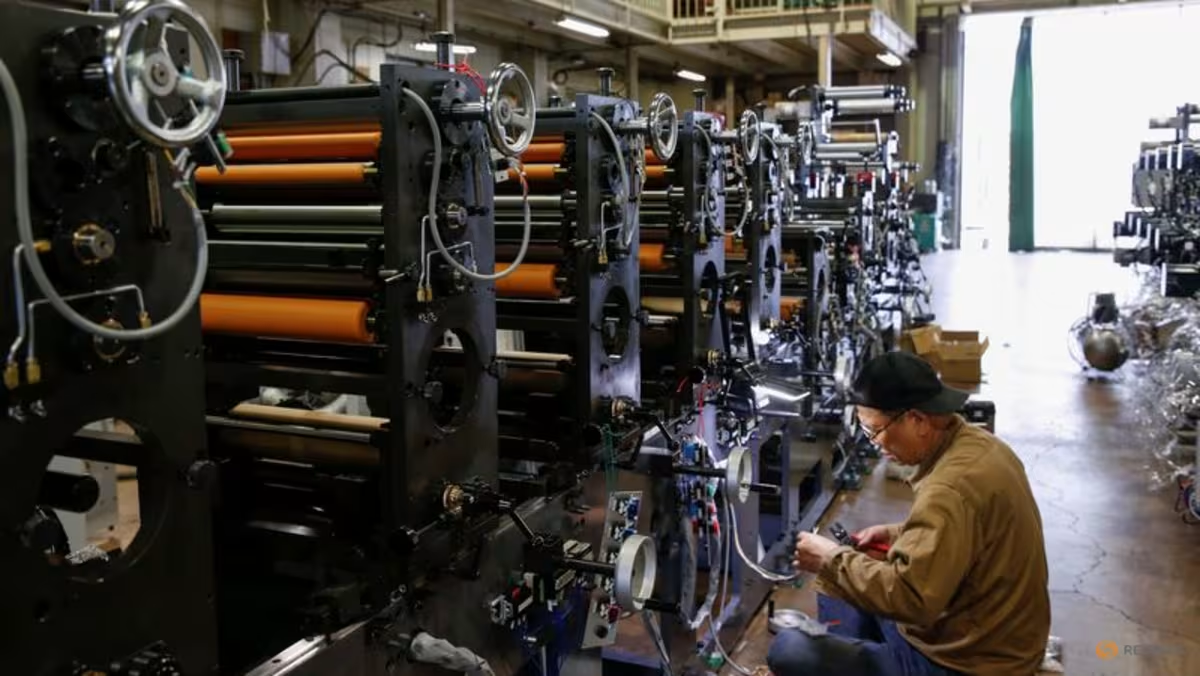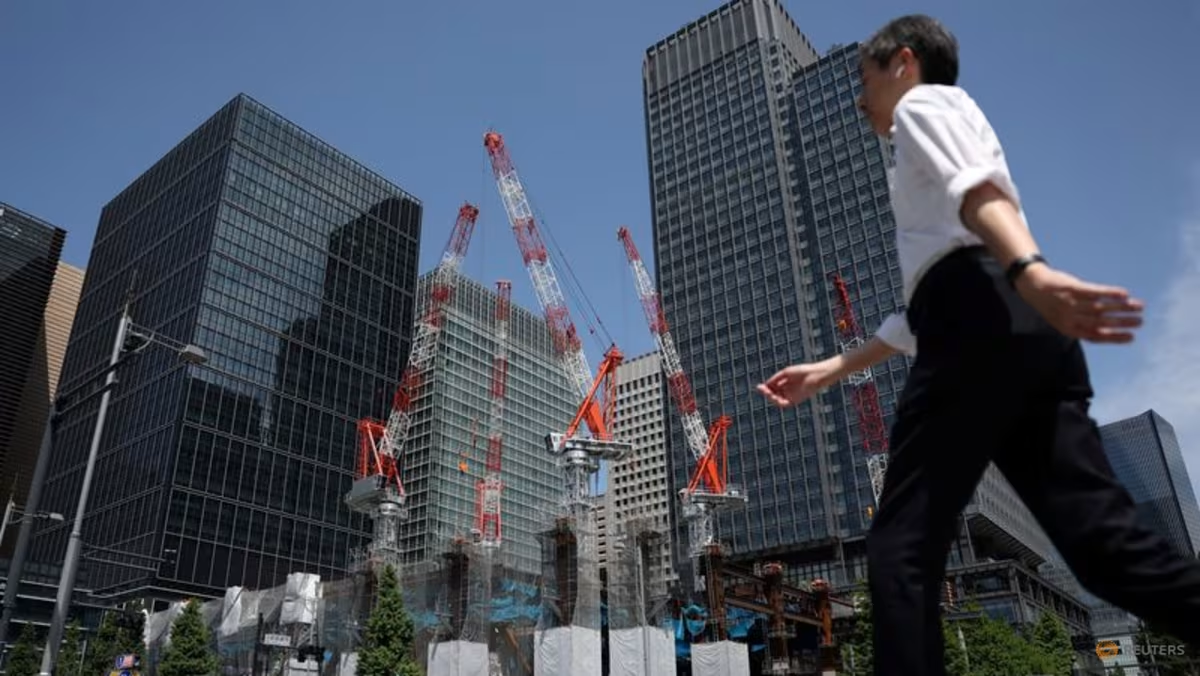
TOKYO, June 1 : Japanese companies' pace of annual spending on plant and equipment stalled in the first quarter after a year of strong expansion, likely prompting a downgrade to economic growth as concerns mount over the impact of the Middle East conflict.The Iran war has upended the global economic outlook, leaving oil-import-dependent Japan heavily exposed to the energy shock rippling across businesses and consumers. "Results were weaker than expected, reflecting a pullback from earlier strength," Meiji Yasuda Research Institute economist Kazutaka Maeda said."But given steady demand for labour-saving investments and similar areas, capital expenditures are unlikely to deteriorate sharply from here," he added, though this would depend on "developments in the Middle East."
First-quarter capital spending rose 0.047 per cent year-on-year, slowing down from the previous quarter's 6.5 per cent gain, according to Ministry of Finance data. It fell 2 per cent on a seasonally adjusted quarterly basis.The latest figures on business investment, which will be used to calculate revised gross domestic product data due on June 8, followed four consecutive quarters of robust growth.Maeda said the capex numbers suggest first-quarter GDP data might be revised down from the preliminary estimate last month showing a faster-than-expected annualised expansion of 2.1 per cent, driven by solid exports and consumption.Spending by manufacturers fell 0.4 per cent year on year, capping overall growth as the information and communications equipment and automotive sectors scaled back after last year's capacity expansion drive.Corporate sales meanwhile rose an annual 1.1 per cent, and recurring profits increased 14.6 per cent.PM TAKAICHI'S POLICY PUSHCapital expenditure, which hit a fresh quarterly record at 18.8 trillion yen ($117.89 billion) despite the slowdown, is one of the key gauges of domestic demand-led economic growth.Business spending stayed firm in recent years, driven by corporate appetite for investment to offset a chronic labour crunch in the fast-ageing population.Japan's exit from deflation is also driving a shift in corporate behaviour, with companies finally deploying the large cash reserves they had long hoarded into business expansion and investment.Prime Minister Sanae Takaichi's government is seeking to speed up the transition by offering tax credits for capital investment and committing increased public spending to strategic sectors, including semiconductors and shipbuilding.It is also revising the corporate governance code, urging companies to evaluate whether cash reserves are being productively deployed toward investment and growth instead of remaining idle on balance sheets.Japan aims to double annual corporate capital expenditure to 200 trillion yen by 2040.In the near term, however, monetary policy adjustments and Middle East tensions are likely to keep domestic capital investment growth subdued, Mizuho Securities said in a recent report.($1 = 159.4700 yen)