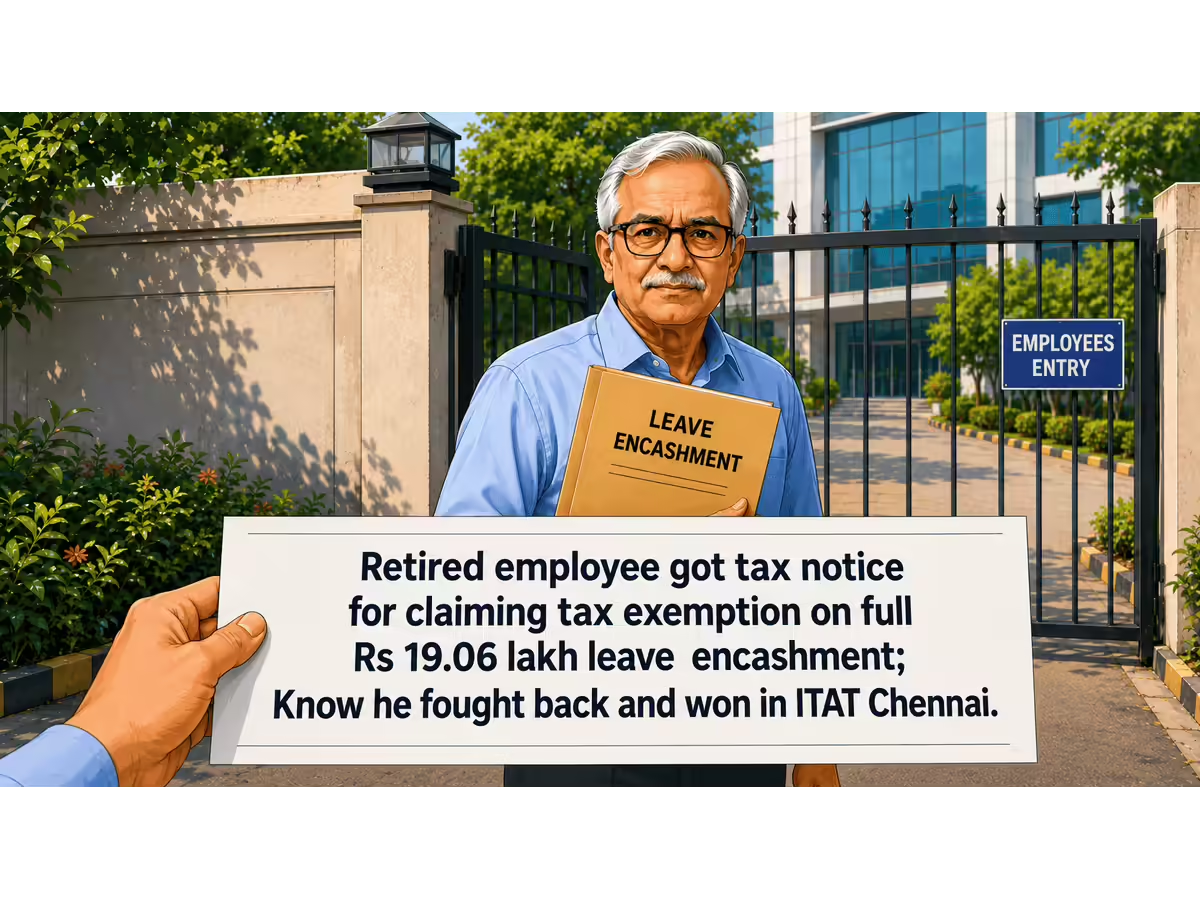
SynopsisSalaried employees can claim tax exemption on leave encashment at retirement. While government employees enjoy full exemption, private sector employees have a limit of Rs 25 lakh, subject to specific calculations based on earned leave and salary. This income is reported under 'Income from Salary' in the ITR.ET OnlineAY 2026-27 ITR filing: Tax exemption on leave encashment explained for private and govt employees (AI generated representative image)Leave encashment that you get while still working is generally taxed as salary for both government and non-government employees. But if you receive leave encashment at the time of retirement, then the tax rules change a bit. For non-government employees, like those in the private sector or public sector undertakings (PSUs) there's a limit on the tax exemption based on the Income Tax Act, and any amount over that limit will be taxed. On the other hand, Central and State Government employees enjoy a full tax exemption on the entire leave encashment amount that they receive upon retirement, thanks to Section 10(10AA)(i). Moreover, some employers allow their staff to take leave before it is actually earned, like in an emergency, medical issue, or any other situation. Just keep in mind that if you have taken more leave than you've earned, you won't have any earned leave left to encash. In this situation, the leave encashment amount won't be treated as a tax exempt benefit and the whole amount would be taxed as salary income.For example: Earned leave available: 20 daysLeave taken: 30 daysBalance: negative 10 daysChartered Accountant Suresh Surana told ET Wealth Online that in case of any other employee, the amount paid by his employer at the time of his retirement, whether on superannuation or otherwise, in respect of earned leave to his credit, is tax exempt as per Section 10(10AA). Surana mentions that the tax exemption amount is the smallest of the followinga.[Earned Leave - leave availed] x Average monthly salary It must be noted that if leave availed is more than earned leave then the entire amount of Leave Encashment becomes taxable), orb. 10 months' salary, orc. Notified amount which is Rs 25 lakhd. Leave salary actually receivedSurana says that earned Leave can't exceed 30 days for each completed year of service. This means for the limited purpose of leave encashment calculation, the earned leave can't exceed 30 days but you may take more leaves if needed.Also for the purpose of leave encashment, salary means average of last 10 months' salary and it includes basic salary, dearness allowance and commission based on fixed percentage of turnover secured by the employee.How to report leave encashment income in ITRSurana says that leave encashment received on retirement is required to be reported under the head "Income from Salary" under Schedule S in the Income Tax Return (ITR). Surana says that the tax exempt portion eligible under Section 10(10AA) should be separately disclosed in the Exempt Income ("Allowances to the extent exempt under Section 10), while the balance amount, if any, is taxable as salary income.For non-government employees, exemption is available under Section 10(10AA)(ii), subject to prescribed conditions and monetary limits. Following the CBDT Notification No. 31/2023 dated 24 May 2023, the exemption limit for non-government employees has been increased from Rs 3 lakh to Rs 25 lakh.Accordingly, you must ensure that the leave encashment details reported in the ITR are consistent with Form 16 and that the exemption is correctly claimed under Section 10(10AA). ...more
Leave encashment tax rules for AY 2026-27: How much exemption salaried employees can claim - The Economic Times
How much tax exemption for leave encashment can employees claim in ITR for AY 2026-2027
571 words~3 min read