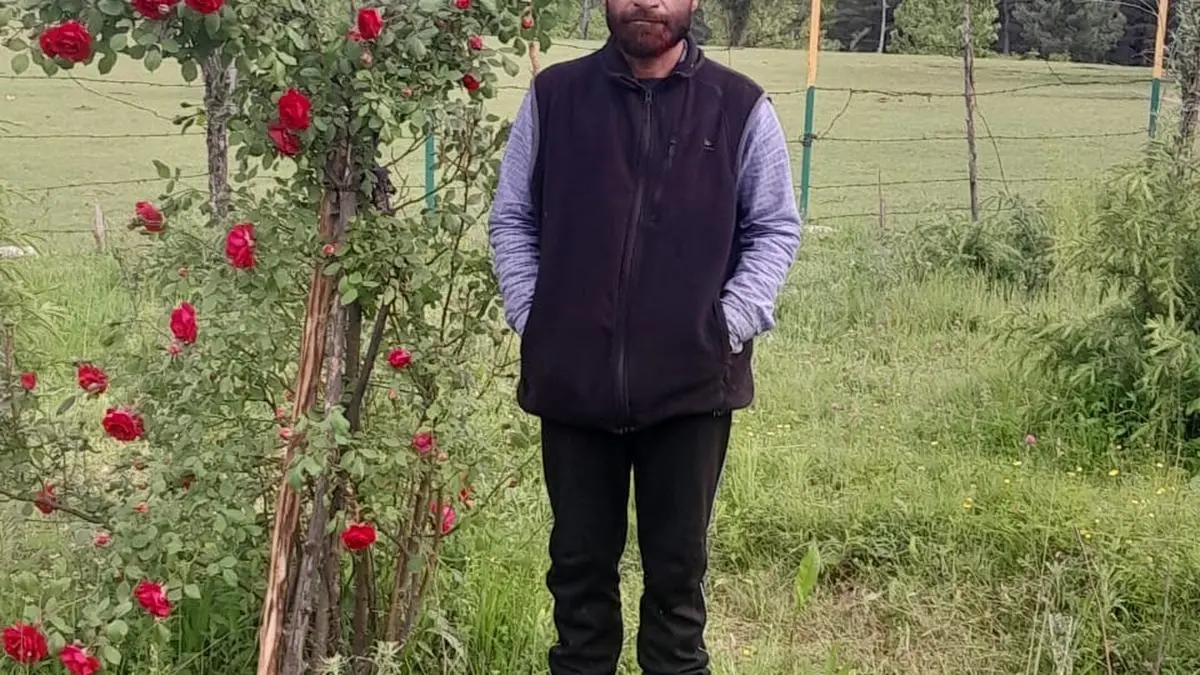
When recently planted a batch of Chinar saplings on a temple premises in north Kashmir’s Lalpora village, he crossed a remarkable milestone — 1,500 Chinar trees planted.The 42-year-old resident of Nagri Malpora in the frontier district of Kupwara begins his day early, tending to and watering the Chinar saplings he has planted over the years across villages in the district. Driven by a passion to preserve Kashmir’s iconic tree, Khan has turned a personal mission into a grassroots conservation effort.“The number of Chinar trees in the Valley are on decline. I wanted to plant as many trees as I can in my life,” said Khan, who crossed the 1,500 mark after planting four saplings on the temple premises.Locally known as Bouyn, the number of maple trees in Kashmir has witnessed a significant decline over the decades. From an estimated 42,000 in the 1970s, their count is now believed to be between 32,000 and 33,000. Experts attribute the decline to factors such as urban expansion, unauthorised felling and changing climatic conditions.To strengthen conservation efforts, the Jammu and Kashmir Forest Department, in collaboration with the J&K Forest Research Institute (JKFRI), launched a unique initiative in 2021 to digitally register heritage Chinar trees across the region. Under the programme, thousands of Chinars have been assigned unique identification numbers, enabling authorities to monitor, document and protect these iconic trees, whose population has steadily declined over the years.Solo sojournFor Khan, the mission to save Chinar trees is deeply personal. Unmarried and living a modest life as a labourer, he says the trees have become his family. A significant portion of his measly earnings goes into purchasing saplings and ensuring their survival.“I did not marry. These Chinar trees are my family and my legacy,” Khan said. “Whatever I earn through labour, I spend a part of it on planting and caring for these trees. Seeing a sapling grow into a tree gives me immense satisfaction.”Khan said he often travels long distances to plant Chinars in schools, temples and public spaces. Despite limited financial means, he remains committed to expanding the green cover and inspiring others to take up conservation efforts.“My dream is to leave behind 50,000 Chinar trees for future generations”, he said. “A little financial help from the government could make things easier for me,” Khan added. Published on May 31, 2026
As Chinars decline, one Kashmiri’s green crusade gains ground
Kashmiri Abdul Ahad Khan plants 1,500 Chinar saplings, championing grassroots conservation to combat the tree's declining population.
387 words~2 min read