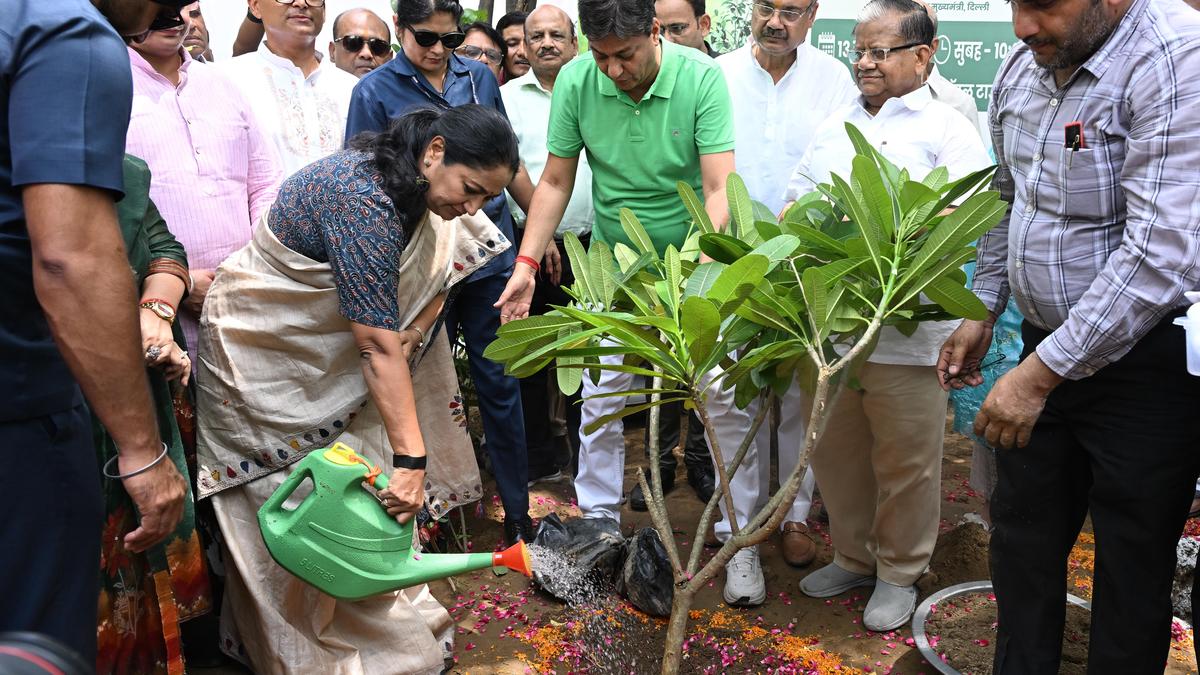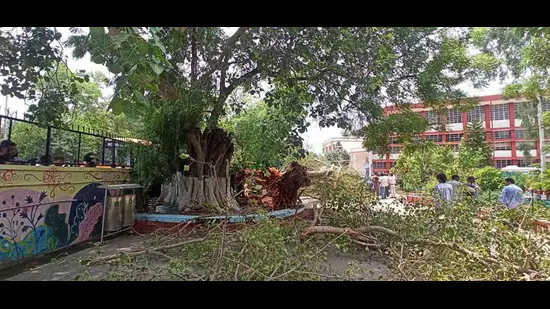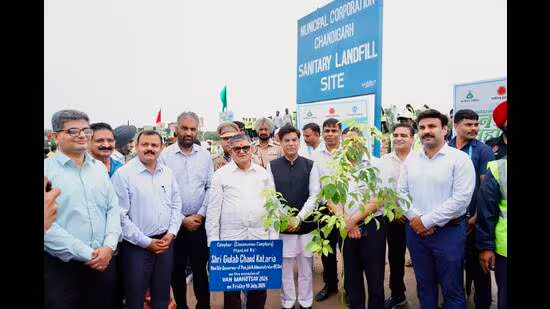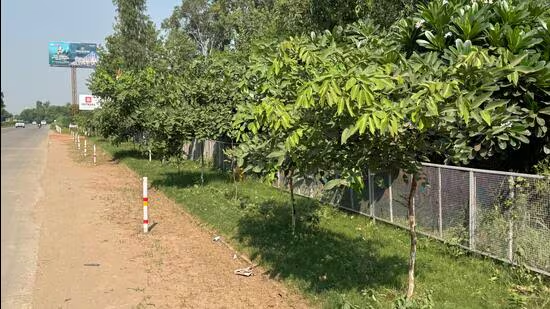
The municipal corporation (MC), the single largest contributor to Chandigarh’s plantation drive, is also among its weakest performers in keeping saplings alive.The Chandigarh administration’s Comprehensive Plantation Plan 2026–27 places clear emphasis on quality over quantity, prioritising tall, healthy saplings and scientific planning over mass plantation numbers. (Getty Images)Data from the Green Chandigarh Action Plan (GCAP) 2026-27 shows that the MC planted over 1.5 lakh saplings — the highest among all departments — but recorded only 70% survival by March 2026, meaning 30% – which accounts for tens of thousands of trees – failed to survive within months of being planted.The numbers also reveal a worrying pattern. The city’s overall plantation survival rate fell from 85% in November 2025 to 79% in March 2026, indicating that the city lost a significant share of its saplings in just one season. In absolute terms, of the 4.91 lakh saplings planted, only 3.76 lakh survived, underscoring a gap between plantation targets and actual ecological outcomes.Large agencies pulling down averageThe decline is not uniform across departments. Large agencies responsible for bulk plantation appear to be pulling down the average. The engineering department, which planted 1.5 lakh saplings, also recorded a 70% survival rate, mirroring the MC’s performance. Together, these two departments account for the majority of plantations in the city.Smaller, controlled spaces show better outcomesIn contrast, institutions and specialised agencies managing smaller, more controlled spaces show significantly better outcomes. The forest department, across both its Chandigarh and Nepli ranges, reported around 90% survival, while institutions such as Central Scientific Instruments Organisation, Postgraduate Institute of Medical Education and Research and the department of higher education consistently recorded survival rates above 90%. The difference points to a clear divide: areas with tighter monitoring and defined responsibility tend to sustain plantations far more effectively than large, dispersed public spaces.MC is tasked with planting along roadsides, open lands and public areas where saplings are exposed to heat, water stress, damage and neglect. Without sustained maintenance, watering cycles and protection, a significant portion of these plantations fail to take root. By contrast, institutional campuses offer controlled environments where follow-up care is built into the system.Plantation drive a one-time exercise?At the lower end, some departments reported particularly poor outcomes. The Central Poultry Development Organisation recorded just 41% survival, while Government Medical College and Hospital, Sector 32, and Chandigarh Police reported 50% and 63% survival respectively, reinforcing concerns that plantation drives are often treated as one-time exercises rather than long-term commitments.Focus on post-plantation careOfficials say the decline highlights persistent challenges in post-plantation care, even as it has accelerated a shift towards a survival-based approach rather than target-driven plantation campaigns. In response, the UT administration’s Comprehensive Plantation Plan 2026–27 places clear emphasis on quality over quantity, prioritising tall, healthy saplings and scientific planning over mass plantation numbers. UT has scaled back its plantation target to 4 lakh saplings in 2026-27, down from 6.6 lakh in 2025-26.“The next phase of Chandigarh’s plantation strategy is about closing the 20% survival gap. This will require a shift from plantation drives to protection measures, ensuring every sapling is secured through tree guards, fencing, and regular maintenance, and protected from threats like grazing and environmental stress. Unless plantations are followed by sustained care, survival rates will continue to plateau below their potential,” said an official, on condition of anonymity.
MC topped Chandigarh in tree plantations but one in 3 saplings didn’t survive
Chandigarh MC is tasked with planting along roadsides, open lands and public areas where saplings are exposed to heat, water stress, damage and neglect. Without sustained maintenance, watering cycles and protection, a significant portion of these plantations fail to take root. By contrast, institutional campuses offer controlled environments where follow-up care is built into the system.
551 words~3 min read