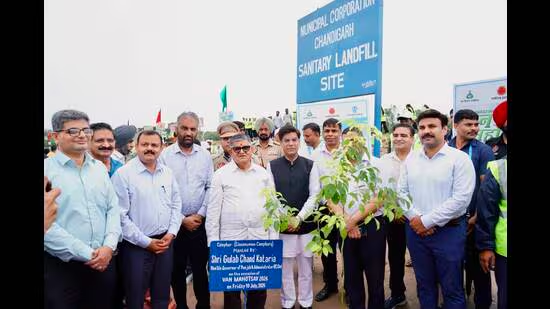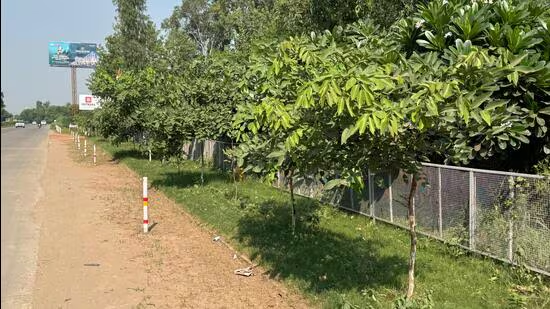
The UT administration has decided to prioritise quality over quantity in its plantation drive for 2026–27, setting a lower but more focused target of over 4.19 lakh saplings, UT administrator Gulab Chand Kataria said while reviewing preparedness on Thursday.Officials informed that against a target of 5.76 lakh saplings under the Greening Chandigarh Action Plan 2025–26, the administration planted 6.64 lakh saplings across the city. (HT File)Chairing a high-level meeting, Kataria assessed the performance of last year’s plantation drive and directed departments to ensure better survival rates through improved planning, site selection and post-plantation care.Higher plantation, moderate survival last yearOfficials informed that against a target of 5.76 lakh saplings under the Greening Chandigarh Action Plan 2025–26, the administration planted 6.64 lakh saplings across the city.However, third-party monitoring conducted twice—in November 2025 and March 2026—recorded an overall survival rate of around 79%, indicating scope for improvement in maintenance and monitoring.2026–27 plan: Focus on quality, not numbersFor the upcoming plantation season, the administration has set a target of 4,19,854 saplings, including distribution and sale of plants.Officials said the emphasis will be on using high-quality planting material, improved plantation techniques and better post-plantation care and monitoring. Training programmes on plantation and maintenance have already been conducted at the Botanical Garden in Sarangpur to enhance capacity across departments. The plantation drive is scheduled to begin during Van Mahotsav in the upcoming monsoon season.Dadumajra landfill to see targeted greeningThe administrator also reviewed the plantation plan for the Dadumajra site, where around 10,000 saplings will be planted in consultation with the forest department.Species like bamboo, bougainvillea, camphor, neem and other native and adaptive varieties will be used, keeping site-specific ecological conditions in view.Stressing long-term sustainability, the administrator directed departments to ensure protection of saplings through tree guards and fencing, reuse old tree guards where trees are already established and fill gaps in avenue plantations across the city.He also instructed engineering wings to develop vegetative cover, preferably grass, along roads and vacant spaces to improve soil stability, reduce pollution and enhance the city’s aesthetic appeal.
Chandigarh: UT sets lower plantation target, shifts focus to quality and survival in 2026–27
Chairing a high-level meeting, governor Kataria assessed the performance of last year’s plantation drive and directed departments to ensure better survival rates through improved planning, site selection and post-plantation care
337 words~2 min read