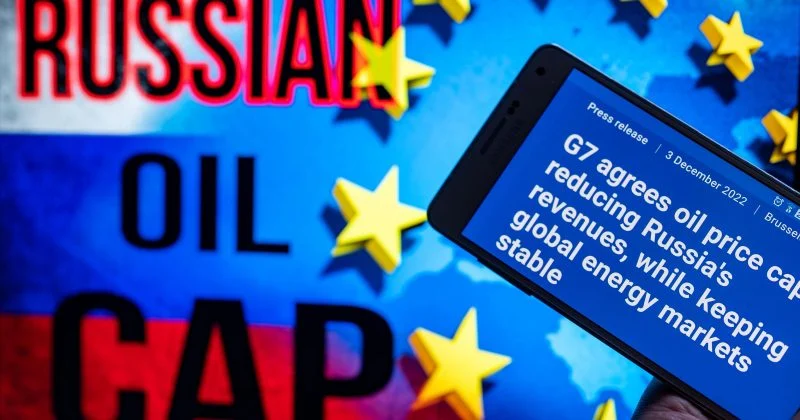
The European Union is exploring emergency interventions to its maritime trade restrictions, moving to temporarily freeze the price cap on Russian crude oil to prevent global energy market disruptions from handing an unintended financial windfall to the Kremlin, Bloomberg reported. The Middle East energy crisis triggers an automatic loophole Last year, the EU established a dynamic, automatic mechanism designed to continuously squeeze Russian oil revenues. The rule mandates that every six months, the price cap must be recalculated and legally set exactly 15% below the prevailing average market price of Russia’s benchmark Urals crude.JOIN US ON TELEGRAMFollow our coverage of the war on the @Kyivpost_official. The current price ceiling is fixed at $44.10 per barrel, with the next formal adjustment scheduled for late summer. Under this restriction, European maritime firms are legally barred from providing vital logistics, shipping, or insurance services for any vessel carrying Russian oil sold above the threshold. However, the war in Iran and the physical closure of the strategic Strait of Hormuz have induced severe instability across global energy networks, causing international crude prices to skyrocket. Because the market price of Russian oil has climbed alongside global trends, the EU’s automatic formula is poised to trigger an unintended consequence. Diplomatic sources speaking on the condition of anonymity revealed that during the next scheduled recalculation in July, the formula would force the EU price cap to rise sharply to at least $65 per barrel.
Sanctions Stall: EU Weighs Freezing Oil Price Cap to Keep Pressure on Russian Urals
The EU is considering a temporary freeze on its dynamic price cap for Russian Urals crude to prevent an automatic price ceiling increase driven by skyrocketing global energy costs.
802 words~4 min read