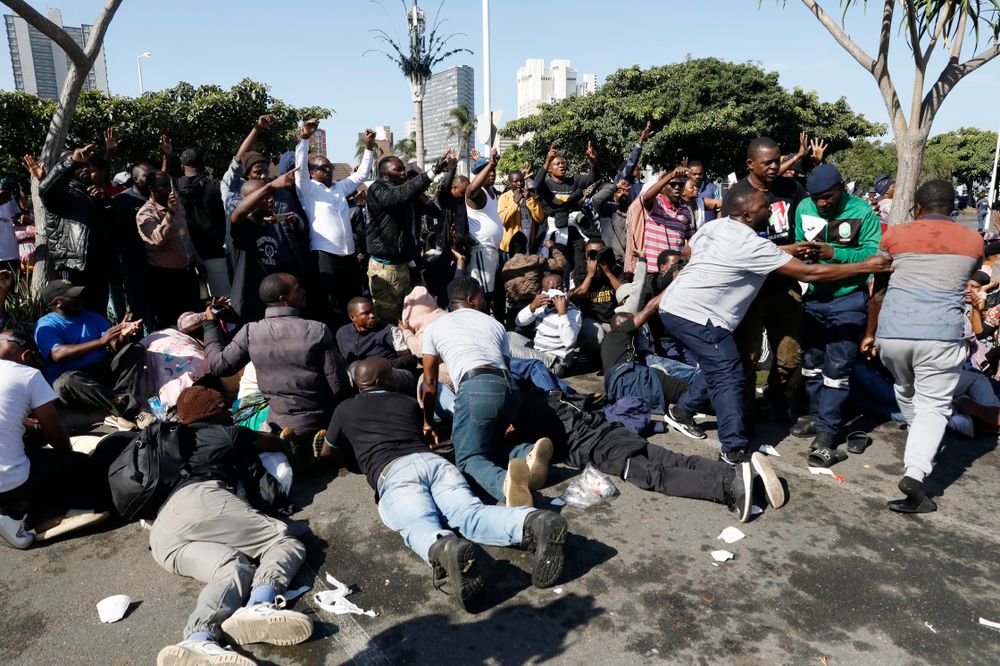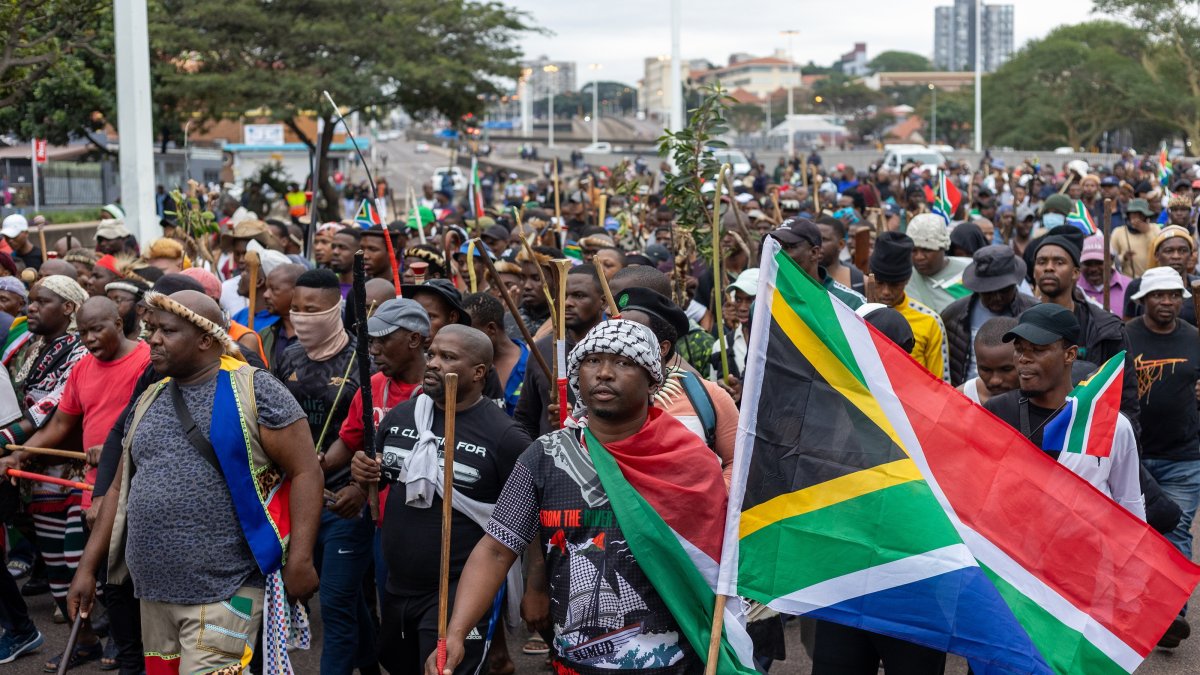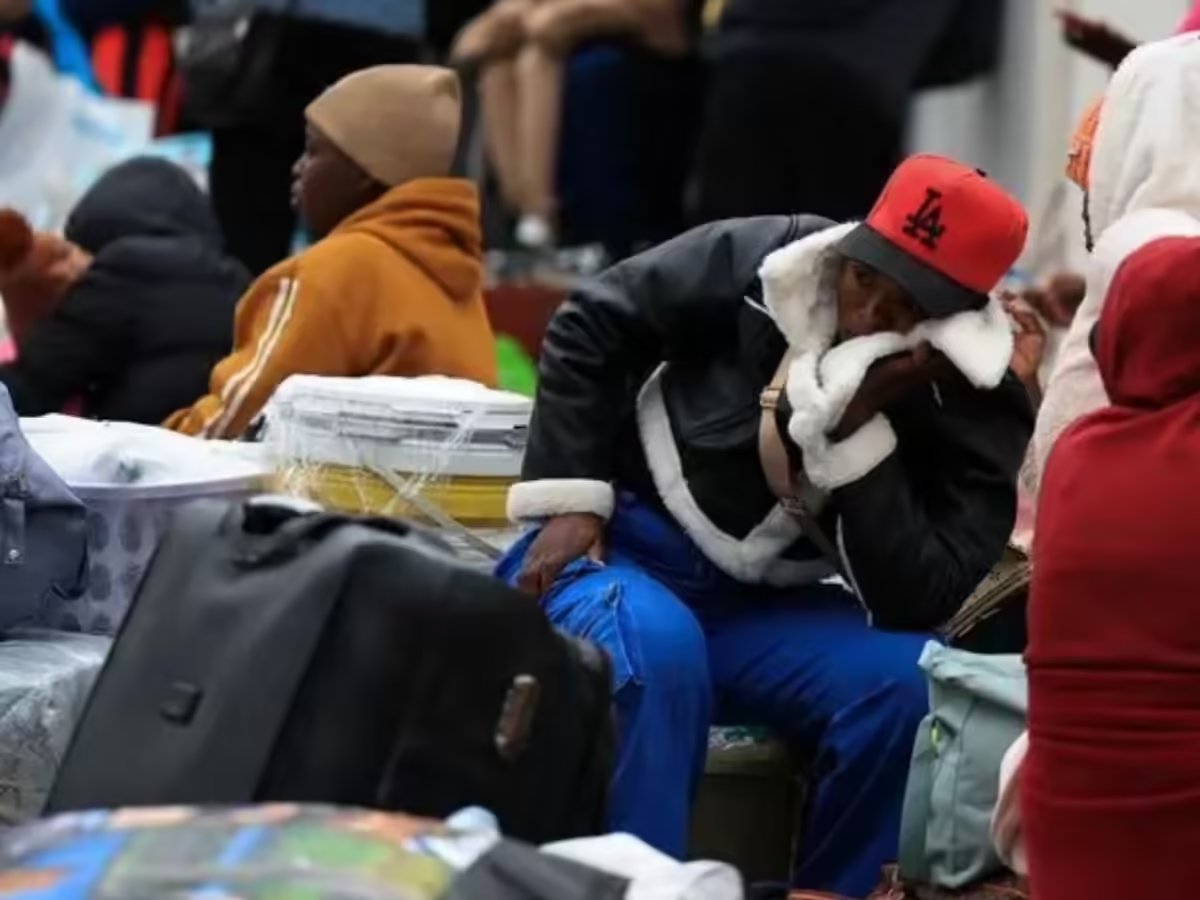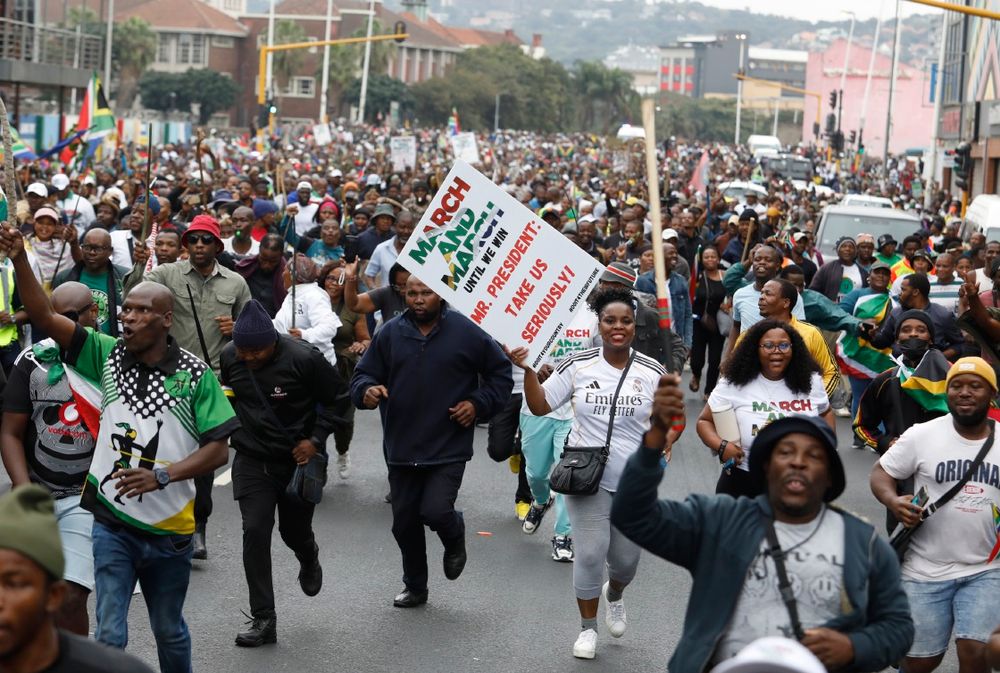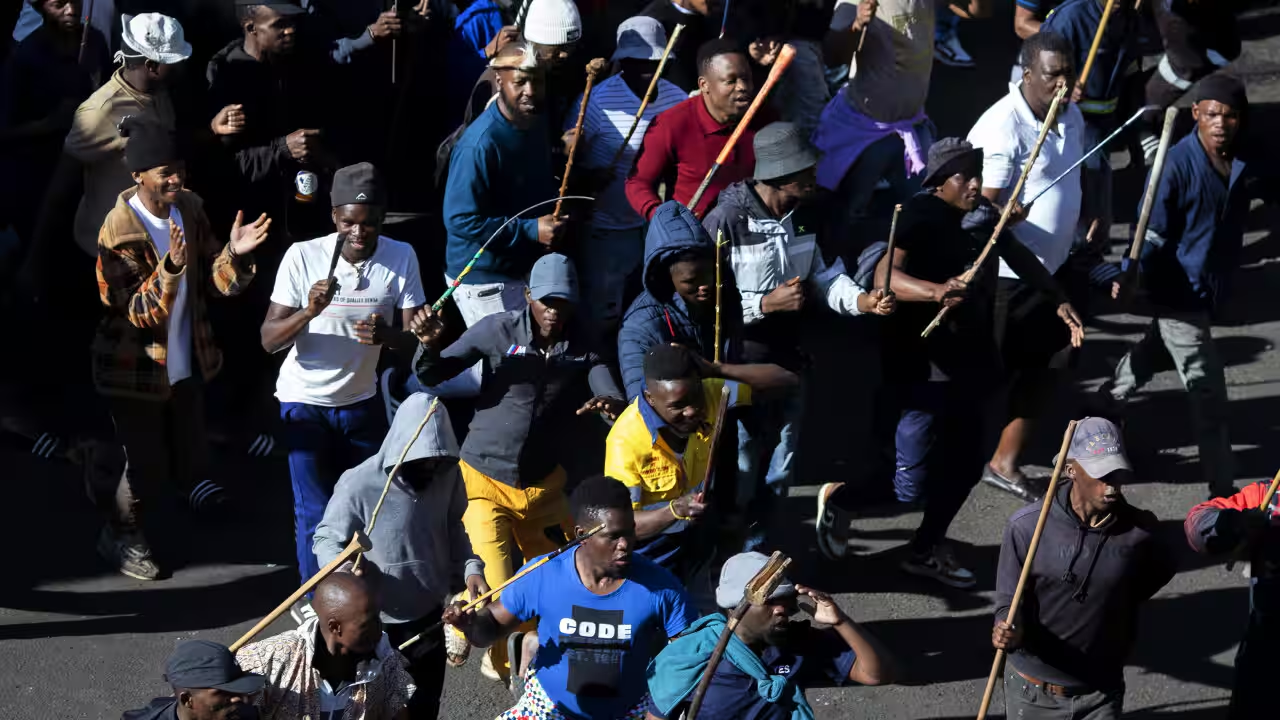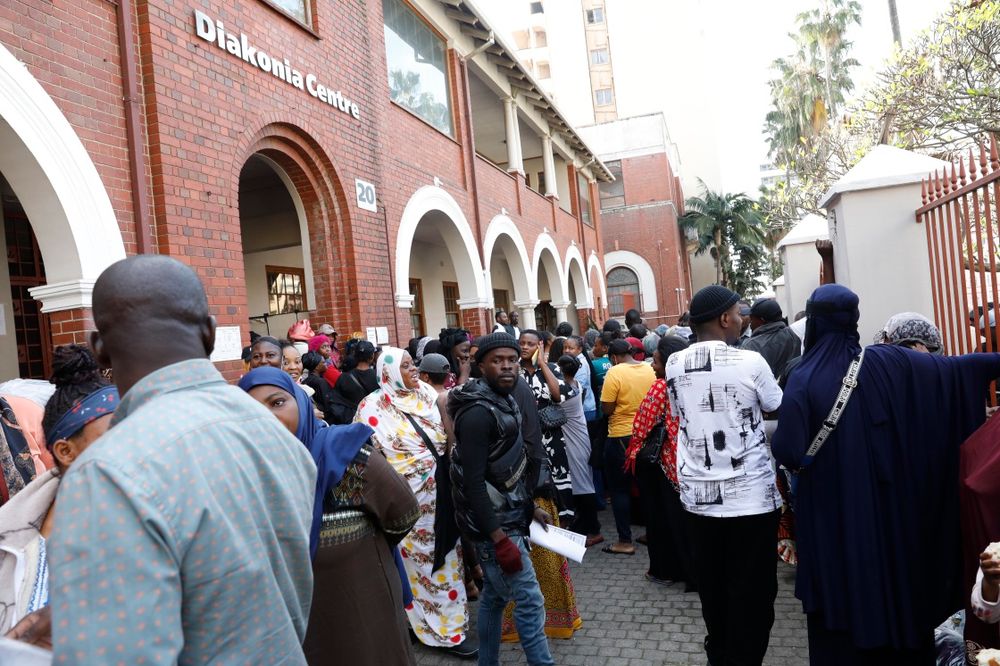
Foreign nationals fearing attacks by the March and March movement sought refuge in Durban's Diakonia Centre on May 21. While it is true that the South African government is to blame for its silence, the home governments of these foreign nationals are equally to blame, says the writer.
Prof. Bheki Mngomezulu
The ongoing protests across the country regarding undocumented or illegal immigrants have raised serious concerns about governance, both in South Africa as a host country and in their home countries. At the centre of these questions is the role played by these governments, or lack thereof.
Concerns about undocumented foreign nationals, especially those coming from other African countries, have been on the South African agenda for some time now. This was the case in 2008 and again in 2015. Each time this issue subsides, the government works on the wrong assumption that it has died a natural death. Before we know it, the issue resurfaces and becomes even more serious than before.
Historically, resentment against foreign nationals is not a new phenomenon. Equally important is that this anger has the same causal factors, which include, inter alia, high unemployment, high crime rate, and lack of service delivery. Whenever these things happen, citizens of the host country blame the situation on foreign nationals, with the undocumented ones receiving more attention.