May 30, 2026 | 06:01 pm
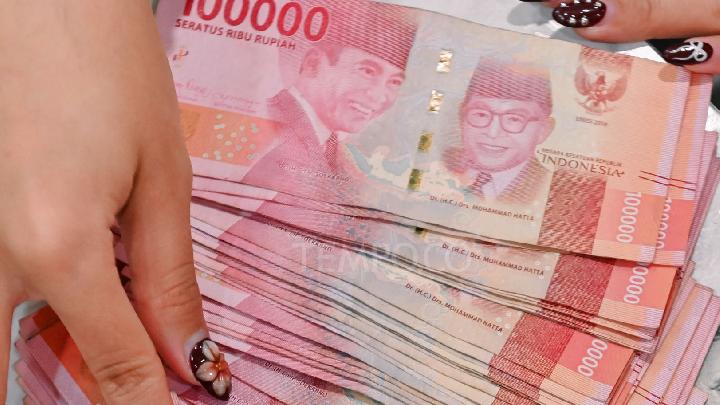
TEMPO.CO, Jakarta - The Indonesian rupiah exchange rate slides past 17,880 in Friday's trading, marking a decline compared to the previous week. As the rupiah continues to fall, several banks are selling the currency for over Rp18,000 per US dollar. Bank Indonesia's exchange rate data on Friday show the central bank set the selling price of US$1 at Rp17,877.94. But a number of international banks have set transaction values for the dollar above that level, such as Bank HSBC Indonesia, which set the selling exchange rate at Rp18,060 on Friday, May 29 at 09:01 a.m. local time.Meanwhile, on the same day at 10:00 a.m., Bank DBS Indonesia set the US dollar price at Rp18,048. On the other hand, Bank UOB Indonesia posted a US dollar price of Rp18,053.On the other hand, the four major banks in Indonesia, namely BCA, Bank Mandiri, BNI, and BRI, set the selling rates for the US dollar ranging from Rp17,800 to above Rp17,900.The Chief Economist of Trimegah Sekuritas Indonesia, Fakhrul Fulvian, believes that the rupiah's depreciation, which has exceeded Rp17,800 per US dollar, indicates new balance seeking amid significant global and domestic pressures.He believes that Bank Indonesia's decision to raise interest rates to 5.25 percent was an appropriate signal that stability is being maintained. However, monetary policies cannot work alone, and the government must run fiscal communication and adjustments to prevent further pressure on the rupiah."If there is no credible follow-up policy from the side of fiscal and government communication, there is a tangible risk of rupiah reaching Rp18,000 per US dollar," he said when contacted on Friday, May 29, 2026.According to Fakhrul, the market is not only looking at the central bank interest rates but also at whether the government is ready to make adjustments and maintain confidence in the state budget and balance of payments.Fakhrul added that if the rupiah does move towards Rp18,000 per US dollar, consumers will feel the impact through price hikes on imported goods, inflation pressures, and a weakening of people's purchasing power.Therefore, he said, the government must issue more balanced policies between the real sector and the financial sector. According to him, maintaining the rupiah's stability is not just a financial market issue but is crucial to the main anchor of national economic stability.Read: Bank Indonesia Cites Global Uncertainty as Rupiah WeakensClick here to get the latest news updates from Tempo on Google News