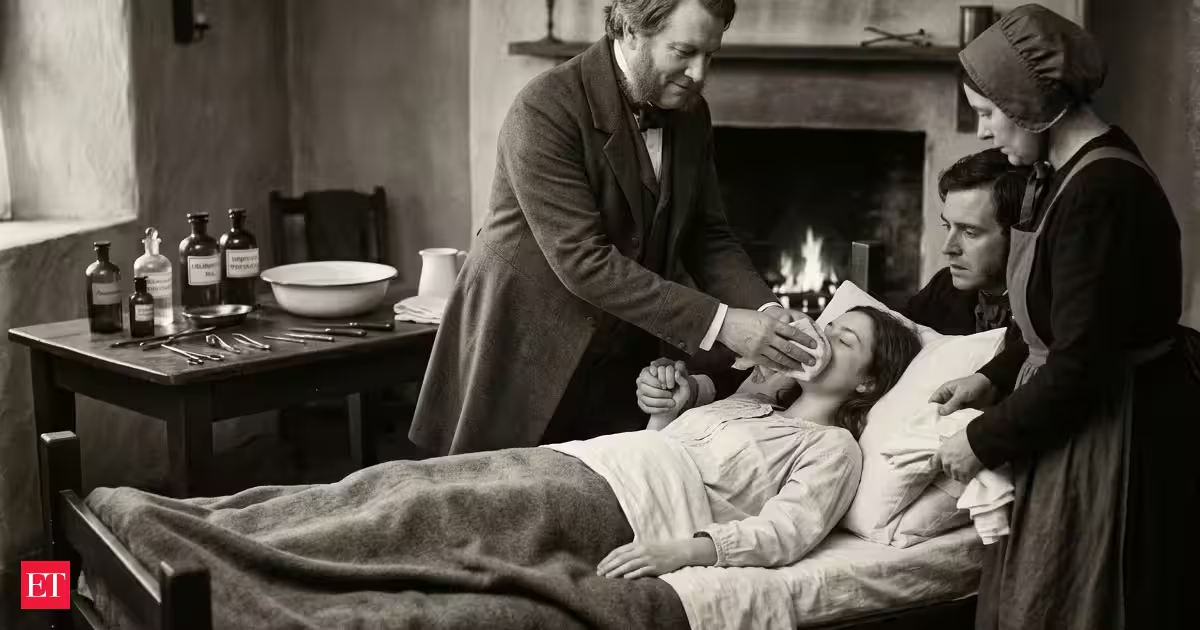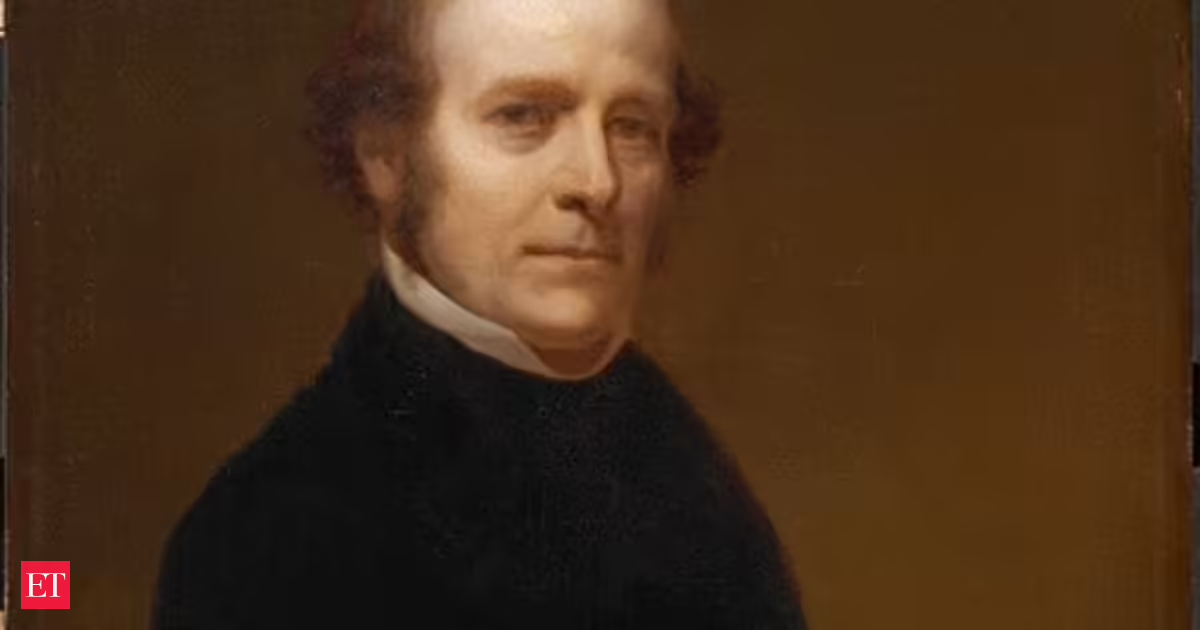
Horace Wells, a dentist, was attending a performance involving nitrous oxide on the night of December 10, 1844, in Hartford, Connecticut, where he did not expect to make any significant discovery related to dentistry but simply intended to watch some entertainment. Gardner Quincy Colton, a traveling showman, was giving an exhibition involving inhalation of nitrous oxide, which was very popular in those days. The purpose of such exhibitions was to have volunteers inhale laughing gas and entertain people with the abnormal actions it caused. One volunteer sustained a wound to his leg but seemingly did not feel pain from it while breathing laughing gas, which caught Wells' attention. According to information from the National Library of Medicine, Wells immediately understood that this event might be very significant for medicine.This issue dealt with one of the biggest problems in the practice of dentistry during the nineteenth century. Extracting a tooth usually meant a quick, excruciatingly painful procedure, and it often became necessary to postpone a visit to the dentist for fear of the procedure itself. There were not many ways for a dentist to alleviate the pain other than restraining the patient and acting quickly. "Pain caused by dental caries ranked among the biggest hurdles that patients faced during the first half of the nineteenth century," notes an article on the history of dentistry at the American Dental Association website.Horace Wells | Image Credit: Wikimedia CommonsWells tested the idea on himself before introducing it to patientsUnlike the speculation in which he indulged in the observation, Wells immediately acted upon it. The very next day, Wells scheduled himself for the inhalation of nitrous oxide followed by the extraction of his tooth. According to the American Society of Anesthesiologists, he did not feel much, if any, pain and found that nitrous oxide could revolutionize the practice of dentistry. The importance of self-experimentation lies in the fact that it converts speculation into evidence. Instead of simply making a suggestion based on the theory of nitrous oxide's use in dentistry, Wells personally went through the process and evaluated his own experience.Nitrous oxide was discovered by chemist Joseph Priestley in the eighteenth century, while scientist Humphry Davy proposed that the gas could be useful in medicine for its anesthetic properties. The Royal Society of Chemistry website states that Humphry Davy had already considered using nitrous oxide for surgery by 1800, and the difference was that Wells added the clinical dimension to the discovery.Dentist prepares to extract a tooth from Horace Wells | Image Credit: Wikimedia CommonsThe demonstration helped open the door to modern anesthesiaWells' early experiments failed to bring about any significant changes in the medical world right away. His public display of administering anesthesia in Boston was considered a failure by many because of a patient’s outcry during the process, although modern historians have suggested that it might have worked partly. This setback damaged Wells's reputation, delaying the acceptance of his theories. As noted in the Wood Library-Museum of Anesthesiology, Wells’ contributions were never acknowledged enough during his life, despite being the man behind one of the most fundamental concepts in medical science. But the concept did survive. Future advancements in ether and other anesthetics broadened the scope considerably.In the National Library of Medicine exhibition, it is stated that Wells's contribution plays a pivotal role in the history of anesthesia because it demonstrated that pain during medical procedures could be prevented, thereby revolutionizing medicine forever. Before the advent of anesthesia, surgeries and dental procedures were often performed quickly to ensure patients could tolerate the pain for a brief period. However, after the invention of anesthesia, new approaches to treating these ailments began to emerge. All this started from an incident in which Wells noticed something quite interesting: a man had hurt himself after inhaling the laughing gas but did not seem to feel any pain.
In 1844, Horace Wells watched a laughing-gas stunt hide pain in plain sight, and it wasn’t just a party trick: It changed anesthesia
Picture the year 1844: a dentist named Horace Wells observes a surreal scene where a man inhaling nitrous oxide, famed for inducing laughter, experiences no pain from a severe injury. This extraordinary moment ignited Wells's imagination, leading him to the radical idea that this gas could vanquish the agony associated with dental procedures.
640 words~3 min read