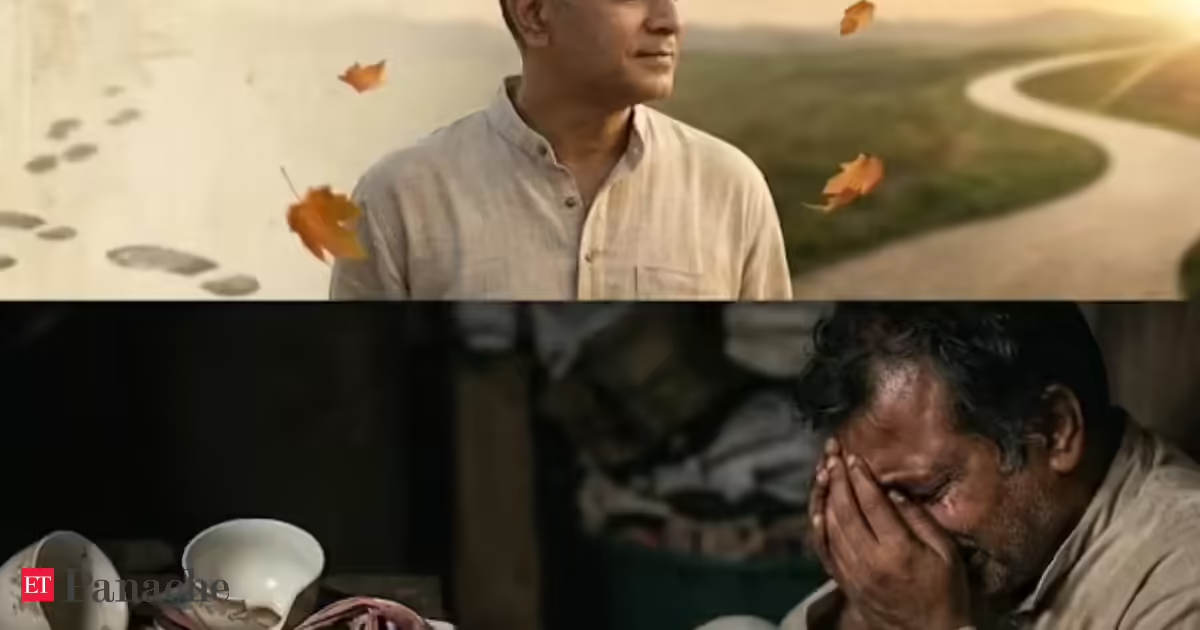
Indian proverb of the day: 'Wise men don't grieve over lost things, the dead and what belongs to the past, but a fool weeps over things not worth his tears, he adds sorrow'; Panchatantra's timeless lesson on regret, loss and moving forwardSynopsisAncient Indian wisdom from the Panchatantra offers a profound lesson on loss. A tale highlights how wise people accept what is gone. Foolish individuals prolong suffering by dwelling on the unchangeable. This ancient text, translated widely, guides readers to focus on the present. Acceptance allows for healing and growth, distinguishing wisdom from folly.Indian proverb of the day is from Panchatantra which warns against becoming permanently attached to sorrow. (AI-generated: Gemini)Everyone experiences loss. A missed opportunity, a broken relationship, the death of a loved one or a mistake that cannot be undone can linger in the mind for years. Yet some people eventually find peace, while others remain trapped in cycles of regret and sorrow. One of the most profound lessons on this aspect of human nature comes from the Panchatantra, the ancient Indian collection of wisdom stories. Through a simple observation about grief, it offers a powerful guide to accepting life's realities and moving forward.In the famous Panchatantra tale, The Elephant and the Sparrow, a memorable teaching explains that wise people do not spend their lives mourning what has already been lost, those who have passed away, or events that belong to the past. Instead, it suggests that foolish individuals prolong their suffering by repeatedly dwelling on things that can no longer be changed. In doing so, they add fresh pain to an already painful situation, effectively doubling their misery.Lesson behind Panchatantra's quoteThe meaning behind this teaching is both practical and deeply psychological. The proverb is not encouraging people to become emotionless or indifferent to loss. Grief is a natural human response. What the Panchatantra warns against is becoming permanently attached to sorrow. When people endlessly replay past events in their minds, wishing reality were different, they often create new suffering for themselves.The loss itself may be unavoidable, but the decision to continue reliving it is within one's control. According to this wisdom, true intelligence lies in recognising the difference between what can be changed and what must be accepted.This lesson remains remarkably relevant today. Many people spend years dwelling on failed careers, broken friendships, financial setbacks or opportunities they believe they missed. The mind repeatedly revisits the same memories, imagining alternative outcomes. Yet no amount of worrying can alter what has already happened.The Panchatantra suggests that such thinking rarely produces solutions. Instead, it drains emotional energy that could be used to build a better future. At its core, the proverb teaches acceptance. Acceptance does not mean approval of painful events, nor does it mean forgetting them. Rather, it means acknowledging reality without allowing it to consume the present moment.The wisdom also highlights an important distinction between remembrance and attachment. Remembering the past can provide valuable lessons. Remaining emotionally trapped in it, however, prevents growth. Wise individuals learn from their experiences and carry the lessons forward. Foolish individuals remain stuck reliving the same pain over and over again.About PanchatantraThis teaching comes from the Panchatantra, one of the most celebrated works of ancient Indian literature. The Panchatantra is a collection of interconnected animal fables written in Sanskrit prose and verse. Its title translates to "Five Treatises," reflecting the five sections through which moral, political and practical wisdom are conveyed.Although the exact identity of its author remains uncertain, the work has traditionally been attributed to Vishnu Sharma in some versions and Vasubhaga in others. Scholars generally believe these names may have been pen names or literary traditions rather than historically verified individuals.The stories themselves are believed to draw upon much older oral traditions. Many researchers suggest that some of these animal fables are among the oldest narrative traditions known to humanity. Through clever storytelling and memorable characters, the Panchatantra teaches lessons about leadership, friendship, decision-making, ethics and human behaviour.The enduring popularity of the Panchatantra lies in its ability to capture timeless truths about human nature. While societies, technologies and lifestyles have changed dramatically over the centuries, the emotional struggles people face often remain the same.Read More News on...morelessRead More News on...moreless
Indian proverb of the day: 'Wise men don't grieve over lost things, the dead and what belongs to the past, but a fool weeps over things not worth his tears, he adds sorrow'; Panchatantra's timeless lesson on regret, loss and moving forward
Ancient Indian wisdom from the Panchatantra offers a profound lesson on loss. A tale highlights how wise people accept what is gone. Foolish individuals prolong suffering by dwelling on the unchangeable. This ancient text, translated widely, guides readers to focus on the present. Acceptance allows for healing and growth, distinguishing wisdom from folly.
700 words~3 min read