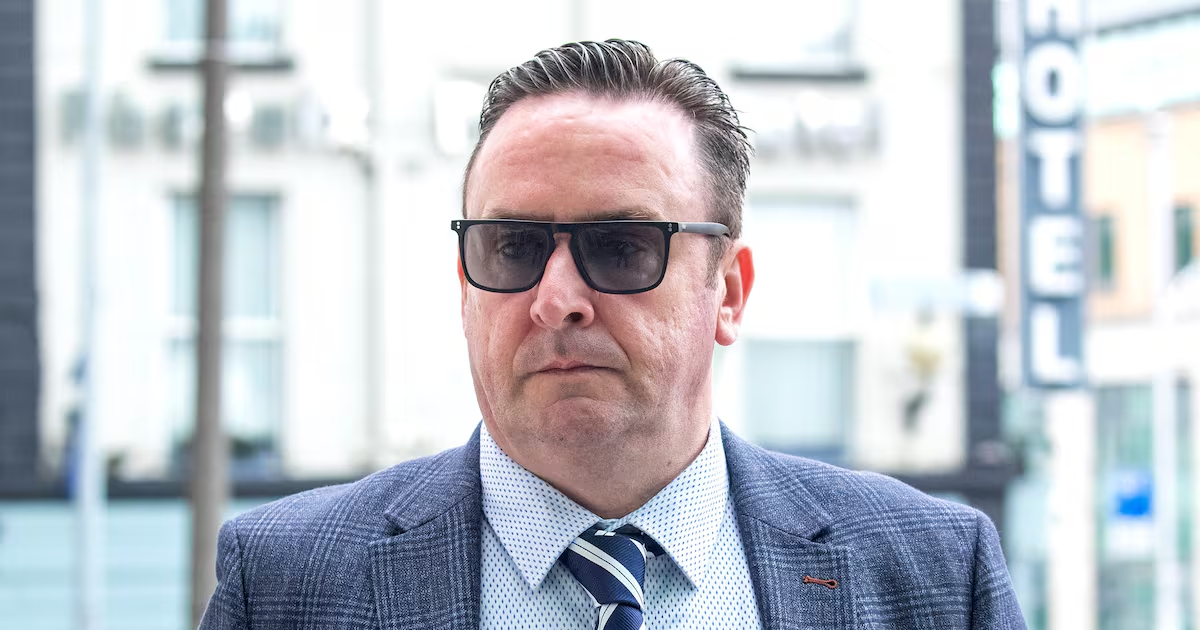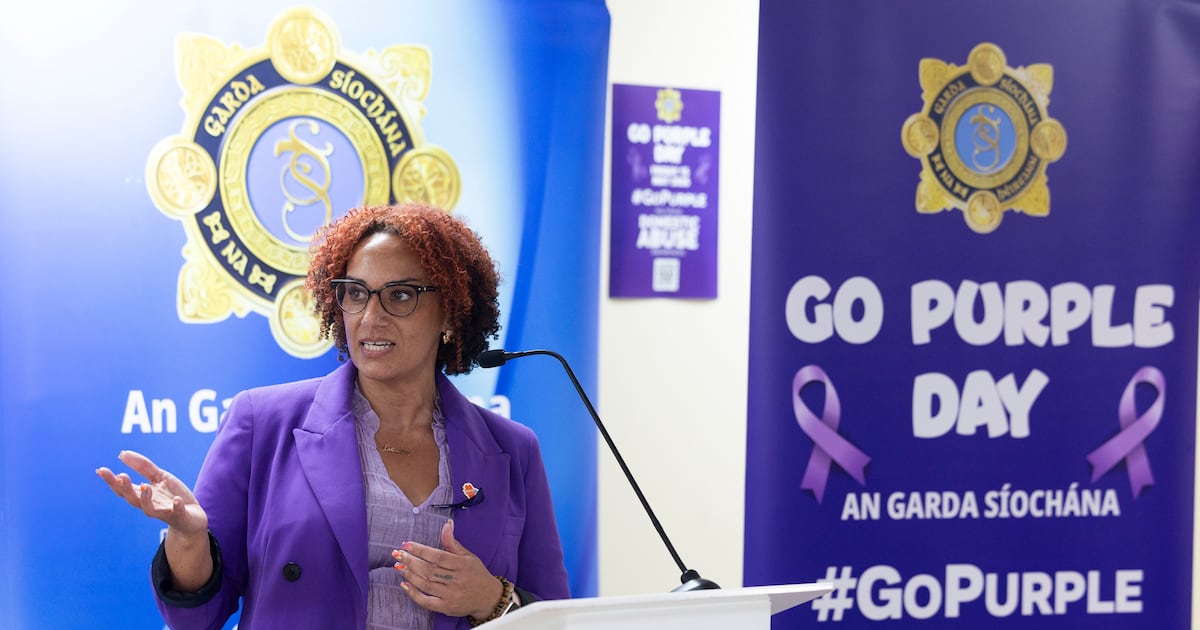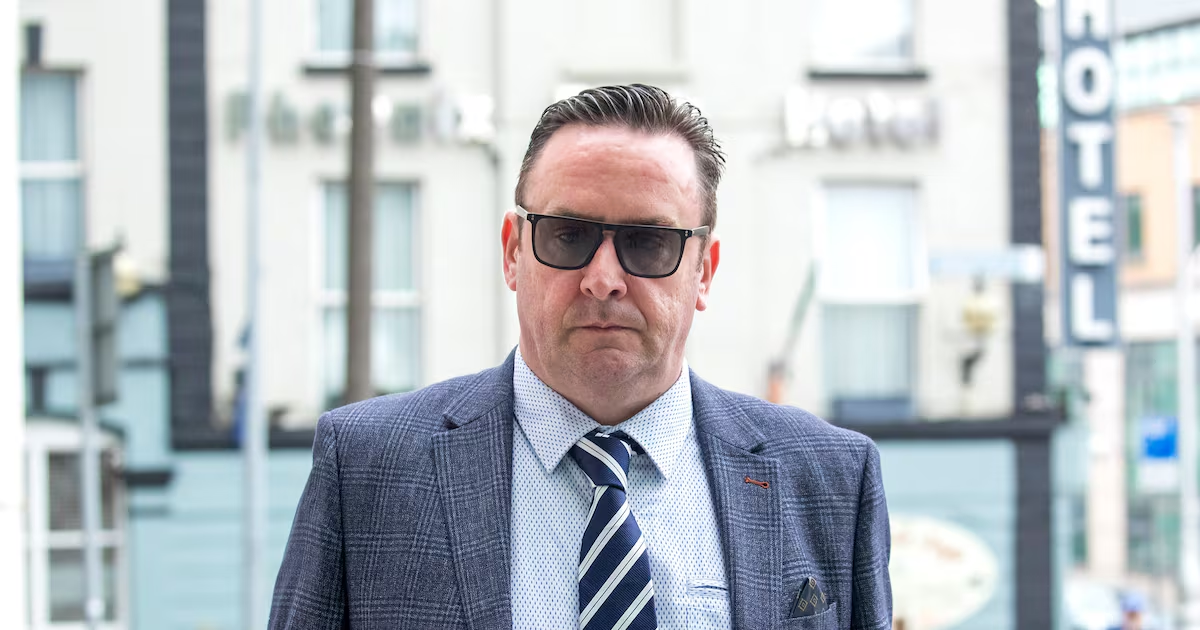
Three men were convicted in recent months of multiple crimes of abuse against women. All three were serving gardaí at the time they committed the offences. Paul Moody is now serving his second jail term for offences including coercive control affecting multiple victims-survivors. Ashley Masterson, like many courageous women, waived her anonymity to ensure David Reynolds, her former spouse, was named after he pleaded guilty to controlling and coercive behaviour. Trevor Bolger is challenging his dismissal by the Garda Commissioner following his conviction and sentencing for the assault of his then wife and fellow garda Margaret Loftus, another courageous woman who has taken on a crusade for the benefit of others.Understandably, people may be asking themselves if these three high-profile cases are isolated incidents or are part of a worrying pattern of abuse.While considerable attention is paid to police violence in the public sphere, less attention has generally been given to abuse perpetrated by police in their private lives, including against their intimate partners. This is the case both in Ireland and globally.What is, however, well documented is how police officers who are abusers can use their institutional powers. They are trained in interrogation and use of force; they know how crimes are investigated and therefore how to cover their tracks; and they have access to personal data and official communications channels. My office, Fiosrú, is operating in the context of a wholly new and expanded level of statutory accountability in policing oversight, one that did not exist before. This includes new powers in the area of domestic, sexual and gender-based violence (DSGBV) concerning garda behaviour in both their personal and professional lives. The mechanism for my office’s widened remit in this sphere is the Policing, Security and Community Safety Act 2024, which took effect in April 2025.Fiosrú has a mandate to investigate serious incidents in which members of the public have suffered death or serious harm having been in contact with gardaí. The definition of “serious harm” has now been expanded to include incidents of an alleged sexual offence and alleged abuse of power for a sexual purpose. Abuse of power for a sexual purpose can include an inappropriate emotional relationship between a garda and any other person.In Fiosrú’s first nine months of operations following the introduction of this expanded investigative remit, my office received a total of 30 referrals from gardaí of incidents of death or serious harm. Of these, five related to alleged sexual offences by gardaí and one related to the alleged abuse of power for a sexual purpose by a garda. A second significant way in which my office now has enhanced oversight and insight into garda behaviour derives from a new statutory obligation on the Garda Commissioner to notify Fiosrú of any “incident of concern” where a garda may have committed a criminal offence or behaved in a manner that constitutes notifiable misconduct justifying conduct proceedings. [ Increase in gardaí declaring domestic violence orders taken out against themOpens in new window ]Fiosrú received a total of 58 such notifications in its first nine months of operations. Of these, 12 (21 per cent) related to alleged incidents of domestic, sexual or gender-based violence by serving gardaí, affecting 13 victims. They included allegations made against both men and women gardaí by their partners, ex-partners and concerned Garda colleagues. The fact that my office is now sighted on incidents of concern such as these is in itself a positive development regarding accountability. In the majority of the 58 notifications, Garda-led investigations – either criminal or conduct-related – have been initiated. I am of course conscious that Fiosrú is only one actor in a wider criminal justice system that is paying increased attention to domestic, sexual and gender-based violence through a range of initiatives contained in Ireland’s third national strategy on DSGBV.Recent legislative reforms are also part of this wider context. Key among these is the Domestic Violence Act 2018, which came into force in January 2019, bringing together a range of existing laws in one statute. The Act improves the protections available to victims and survivors of domestic violence under both civil and criminal law. Significantly, it also established a new criminal offence of coercive control.We have also seen a demonstrably greater level of public accountability in this area on the part of the Garda Commissioner and his immediate predecessor. Gardaí now routinely report on the numbers of gardaí suspended due to domestic violence allegations, with senior management expressing concerns about gardaí as perpetrators of violence or coercive control against women, including their intimate partners. The recent convictions of former serving gardaí reflect wider patterns of gender-based violence within society. Both the World Health Organisation and the United Nations report a continued increase in the global prevalence of violence against women. More optimistically, they also report a positive reduction in rates of domestic violence in countries that legislate on intimate partner violence, as opposed to those without such legislation.We know from our sister organisation in England and Wales, the Independent Office for Police Conduct, that the abuse of power for a sexual purpose is now the single biggest form of police corruption it deals with.[ Gender based violence requires ‘island-wide lens’, Taoiseach tells Belfast audienceOpens in new window ]Recently, the Police Ombudsman for Northern Ireland reported that 30 per cent of the most serious cases it handled over a seven-year period to 2024 related to alleged abuse of position for sexual purposes by Police Service of Northern Ireland officers. And just this week in Scotland, we saw the conviction of a serving police officer for the rape of two women and subjecting a third to a campaign of abuse.Learning from its own past experiences of complaints handling, Fiosrú’s recent initiatives include the creation of a dedicated specialist services unit for investigations into both public complaints and Garda referrals involving domestic, sexual and gender-based violence. We have appointed an expert adviser on DSGBV and initiated a staff training and support project with Women’s Aid to support our gender-responsive service delivery for victims-survivors. This includes Fiosrú funding the secondment of a victim support worker from Women’s Aid with specialist skills to assist in victim-survivor engagement and communications.These initiatives are largely based on international best practice models of investigation of violence against women and girls developed by the UN, including training in trauma-informed practice.It would be naive to think that Ireland’s police service is somehow immune to global trends when it comes to domestic, sexual and gender-based violence or abuse of power. Working in co-operation with An Garda Síochána and other State agents, we need to understand not only the risks and the societal context in which gardaí operate but also the multiple barriers within the criminal justice system facing victims-survivors when it comes to reporting their experiences.Our gardaí are granted extraordinary lawful powers beyond the reach of ordinary citizens and it is paramount that they exercise those powers in a way that ensures public trust in their important public service.Fiosrú’s new and high level of accountability is another important element of the State’s commitment to zero tolerance when it comes to DSGBV.Emily Logan leads Fiosrú as the State’s Police Ombudsman. She was appointed in April 2025
Violence against women is increasing globally – and police forces are not immune
Fiosrú has been given wider powers to tackle domestic, sexual and gender-based violence perpetrated by serving gardaí
1,197 words~5 min read