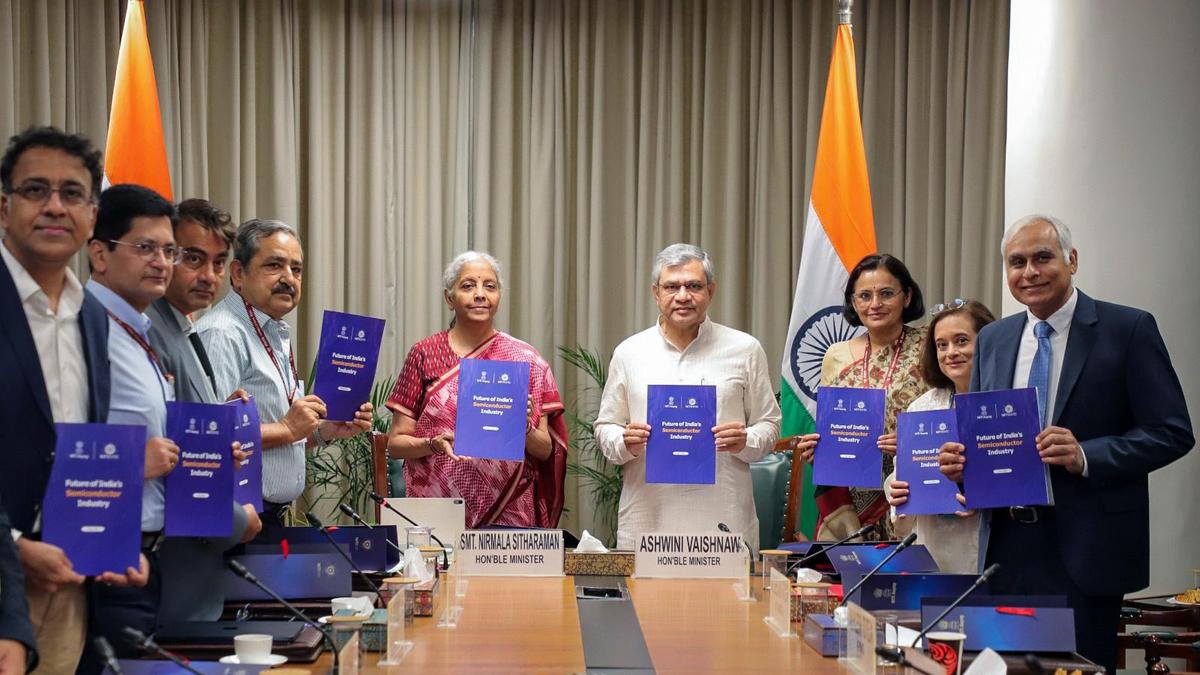
India needs to accelerate efforts to build a domestic semiconductor ecosystem, with self-reliance in chip manufacturing becoming critical for economic resilience, national security and inclusive growth, according to a new report by NITI Aayog.The report said that while government initiatives such as the India Semiconductor Mission are helping lay the foundation for a domestic industry, India's semiconductor manufacturing base remains at a nascent stage. With global supply chains undergoing a major realignment, the report cautioned that the country has a narrowing window to establish itself as a meaningful player in the sector.Also Read: India needs to build $120-$150 billion semiconductor value chain: NITI Aayog"With chips becoming the foundation of everything from smartphones to defence systems, countries are racing globally to build semiconductor self-sufficiency," the report said.According to NITI Aayog, the urgency stems from India's heavy dependence on imports, rising national security concerns, a growing foreign exchange burden and the role semiconductors can play in improving access to technology-driven services.India currently meets only 5-10% of its semiconductor demand domestically, with the remaining 90-95% fulfilled through imports. The report noted that global chip production is concentrated in a few countries, making supply chains vulnerable to geopolitical tensions and disruptions.Any disturbance in Taiwan or China could trigger shortages similar to those witnessed during the Covid-19 pandemic, affecting sectors ranging from automobiles and consumer electronics to healthcare and defence."As electronic content rises, the economic cost of such disruptions will only intensify," the report said.Also Read: India's semiconductor push gets major boost with $3.3 bn Odisha deal with Intel & 3D Glass SolutionsThe think tank also highlighted the strategic importance of semiconductors for defence and aerospace programmes."Chips have become increasingly important to national security and defence programmes. As many semiconductor parts used in defence systems are produced outside India, deploying them in our aerospace and defence programmes is increasing threats to national security," it said.Unmanned aerial vehicles, naval systems and airborne platforms continue to rely heavily on imported chips. Developing a domestic semiconductor base would be "well positioned to safeguard the autonomy of our defence programmes" as India modernises its military capabilities, the report added.The economic implications are equally significant. India spent nearly $150 billion on semiconductor imports between FY17 and FY25, with imports growing at a compound annual growth rate of 23% during the period. The import bill rose from $5.7 billion in FY17 to $30.3 billion in FY25."If this pace persists, the annual import cost could increase to USD 240 billion by 2035," the report cautioned.NITI Aayog said domestic chip production could also play a crucial role in making next-generation technologies more affordable. The rollout of 5G and future 6G networks has the potential to improve rural connectivity, enable remote healthcare and support precision agriculture, but widespread adoption will depend on affordable devices.India-made semiconductors "will be decisive" in lowering handset costs and expanding access to such technologies, it said.The report acknowledged that India already possesses important strengths, particularly in semiconductor design. Several leading global fabless companies operate captive design centres in the country, supported by a talent pool that accounts for around 20% of the world's semiconductor design workforce. Investments are also flowing into semiconductor assembly and packaging facilities.India's first semiconductor fabrication plant, currently being developed in Gujarat's Dholera, is expected to begin production by 2028."Recognising the pivotal role of semiconductors and sustaining their growth is vital to cementing India's position in the global value chain and building an inclusive, resilient society--both indispensable to accelerating India's journey towards 'Viksit Bharat 2047'," the report said.
India must fast-track chip self-reliance as import bill and security risks mount, says NITI Aayog
India must speed up its domestic chip manufacturing efforts. Self-reliance in semiconductors is crucial for the nation's economy and security. Global supply chains are shifting, creating a limited opportunity for India to become a key player. Developing this sector will lower costs for advanced technologies and safeguard defense programs. This is vital for India's progress.
581 words~3 min read