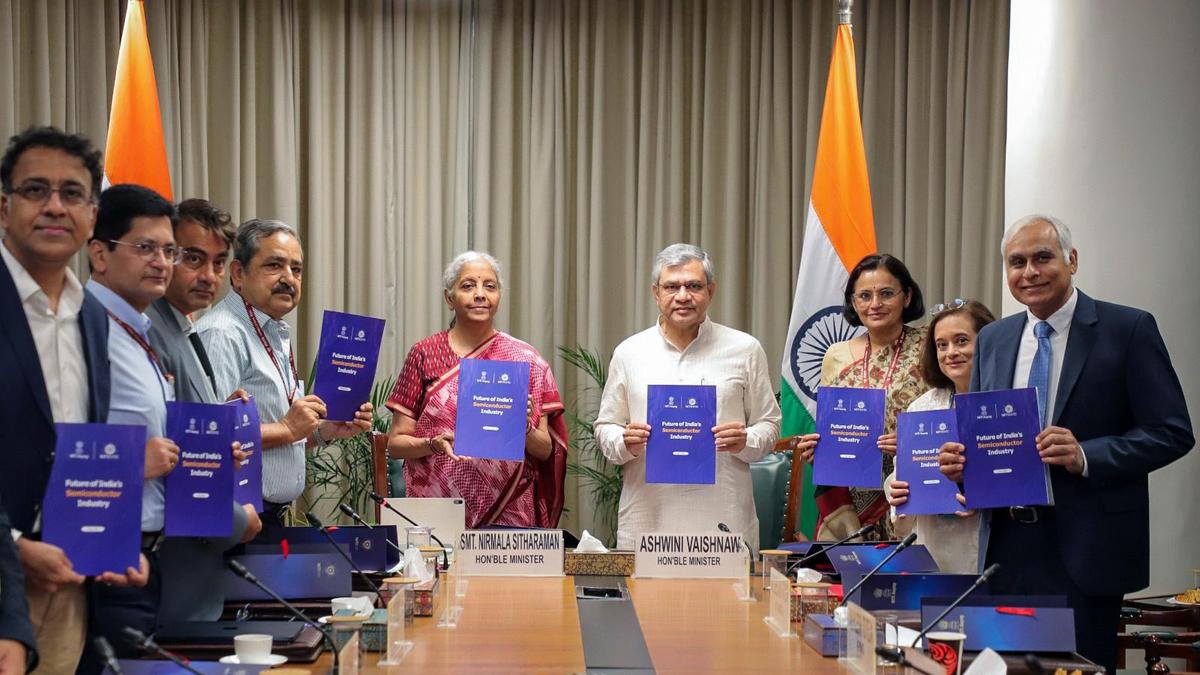
India should target building a $120-150 billion semiconductor value chain by 2035 with Centre committing at least one-third of the required investment to de-risk projects and anchor long-term investor confidence, NITI Aayog said.In its report ‘Future of India’s Semiconductor Industry’, released on Friday, the Aayog has proposed establishing an autonomous national semiconductor nodal agency with technical and financial authority, implementing a single window clearance and fast-track approval mechanism for semiconductor investments and publishing and maintaining a multi-year semiconductor policy stability framework, with defined review cycles.Also Read: Huawei bets on speed over shrinking transistors to sidestep US chip sanctions“This will help in faster decision-making and reduced execution risk along with stronger investor confidence and accountability,” it said.According to the report, building a globally competitive semiconductor ecosystem in India will require nearly $135–180 billion in cumulative semiconductor investments over the next decade, directed toward growth capital across design, fabrication, advanced packaging, materials and supporting infrastructure.“The government of India should commit at least one-third of the required investment to de-risk projects and anchor long-term investor confidence,” it said, adding this in turn can crowd in private capital at scale.The Aayog suggests replacing fragmented incentives with a tiered, value-chain-wide incentive framework aligned to capital intensity, technology risk and strategic importance.Also Read: Indian semicon firm Netrasemi plans mass production of its first chip this yearAccording to the report, India should link incentives to outcomes tied to capacity, yield, localisation and exports and should put in place long-term policy visibility (10-year horizon) to reduce regulatory uncertainty“Notify a full stack semiconductor incentive policy covering design, IP, fabs, OSAT, materials and equipment, introduce credit guarantees and offtake linked risk buffers for high capex projects and establish a continuous incentive effectiveness review mechanism,” it said.“This would help in synchronised growth across the semiconductor value chain, reduced cost of capital and improved global competitiveness,” it added.As per the report, fabs, advanced packaging, compound semiconductors and critical design infrastructure should be prioritised for public funding along with focus on stability, predictable incentives and coordinated execution across the value chain.
India needs to build $120-$150 billion semiconductor value chain: NITI Aayog
In its report ‘Future of Indias Semiconductor Industry, released on Friday, the Aayog has proposed establishing an autonomous national semiconductor nodal agency with technical and financial authority, implementing a single window clearance and fast-track approval mechanism for semiconductor investments and publishing and maintaining a multi-year semiconductor policy stability framework, with defined review cycles.
338 words~2 min read