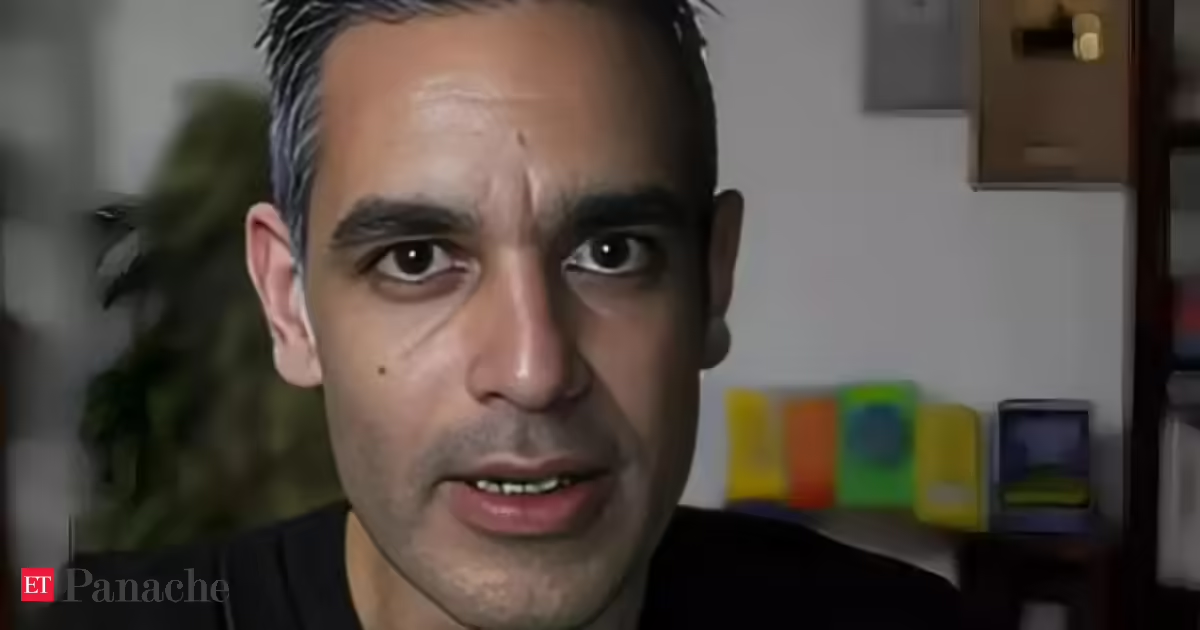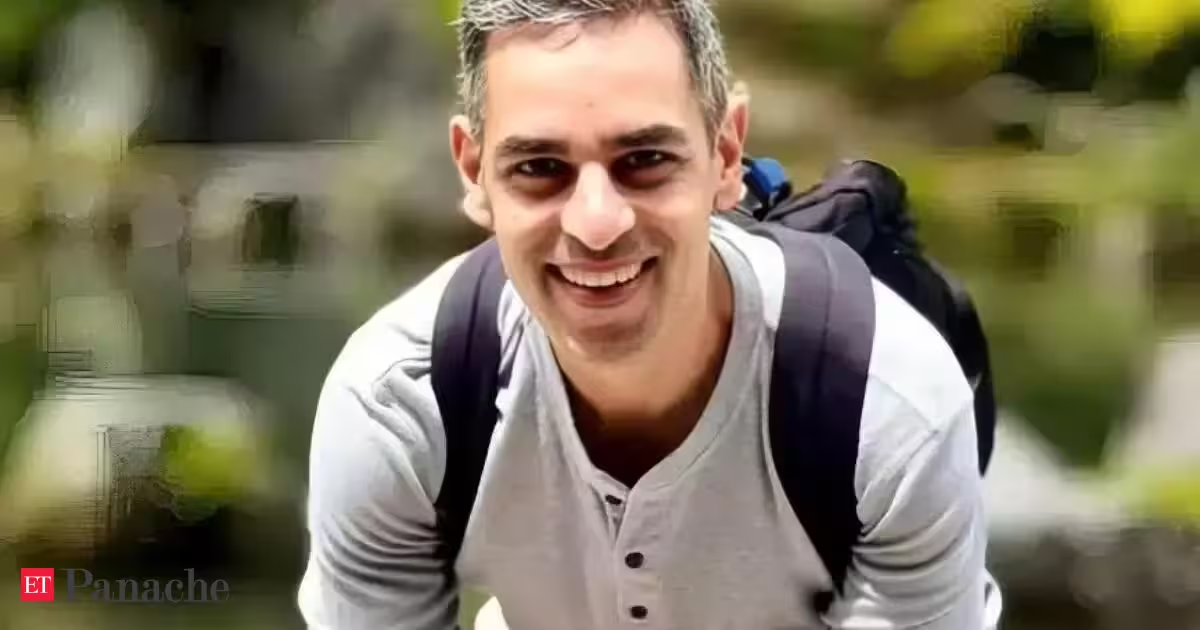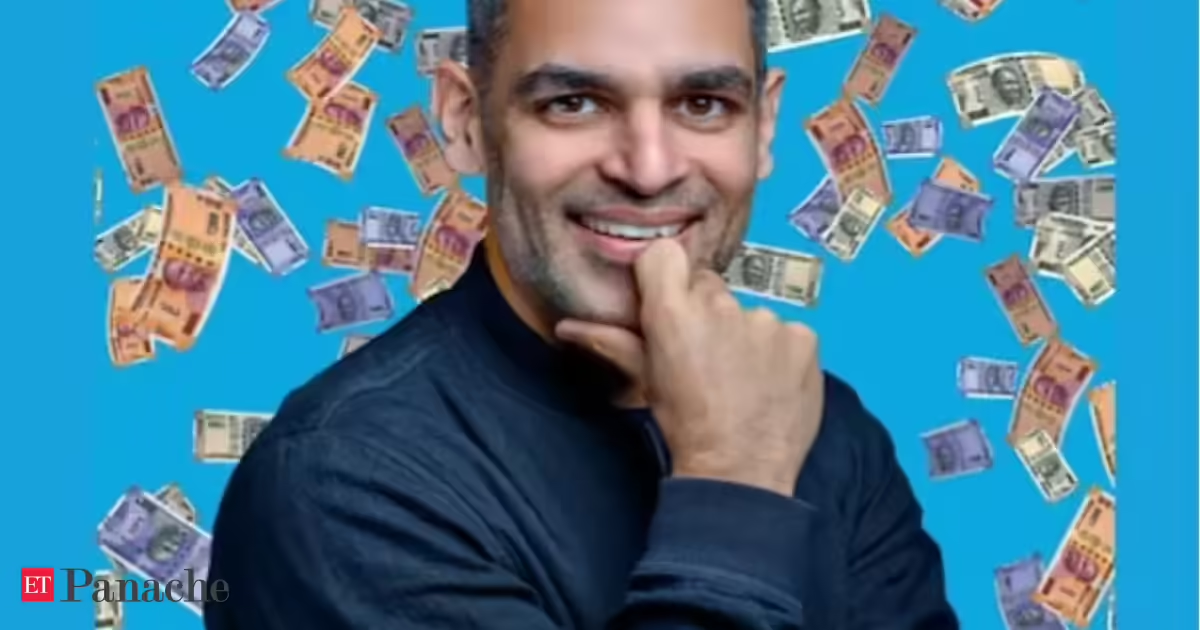
SynopsisEntrepreneur Ankur Warikoo shares how a risky decision to hire a content team in 2020, despite no current revenue, led to a business generating Rs 9 crore by 2025. This exemplifies 'irrational optimism', the belief that today's reality can change tomorrow. Successful people acknowledge odds but refuse to let them dictate outcomes.Ankur Warikoo clarified that irrational optimism does not mean ignoring facts or pretending challenges do not exist. Many of life's biggest turning points do not look impressive when they begin. In fact, they often appear risky, irrational and difficult to justify to others. The outcome is uncertain, the numbers may not make sense and there is little evidence to support the decision. Yet some people move forward anyway. Entrepreneur and content creator Ankur Warikoo recently reflected on one such moment from his own journey, sharing how a decision that seemed like a terrible idea at the time eventually grew into a business generating crores in revenue.Taking to social media, Ankur Warikoo shared what he described as the best decision he had ever made, despite the fact that it looked like the worst one when he was making it. According to Warikoo, the story goes back to 2020 when he decided to hire a content team.At the time, the move made little sense from a business perspective. He revealed that he was making no money from content when he chose to build the team. Looking at the decision purely through numbers and conventional business metrics, it would have been easy to dismiss it as a mistake. Warikoo admitted that by almost every measurable standard, the decision appeared to be a bad idea.Yet he moved ahead anyway. The reason, he explained, was conviction. He said he had a belief that he could not fully explain. There was no spreadsheet proving the opportunity. There was no guaranteed return. There was no clear roadmap showing exactly how things would work out. What he did know was that if he never took a chance on himself, he would eventually regret it.Results 5 years laterFive years later, the results told a completely different story. Warikoo revealed that by 2025, the content business had generated Rs 9 crore in revenue. For him, the experience became an example of what he calls "irrational optimism." According to Warikoo, this quality is something he repeatedly notices among successful people across industries. It is not blind positivity or unrealistic thinking. Instead, it is the ability to believe that today's reality does not have to define tomorrow's outcome.Irrational optimismHe described irrational optimism as the belief that your current reality is not your permanent reality, even when nothing around you appears to support that belief. Importantly, Warikoo clarified that irrational optimism does not mean ignoring facts or pretending challenges do not exist. In his view, successful people acknowledge the odds. They understand the obstacles. They recognise the risks. The difference is that they refuse to let those odds have the final say.To illustrate the idea, Warikoo shared several examples that many people encounter in everyday life. One example involved job applications. He pointed out that many individuals avoid applying for roles because they do not meet every requirement listed in the job description. They convince themselves they are not qualified enough and never submit the application. Meanwhile, the person who eventually lands the role may have met only 70 per cent of the criteria and learned the rest after getting hired.Another example focused on content creation and personal branding. Warikoo noted that countless people avoid posting online because they feel they are not experts yet. They wait until they know more, have more experience or feel more confident before sharing their thoughts publicly. At the same time, many successful creators who now have audiences of over 100,000 followers started when they knew far less than they do today.Their expertise was built through the process of showing up consistently, not before it. He also highlighted the common tendency to postpone side projects. Many people tell themselves they will start a business, write a book, launch a product or pursue a passion project once they have more time. According to Warikoo, that perfect moment rarely arrives.Instead, the people who eventually succeed are often those who begin with whatever time they have available. He cited the example of someone spending just 30 minutes a day on a side project and managing to launch it within two months. The broader lesson, according to Warikoo, is that action often comes before confidence, not after it.Towards the end of his reflection, he drew a distinction between two mindsets. "The rational person waits for proof before they believe," he wrote.Read More News on...morelessRead More News on...moreless
‘The best decision I ever made looked like the worst one’: Ankur Warikoo on the bet that turned into crores
Entrepreneur Ankur Warikoo shares how a risky decision to hire a content team in 2020, despite no current revenue, led to a business generating Rs 9 crore by 2025. This exemplifies 'irrational optimism', the belief that today's reality can change tomorrow. Successful people acknowledge odds but refuse to let them dictate outcomes.
777 words~4 min read