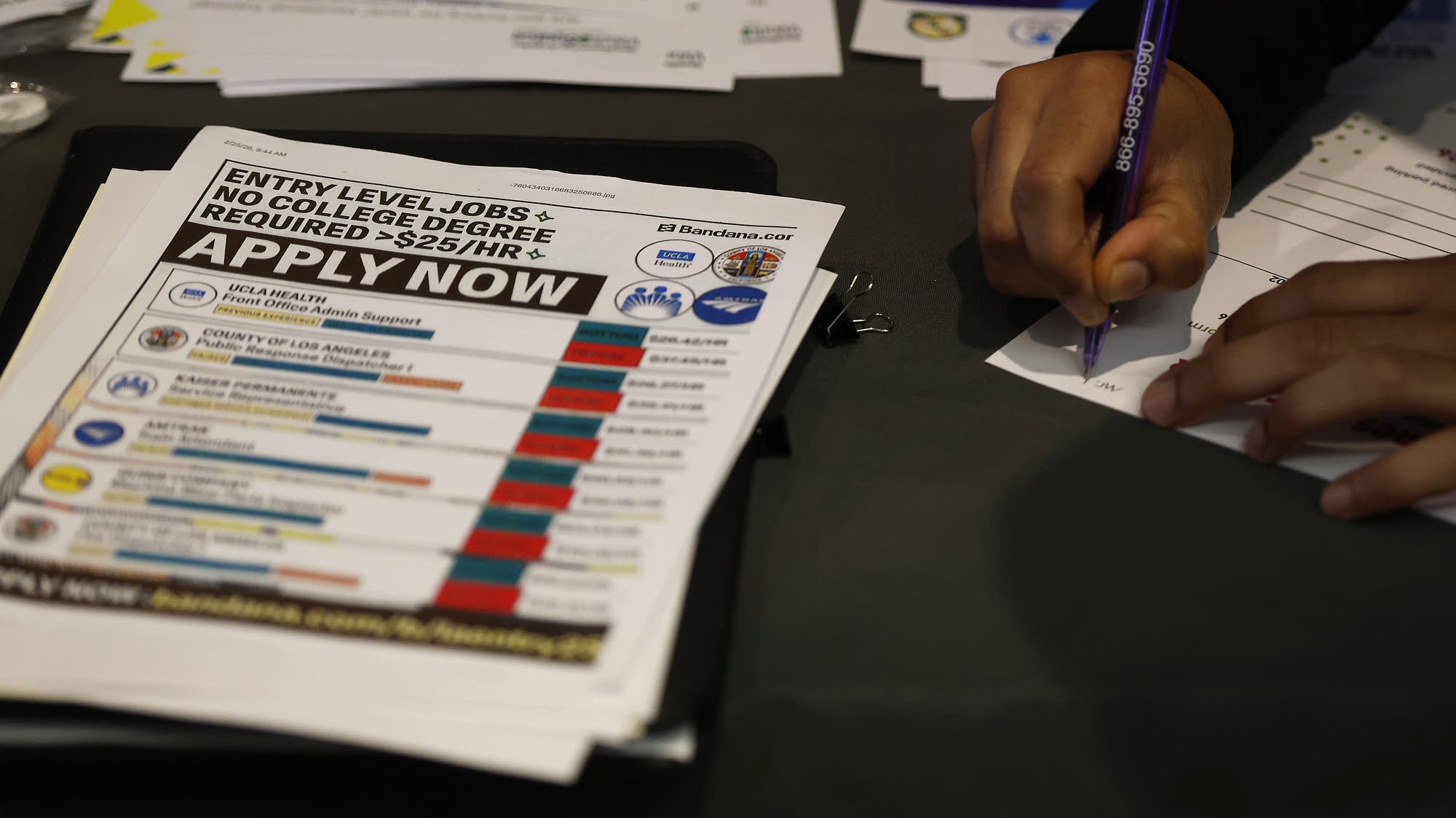
There are lots of growing wage gaps — between genders and between races, for example. They’re all widening. Here’s another one: between salaried workers and hourly workers. According to fresh data from Indeed’s Hiring Lab, hourly wages went up 1.7% in the past year, and salaried wages went up 2.9%.Hourly workers are typically younger — new graduates with less experience. Those are the same people having a tough time finding a job right now.“These are entry-level professionals, they are contractors, freelance workers, interns. They are the ones that saw their posted wage go down,” said Sneha Puri, an economist at Indeed Hiring Lab. “These people are finding it harder to find a job, which makes it easier to not increase their posted wage at the same rate.”That’s a pretty big 180 from the post-pandemic boom in 2022. Back then, hourly wage increases actually outpaced growth for salaries.“When things opened up, employers had to scramble a bit more to try to hire those workers, and they had to do more to attract and retain them,” said Elise Gould, senior economist at the Economic Policy Institute.Those jobs are more volatile, she said. If the economy’s strong, so are those wages.“Now, the economy is weakened somewhat … they don't have that kind of leverage. Unemployment is rising, and therefore, when employers see more sidelined workers, they don't have to work as hard to get the ones they want,” she said.In the past year, salaried wages have stagnated too — but not as dramatically.“So, over long periods of time, it is these two things are kind of tracking each other. It just so happened that the hourly [rate] grew a lot in the 2022 and ‘23, and now the salaries are growing more in the ‘25 and ‘26,” he said.One of the main ways to get a higher wage is to get a new job. Salaried workers have a tougher time doing that, said Erik Hurst, an economics professor at the University of Chicago.So if you’re, say, an economics professor, “it takes us a little bit longer to kind of, you know, churn and search and find the right match, and now we're making up for our losses a little bit later,” he said.One thing the two categories have in common: both hourly and salaried workers saw their wages increase more slowly than the rate of inflation. That means that their real wages — or their ability to afford stuff — actually went down.
Hourly workers' wages are rising more slowly than salaried workers
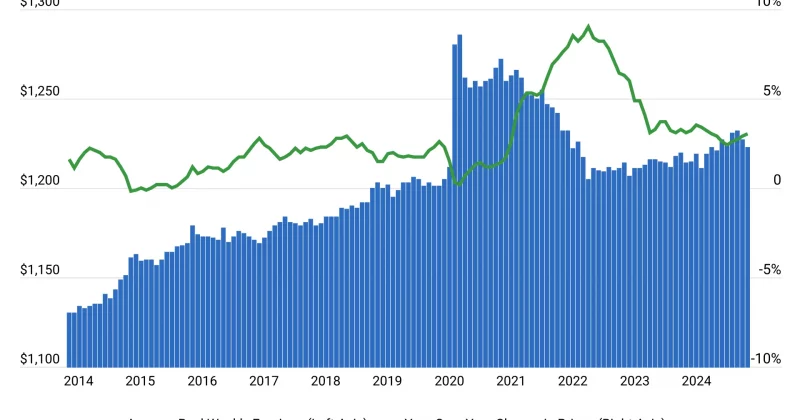
According to fresh data from Indeed’s Hiring Lab, hourly wages went up 1.7% in the past year. And salaried wages went up 2.9%. Neither is keeping pace with inflation.
410 words~2 min read