We’re going to get the government’s official employment tally for June in a couple of days. The report is coming on the heels of three straight positive monthly jobs reports, in terms of the number of jobs the economy added.That said, those reports have been telling us that wage growth has been steadily slowing. And for women, it’s slowing even more, according to an analysis of weekly earnings data by the Institute for Women’s Policy Research.Throughout the 1970s, 1980s, and 1990s, the gender wage gap got narrower. Kate Bahn, chief economist at the Institute for Women’s Policy Research, said that was thanks to more women entering the workforce, broader minimum wage protections, and better access to contraception.“There’s research showing that that directly led to women finishing college and going on to grad school and earning money later on,” Bahn said.Bahn said a lot of that progress was down to policy decisions by lawmakers. And by the 2000s and 2010s, that progress stalled.Then came the pandemic. Demand for low-wage labor spiked. So wages did, too.“Women are over-represented in low-wage jobs,” Bahn said. “And so when you have low-wage workers broadly have more earnings growth, that is going to reduce the gender wage gap.”But since the pandemic, the gap has started widening again.“Men’s earnings grew 3.7% in 2024, adjusted for inflation, and women’s grew, in our findings, only 1.5%, but it was not statistically significantly different from zero,” Bahn said.A lot of the job growth in the economy has shifted away from those lower-wage positions that helped boost women’s average earnings, said Yana Rodgers, a professor at Rutgers University.“So as demand rose again for other jobs, more dominated by men, their wages picked up,” Rodgers said.Also, Rodgers said women are still disproportionately responsible for taking care of children and elders at home.“Care work is probably the biggest constraint that women face,” Rodgers said. “So they’re just not as able to respond to opportunities in the labor market as men.”That constraint is a bigger challenge for women now that many employers expect their workers to be back in the office, said Courtney Shupert, an economist with MacroPolicy Perspectives. It’s also a challenge for women in jobs that require long hours, including finance, law, and other high-paying professional services.“The fields that are sometimes more time-intensive for full-time work, or even for part-time work, that’s where we tend to see the greatest differences in gender pay,” Shupert said.Shupert added that all of this is an even bigger hurdle for women now that inflation has been picking up again.“So for most workers, real disposable income is declining, but it is hitting women harder than men,” Shupert said.As a result, women are more likely to cut back on spending. Elissa Braunstein, an economics professor at Colorado State University, said every dollar of women’s income tends to have a bigger impact on the broader economy.“Not because of anything intrinsic about women, but because women are more likely to be in lower-paid, stretched-thin jobs, covering the households’ basic needs,” Braunstein said.People with lower incomes tend to spend that money faster, too. “So underpaying women squeezes exactly the households most likely to spend every dollar, which makes the hit to demand bigger than the paycheck alone,” Braunstein said.In other words, a widening gender wage gap holds back the entire economy.
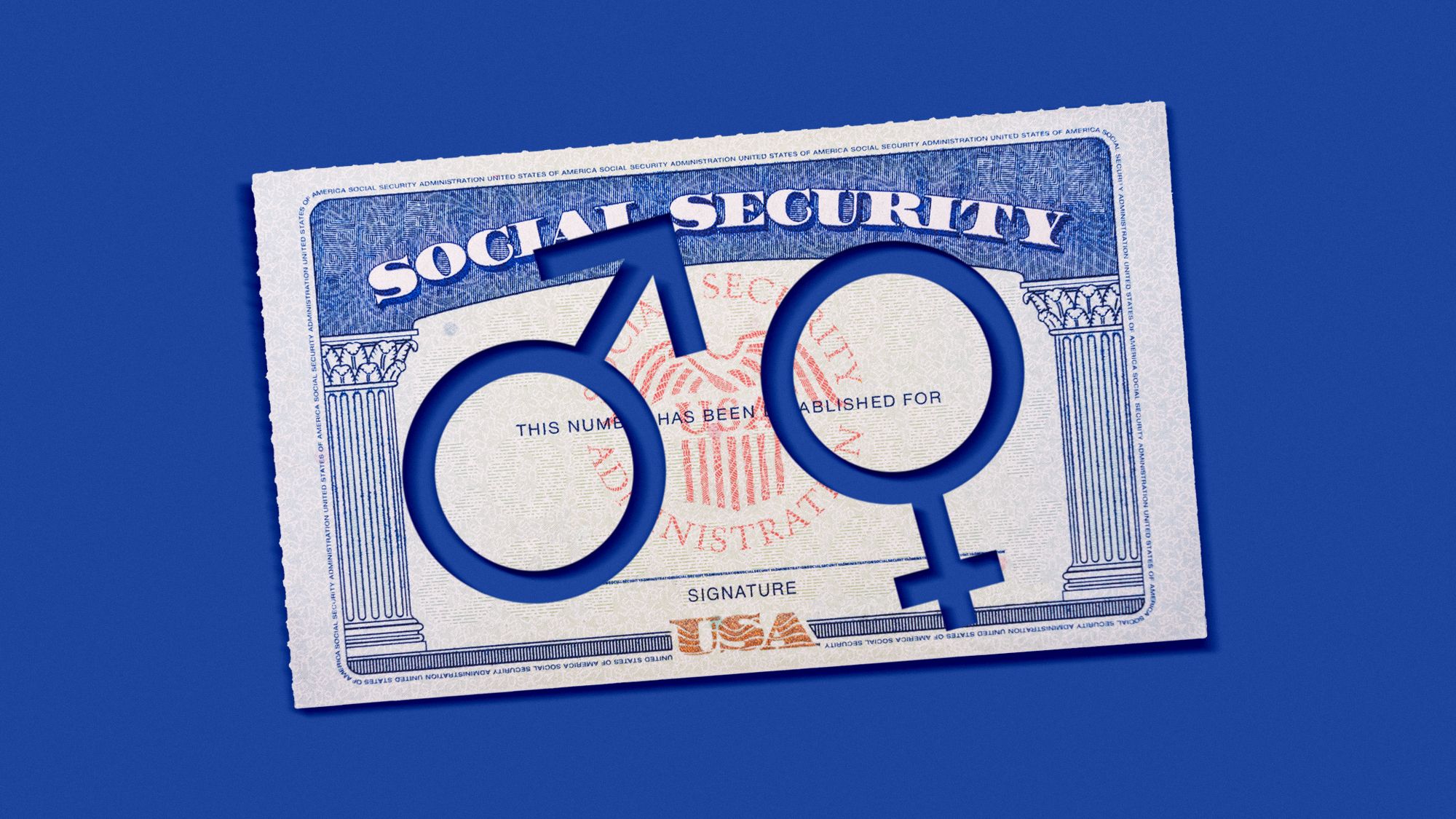
As wage growth slows, the gender wage gap is widening
The gender wage gap has been widening for several years, after it narrowed at the start of the pandemic. That’s a drag on the entire economy.
550 words~3 min read