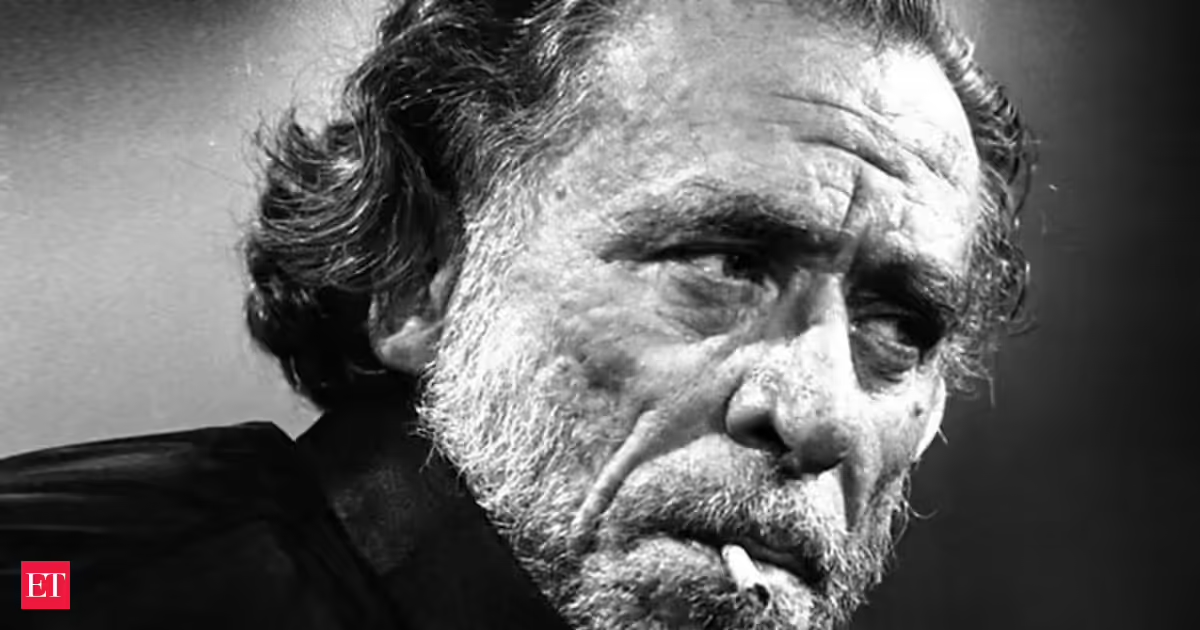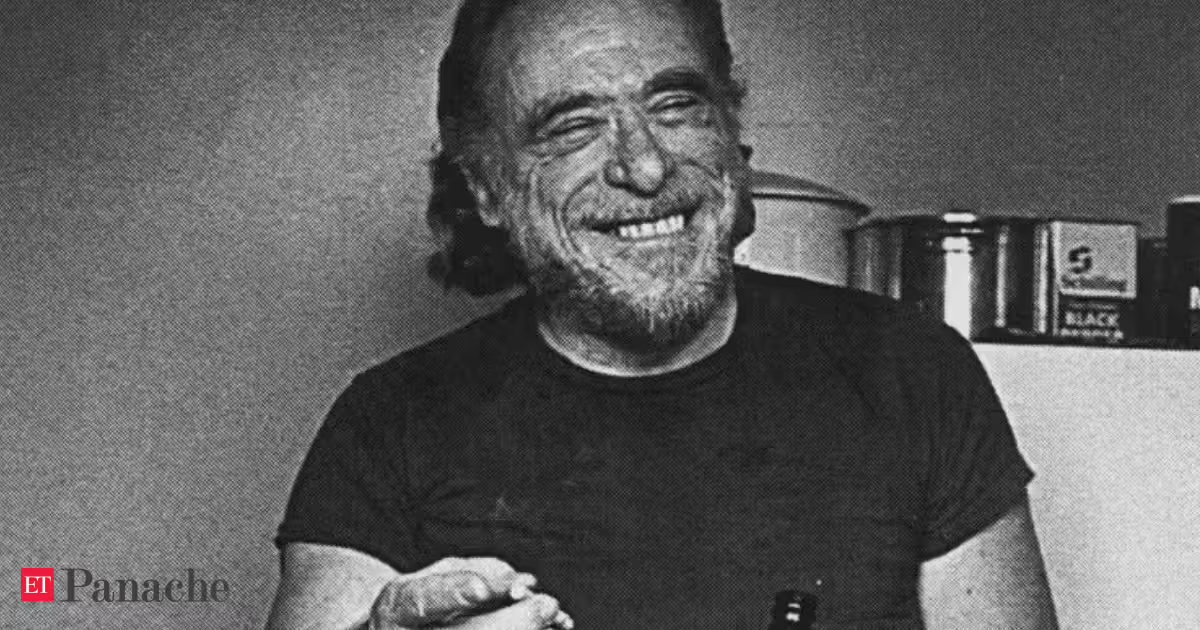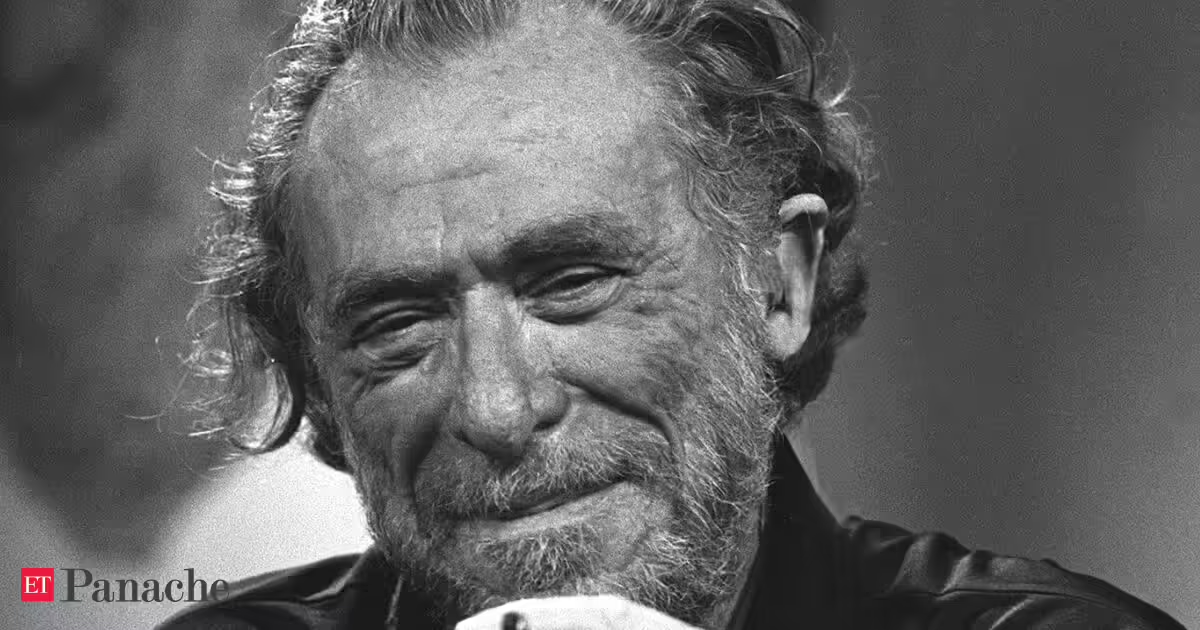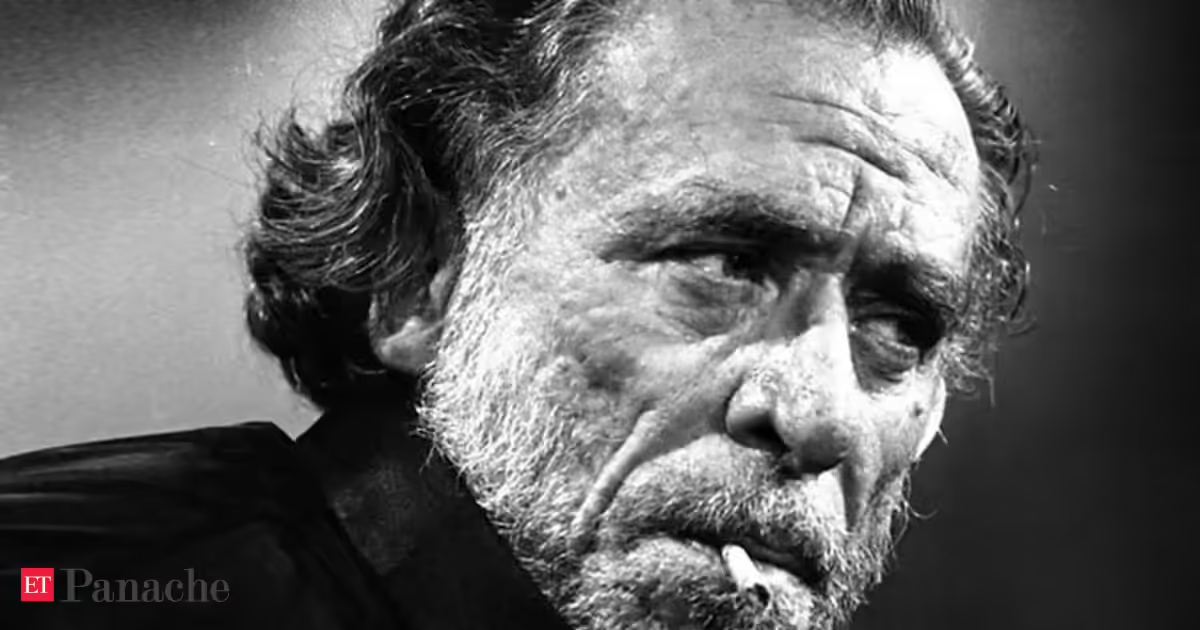
American writer and poet Charles Bukowski was known for his blunt writing style and his focus on people living on the margins of society. His poems and stories often explored loneliness, rejection, addiction and emotional struggle without trying to make life look softer than it was. One of his most discussed quotes continues to be widely shared even decades after it was published in 1972.The quote of the day by Charles Bukowski goes: “Beauty is nothing, beauty won't stay. You don't know how lucky you are to be ugly, because if people like you, you know it's for something else.”The origin of the quoteThis quote appeared in Bukowski’s short story “The Most Beautiful Woman in Town,” which was published in the collection Erections, Ejaculations, Exhibitions, and General Tales of Ordinary Madness, later republished under Tales of Ordinary Madness. In the story, the line is spoken to a woman named Cass, whose physical beauty constantly attracts attention but also leaves her emotionally isolated and deeply troubled.The quote may sound harsh at first, but many readers see it as Bukowski’s way of speaking about superficial attraction and temporary admiration. He suggests that physical beauty fades with time, while people who are appreciated for other qualities may experience more genuine relationships. Instead of presenting beauty as a gift, Bukowski points to the emotional burden that can come with constantly being valued only for appearance.Within the story itself, the quote becomes even more tragic. Cass is admired everywhere she goes, yet that admiration does not bring stability or happiness into her life. Bukowski presents beauty almost like a trap that turns a person into an object for others to look at rather than someone people truly understand. The line reflects his larger writing style, where uncomfortable truths about human behaviour are often delivered in a very direct way.You Might Also Like:Charles Bukowski’s difficult early life and strugglesBorn in Andernach in 1920, Charles Bukowski moved to the United States with his family when he was still a child. They eventually settled in Los Angeles, a city that later became deeply connected to his literary identity. Bukowski’s early years were difficult. He wrote openly about growing up with a strict and abusive father, financial hardship and bullying during school. Severe acne during his teenage years left permanent scars on his face and deeply affected his confidence.Those experiences shaped much of his writing. Many of his poems and novels focused on outsiders, struggling workers, alcoholics and emotionally damaged people trying to survive everyday life. Bukowski rarely wrote glamorous characters. Instead, he focused on ordinary people carrying frustration, loneliness and disappointment.How rejection and hardship shaped Bukowski’s writingBukowski briefly studied at Los Angeles City College before dropping out and moving between cities while trying to become a writer. During the 1940s and early 1950s, he faced constant rejection from publishers. Frustrated with the literary world, he stopped writing for several years and spent much of that time drinking heavily and working small jobs.You Might Also Like:After suffering a serious bleeding ulcer in the 1950s, Bukowski returned to writing and slowly began building a reputation through underground literary magazines and alternative newspapers. His first poetry collection, Flower, Fist, and Bestial Wail, was published in 1960. Over time, readers became drawn to his rough but honest style, which avoided polished literary language and focused instead on direct observations about life.Much of Bukowski’s work revolved around his semi-autobiographical alter ego Henry Chinaski. The character appeared in novels such as Post Office, Factotum, Women and Ham on Rye. Chinaski moved through low-paying jobs, bars, failed relationships and moments of emotional collapse while trying to survive in an unforgiving world. Readers connected with the honesty of those struggles even when Bukowski’s writing became uncomfortable or aggressive.The breakthrough that changed his careerHis major breakthrough came in the early 1970s when publisher John Martin of Black Sparrow Press offered him financial support to leave his postal job and write full-time. Soon after, Bukowski published Post Office, a novel inspired by his years working for the postal service. The book helped push him beyond underground literary circles and introduced him to a much wider audience.Over the years, Bukowski published more than forty books including novels, poetry collections and short stories. His work often explored drinking, gambling, violence, failed love and emotional emptiness. Critics remained divided about him throughout his career. Some believed his work was crude and offensive, while others argued that his honesty and lack of pretence made him different from most writers of his time.Bukowski also gained attention outside literature. He wrote the screenplay for the 1987 film Barfly, starring Mickey Rourke, which was heavily inspired by his own life. The film further strengthened his image as a writer who openly embraced failure, chaos and life on society’s edges.In his later years, Bukowski lived in San Pedro with his wife Linda Lee Beighle. Though he eventually found financial success and international recognition, he continued writing in the same raw and straightforward voice that first made readers notice him. He died of leukemia in 1994 at the age of 73.
Quote of the day by Charles Bukowski: 'Beauty is nothing, it won't stay. You don't know how lucky you are to be ugly; because if people like you, you know...' - A life lesson on importance of personality growth beyond just physical looks by the German-American novelist
Quote of the day: American writer and poet Charles Bukowski remains widely remembered for his raw and brutally honest observations about life, loneliness and human behaviour. One of his most discussed quote of the day resonates with readers for its harsh but emotional reflection on appearance, superficial admiration and genuine human connection. Originally published in his 1972 short story, the quote also reflects many of the themes that shaped Bukowskis work and life.
844 words~4 min read