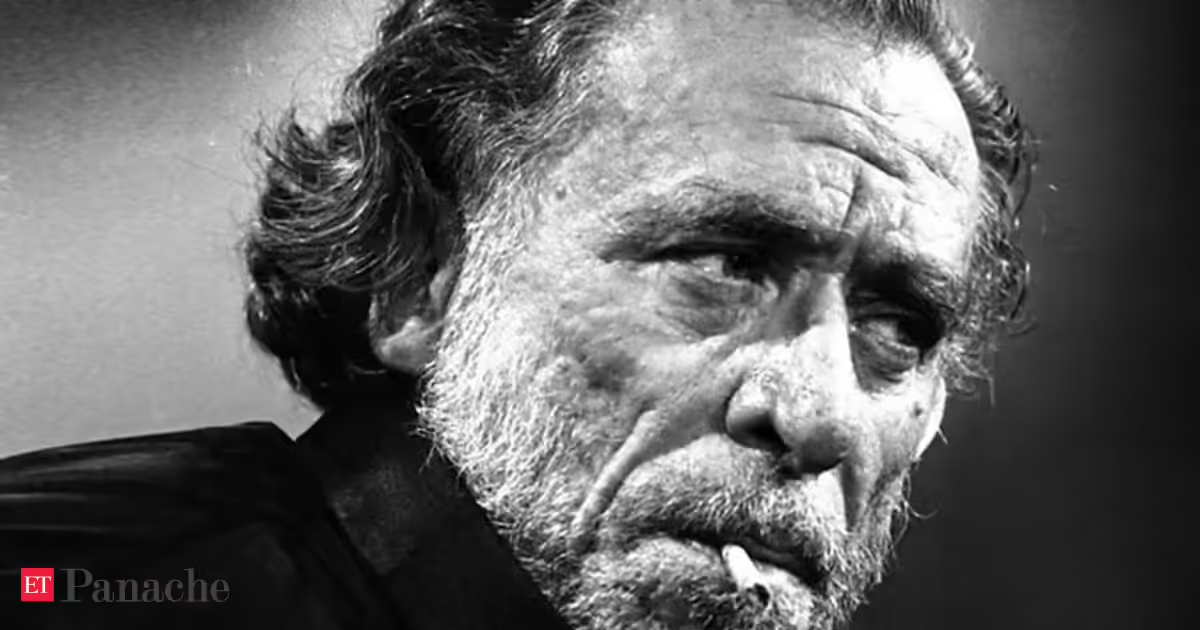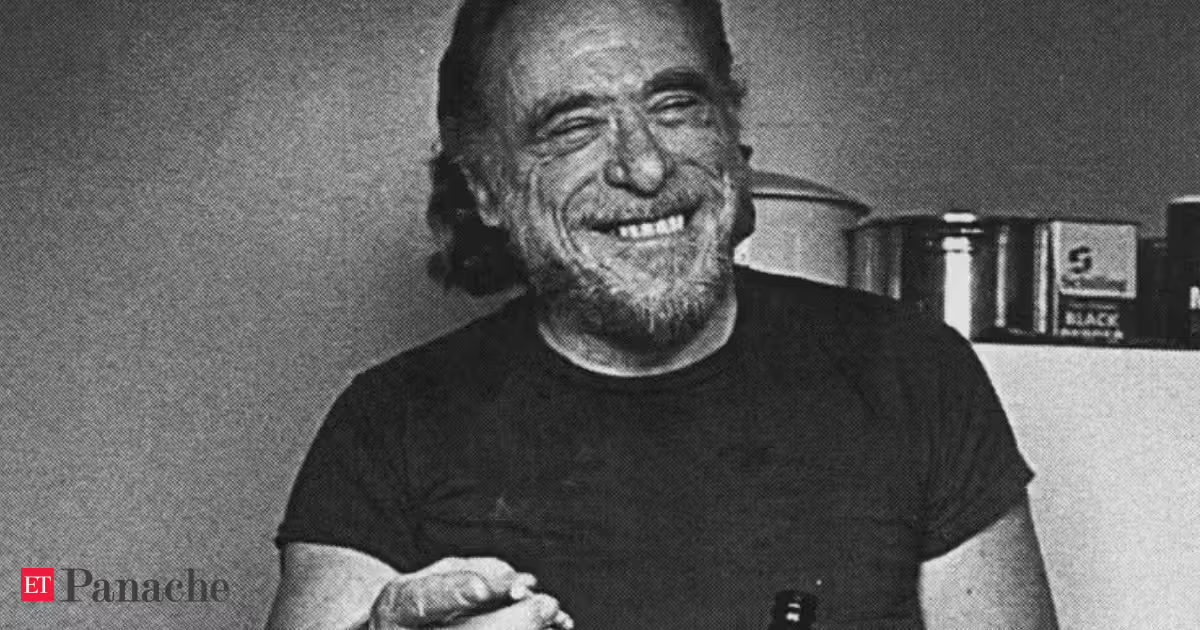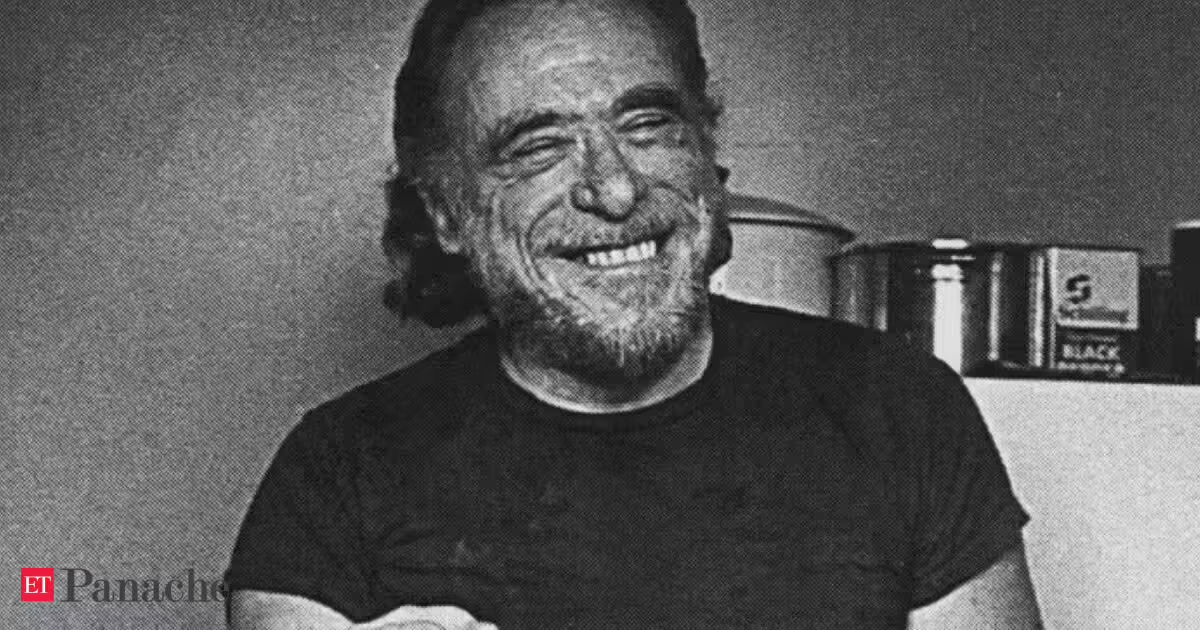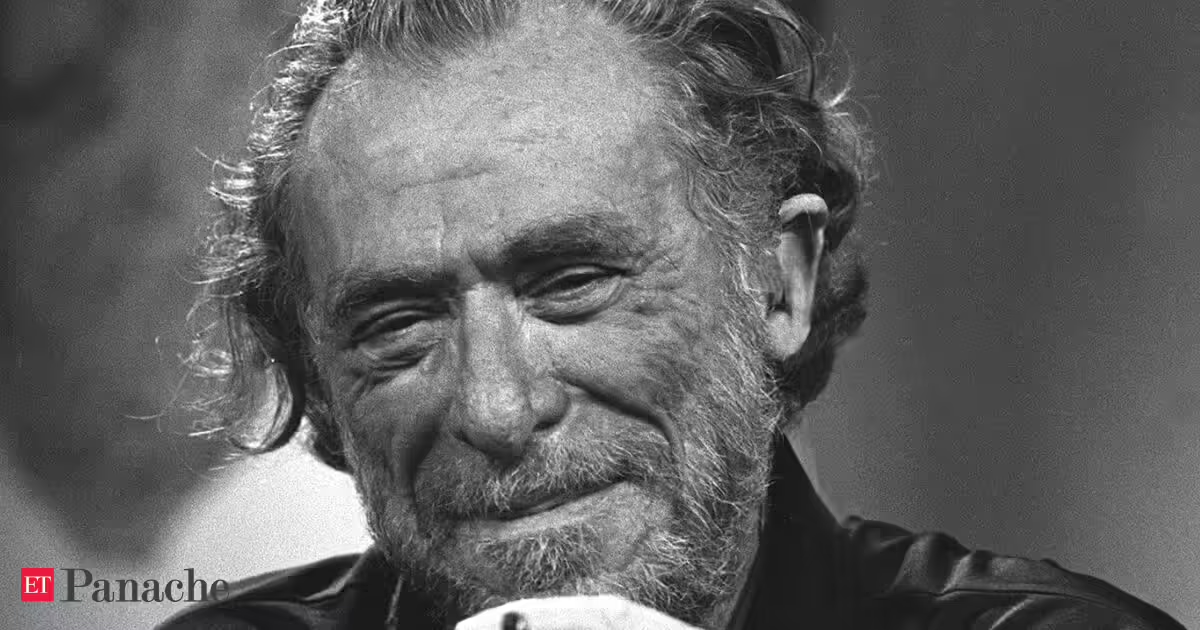
Many quotes stay popular for years because they speak to struggles that people face in everyday life. One such quote comes from writer and poet Charles Bukowski, whose words continue to be shared across social media, books, and motivational discussions decades after his death. His line, “Nobody can save you but yourself – and you're worth saving. It's a war not easily won. But if anything is worth winning this is it,” is often seen as a reminder that personal change begins from within and that the effort to keep going through difficult times is one of life's biggest battles.The quote reads: “Nobody can save you but yourself – and you're worth saving. It's a war not easily won. But if anything is worth winning this is it.”At its heart, the message is about personal responsibility and self-belief. Bukowski suggests that while people may receive support from friends, family or others, no one can ultimately make the difficult choices that shape a person's life. Every individual has to decide whether to keep moving forward, even during painful or uncertain times. The quote also carries a hopeful message. By saying, "you're worth saving," Bukowski reminds readers that their own life has value, even if they cannot always see it themselves.The second part of the quote accepts that this journey is not simple. Bukowski does not promise an easy path or quick success. Instead, he compares it to a hard-fought battle, saying that self-improvement, inner peace and survival take effort and persistence. Yet he also says that if there is one fight worth taking on, it is the fight for yourself. That honest balance between struggle and hope is one reason the quote continues to connect with readers across generations.From the poem Nobody But YouThe quote is not a standalone saying. It is the concluding passage of Bukowski's poem "Nobody But You." The poem was published after his death in the 2002 poetry collection ** Sifting Through the Madness for the Word, the Line, the Way **.Throughout the poem, Bukowski delivers what many readers describe as a direct and uncompromising pep talk. Rather than offering comforting words, he urges people to protect their individuality, resist giving up and keep fighting for their own survival in a world that can often be harsh and discouraging. The final lines, which include this widely shared quote, bring together the poem's central message about resilience and self-preservation.Charles Bukowski's life and literary journeyCharles Bukowski was born on August 16, 1920, in Andernach, Germany, and moved with his family to the United States as a young child. He grew up in Los Angeles, where poverty, family difficulties and a troubled childhood left a lasting mark on his outlook. Many of those personal experiences later became the foundation of his writing.Although Bukowski began writing at a young age and published his first story in his twenties, recognition came slowly. His literary career started in the mid-1940s, but it was only after suffering a serious health crisis in the 1950s that he committed himself fully to writing poetry. During the following decades, he produced a large body of work that included poetry collections, novels and short stories.Bukowski became known for his direct, conversational writing style. He avoided polished literary language and instead focused on ordinary people and difficult realities. His work frequently explored themes such as loneliness, poverty, addiction, disappointment, gambling, relationships and the search for meaning. Many of his stories centred on people living on society's margins, including labourers, drifters, gamblers, sex workers and those struggling with alcoholism.A large part of Bukowski's fiction drew from his own experiences. His recurring fictional character, Henry Chinaski, appears in several novels, including Post Office, Factotum and Ham on Rye. Through Chinaski, Bukowski explored his own life with a mix of dark humour, honesty and emotional vulnerability.While some readers associate him with the Beat Generation because of his free-flowing style and anti-establishment outlook, Bukowski himself was never officially part of that literary movement. He preferred to describe himself simply as a writer rather than a poet. At one point, he remarked, “To say I’m a poet puts me in the company of versifiers, neontasters, fools, clods, and skoundrels masquerading as wise men.” He also openly criticised strict poetic form, believing that writing should remain natural and truthful rather than shaped by rigid rules.
Quote of the day by Charles Bukowski: 'Nobody can save you but yourself, and you're worth saving. It's a war not easily won but if anything is worth winning this is it...' German-American teaches why the hardest battle is the one you fight within
Charles Bukowski's widely shared quote, “Nobody can save you but yourself – and you're worth saving. It's a war not easily won. But if anything is worth winning this is it,” is the closing line of his poem Nobody But You, published posthumously in Sifting Through the Madness for the Word, the Line, the Way (2002). The quote highlights the importance of personal responsibility, resilience and self-worth, while the article also explores Bukowski's life, writing style and lasting influence on modern literature.
720 words~3 min read