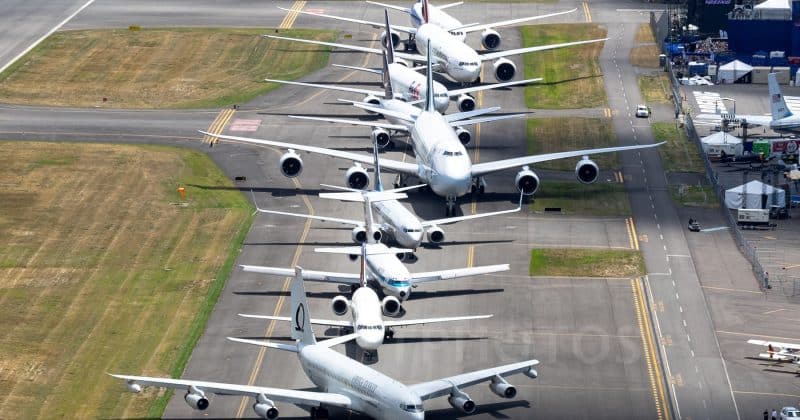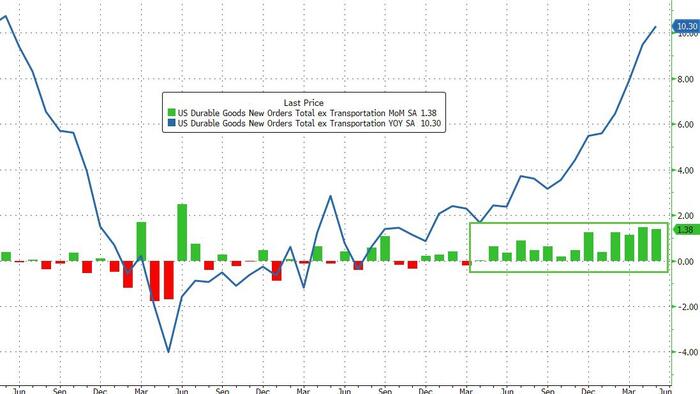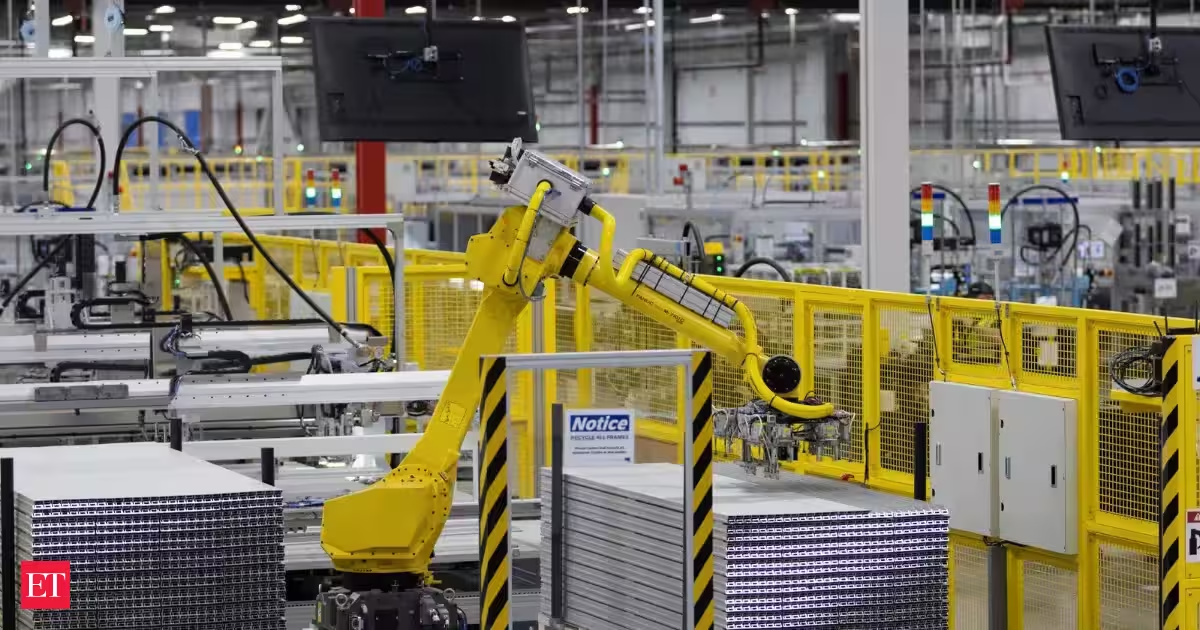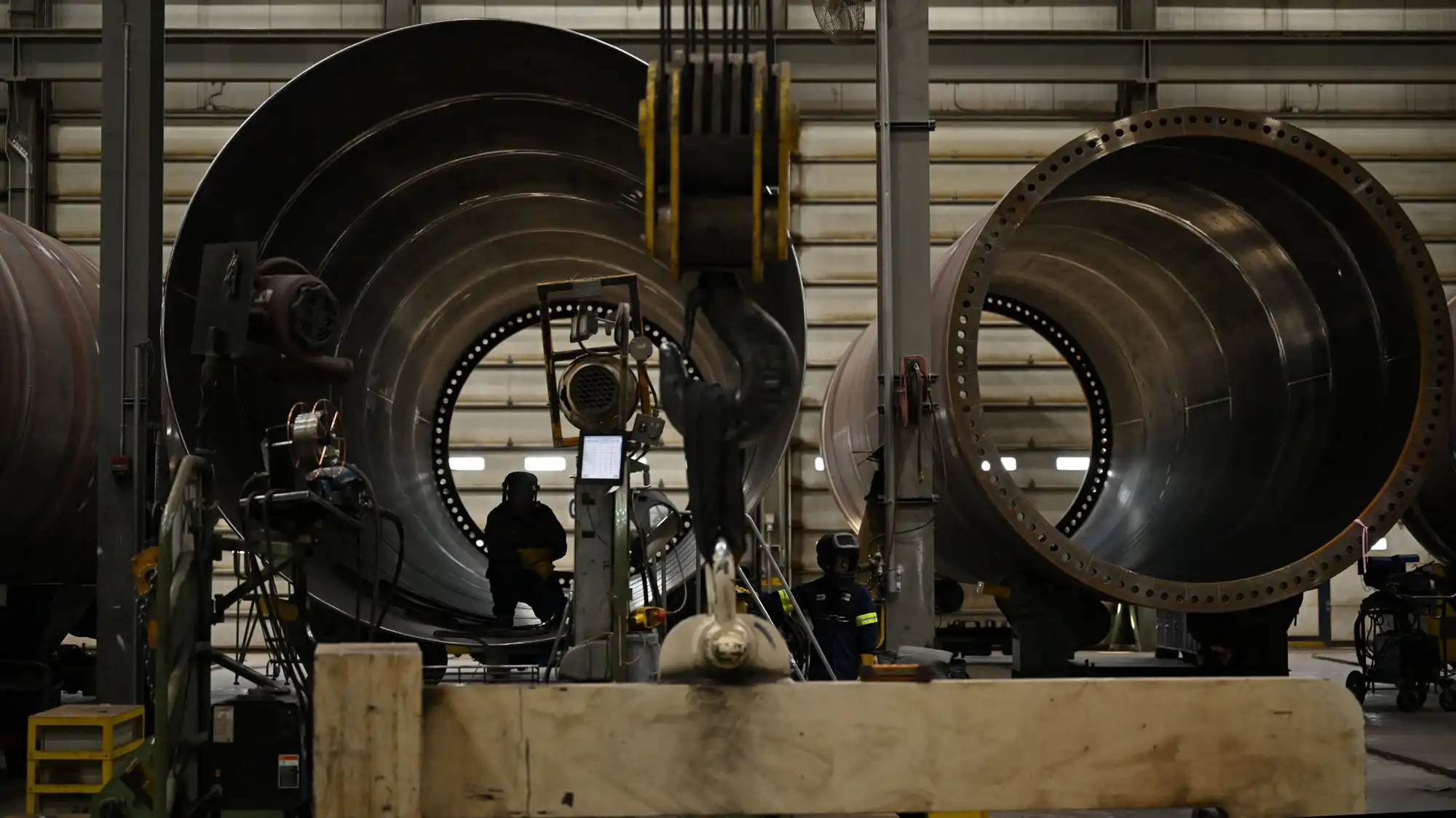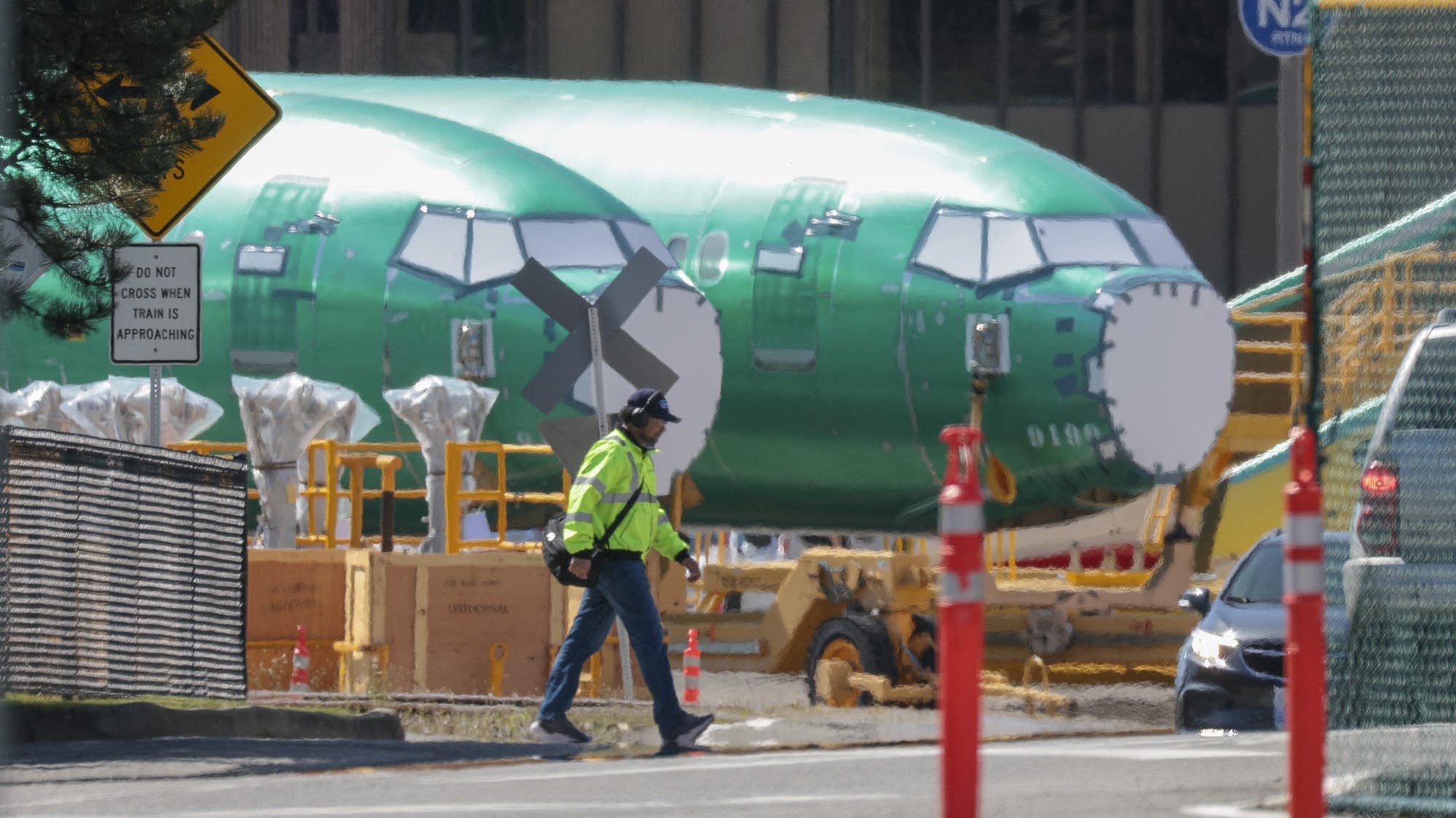
There was some surprisingly strong news from the manufacturing sector this week: Orders for durable goods — that’s expensive items designed to last three years or longer, like cars, planes, and machinery — rose sharply in April.They were up 7.9%, which was more than expected. After falling at the start of the year, it’s a sign of strong economic growth in a sea of economic worry about inflation, high interest rates, and blocked oil supplies from the Middle East.Durable goods orders can be volatile, partly because they include new aircraft, and a bunch of them added to Boeing’s logbook can significantly bump up the numbers. In April, civilian aircraft orders were up a whopping 166%. Foreign and domestic airlines have been rushing to replace their aging fleets, per Richard Aboulafia at AeroDynamic Advisory. And now they have additional incentive: the soaring price of jet fuel.“High fuel prices remind everybody that if you can get a jet with, say, 15% better fuel efficiency, you need to get that jet,” he said.As for warplanes, with geopolitical tensions running high from Europe to Asia to the Middle East, Aboulafia said U.S. defense contractors are seeing “strong ongoing demand for F-15s, F-35s, F-16s, and whatever else on the export front.”Thing is, the strength in manufacturing isn’t limited to aircraft, according to Nationwide economist Oren Klachkin. “Artificial intelligence continues to offer a pretty solid lift,” he said. “AI investment also actually is helping to support other aspects: metals, machinery.”As data centers get built out across the country, they have to be filled with routers and servers, plus conduits to power them and racks to hold them.
Durable goods orders rose sharply in April
There is good news from the manufacturing sector, with orders for durable goods like cars, planes, and machinery up 7.9%.
TL;DRAI
U.S. durable goods orders rose 7.9% in April, civilian aircraft +166% on fleet renewal; AI data centers are driving metals, machinery, and server demand. AI capex is becoming a structural manufacturing force, signaling sustained hardware cycle pressure for infra and procurement teams.
271 words~1 min read