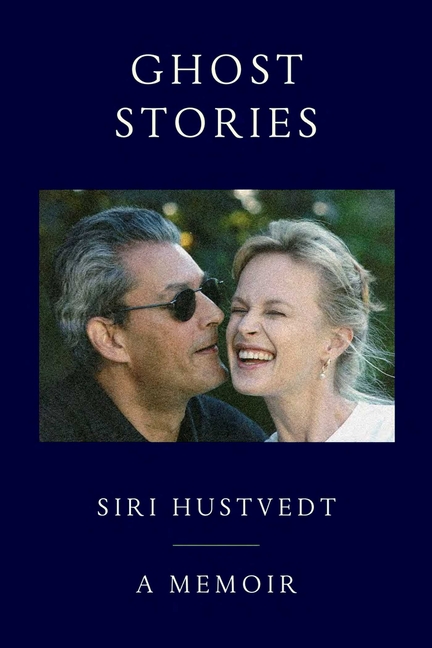
A collage ... Hustvedt’s stitching skills are nimble. This book is cohesive, melancholy, distinctive and — despite the occasional longueur or 'lyrical' moment — genuinely moving ... Hustvedt writes so intimately about their physical and intellectual companionship that she makes you feel, in a way not all memoirists can, the dimensions of the crater he left behind ... The significant and the trivial mix, neither pushing the other aside ... She goes too deeply, for this reader, into the nature of ghosts. I wish her sense of humor were, even darkly, in evidence. She writes about laughing and says she is alert to humor but tends to be deadly serious on the page. This might be the place to remark that Auster’s and Hustvedt’s books have never quite been in my wheelhouse. But Ghost Stories is almost exactly my kind of thing. It’s a grainy and resonant book about loneliness, despair and confusion. It’s close to a howl.
Read Full Review >>
For a thinker of such exquisite taste and grasping wisdom, a writer incapable of a limp sentence or lazy answer, the loss of her own thoughts is right next door to the hell she’s already living in. Her new notion of self then, one without Auster to accompany her, becomes suspect, uncertain, a scaffold that trembles beneath the tentative steps of deep sorrow ... Hustvedt’s attention to objects—Auster’s pens, his typewriter ribbons, his boxer shorts—will remind you of the fetishistic detail of Proust, but without Proust’s aesthetics of consolation. There is no madeleine here to restore the past. Instead, objects testify to emptiness, to irreversibility ... the prose oscillates between much-needed detachment and deeply lyrical engagement. This oscillation mimics grief’s dual nature: it is both a physiological disruption and an existential undoing ... There is no manufactured uplift at the end of her telling. She knows the abyss left by Auster’s death will never fill. But after six months of his absence she has begun to reassemble herself: in small parts, in disparate places.