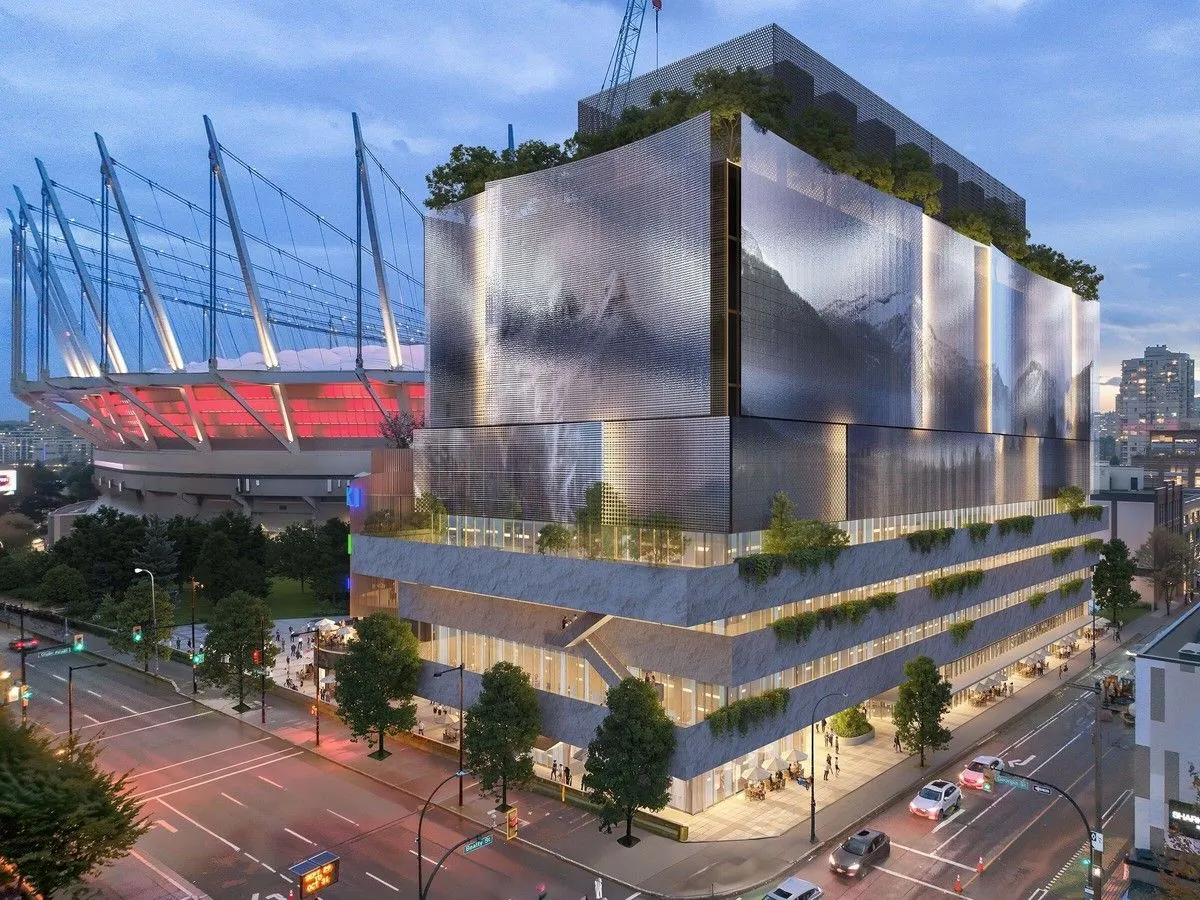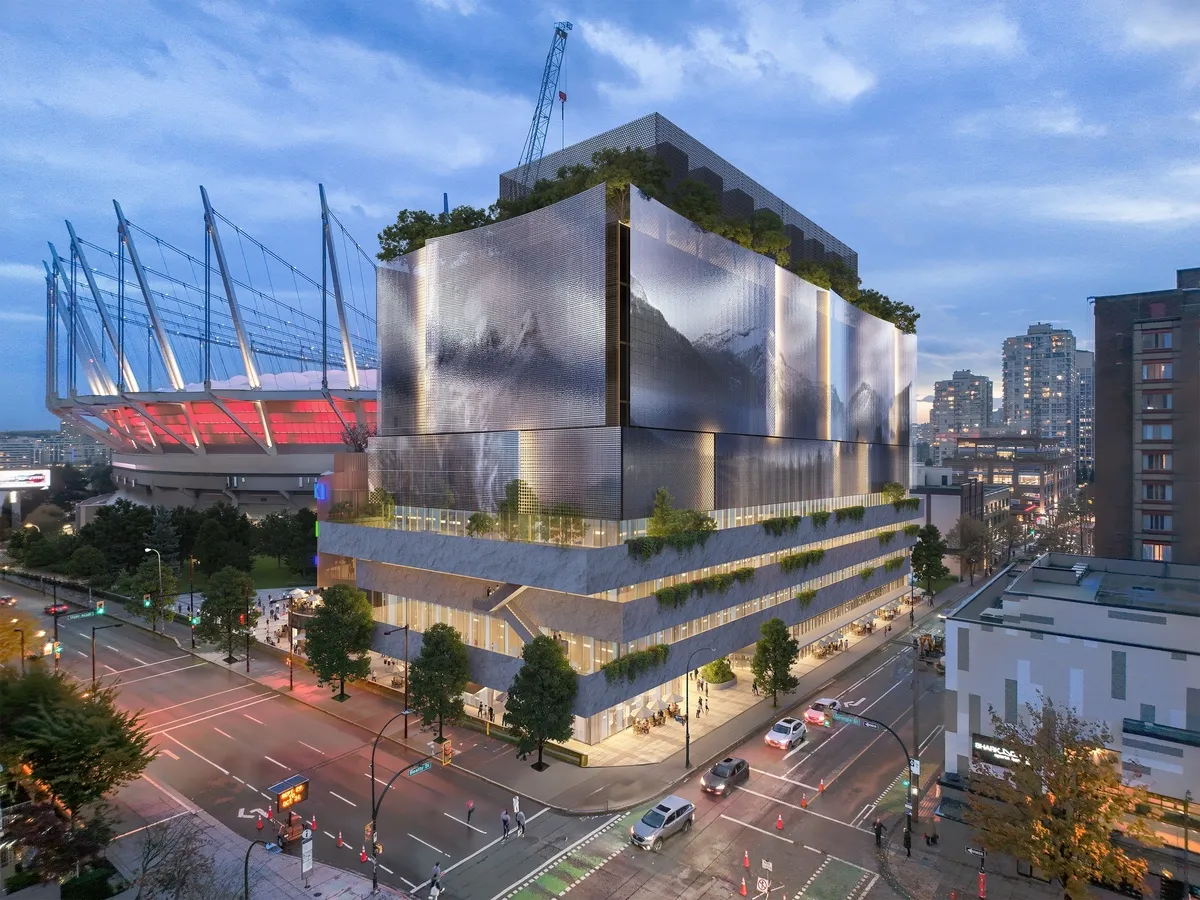
Skip to Content News Archives Economy Energy Oil & Gas Renewables Electric Vehicles Mining Commodities Agriculture Real Estate Mortgages Mortgage Rates Finance Banking Insurance Fintech Cryptocurrency Work Wealth Smart Money Wealth Management Investor Personal Finance Family Finance Retirement Taxes High Net Worth FP Comment Executive Women Puzzmo Newsletters Financial Times Business Essentials More Innovation Information Technology FP500 Podcasts Small Business Lives Told Tails Told Shopping Financial Post Store Obituaries Place a Notice Advertising Advertising With Us Advertising Solutions Postmedia Ad Manager Sponsorship Requests Classifieds Place a Classifieds ad Working Profile Settings My Subscriptions Saved Articles My Offers Newsletters Customer Service FAQ News Economy Energy Mining Real Estate Finance Work Wealth Investor FP Comment Executive Women Puzzmo Newsletters Financial Times Business Essentials HomeCommoditiesEnergyInnovationHow would Telus AI factory data centres stack up on sustainability scale?Telus is going to build AI data centres in Vancouver. They're smaller than U.S. AI facilities but are they more sustainable? You can save this article by registering for free here. Or sign-in if you have an account.Westbank rendering of Telus AI data centre at 150 West Georgia St. Photo by Telus/WestbankPlans by Telus to build artificial intelligence data centres in Vancouver look modest when compared to massive AI infrastructure in the U.S. that suck up enough electricity to power major cities.Subscribe now to read the latest news in your city and across Canada.Exclusive articles from Barbara Shecter, Joe O'Connor, Gabriel Friedman, and others.Daily content from Financial Times, the world's leading global business publication.Unlimited online access to read articles from Financial Post, National Post and 15 news sites across Canada with one account.National Post ePaper, an electronic replica of the print edition to view on any device, share and comment on.Daily puzzles, including the New York Times Crossword.Subscribe now to read the latest news in your city and across Canada.Exclusive articles from Barbara Shecter, Joe O'Connor, Gabriel Friedman and others.Daily content from Financial Times, the world's leading global business publication.Unlimited online access to read articles from Financial Post, National Post and 15 news sites across Canada with one account.National Post ePaper, an electronic replica of the print edition to view on any device, share and comment on.Daily puzzles, including the New York Times Crossword.Create an account or sign in to continue with your reading experience.Access articles from across Canada with one account.Share your thoughts and join the conversation in the comments.Enjoy additional articles per month.Get email updates from your favourite authors.Create an account or sign in to continue with your reading experience.Access articles from across Canada with one accountShare your thoughts and join the conversation in the commentsEnjoy additional articles per monthGet email updates from your favourite authorsSign In or Create an AccountorThe centres, one under construction in Mount Pleasant and one to be built downtown, along with an existing data centre in Kamloops, are part of Telus’ $1 billion AI Factory project to provide sovereign, Canadian-owned computing power for the burgeoning industry.But the project finds itself at the centre of a global backlash against AI over the environmental impacts of data centres, and the threat the technology poses to jobs and creative industries.A group calling itself No AI Data Centres in Vancouver led a protest on May 23 that took over part of downtown for a couple of hours. Some 750 protesters chanted “Use Your Brain” as a rallying cry to encapsulate frustration over the industry’s negative implications.Westbank, the developer building the facilities for Telus, promises the centres will “set a new standard” for sustainability.Below we look at the data centres in question, concerns around their impact, and AI generally.The first facility, dubbed M3, is a 100,000-sq.-ft. centre being built in the former headquarters of Hootsuite in Mount Pleasant. It will run 13,000 graphics processing units (GPUs), the powerful computing chips used by AI, that will require up to 26 megawatts of electricity. It is set to open at the end of 2026. Rendering for future TELUS AI data centre in Mount Pleasant in Vancouver near Main Street and East 5th Avenue. Photo by Telus/WestbankThe second centre is planned as a 400,000-sq.-ft. facility at 150 West Georgia St. to be built as a 10-storey tower to house up to 50,000 GPUs that would consume up to 100 megawatts of electricity. It is set to come online in 2029.Combined with another data centre in Kamloops, the three sites are expected to use 151 megawatts by 2032, enough electricity to power some 80,000 homes.Telus says the cluster of data centres will “ensure B.C.’s businesses, startups and research institutions are first in line for the most advanced AI capabilities available,” according to an unattributed statement from the company.Financial details have not been disclosed, but Ottawa pledged to support the Telus project as part of the government’s sovereign AI strategy. Local experts don’t expect these centres would be of use for industry giants, such as Microsoft or ChatGPT’s parent Open AI.“They need (computing power) that is, I don’t know the scale, more than these will provide,” said Rob Goehring, executive director of the AI Network of B.C.“It’s going to be a lot of government-regulated industries, Canadian organizations that have data (they need to secure), and I think even small and medium businesses,” Goehring added.B.C. is known as Canada’s third largest hub with more than 500 companies, according to Trade and Invest B.C.One advantage for Telus’ urban locations for data centres is their ability to capture the heat that thousands of GPUs generate.“A closed-loop liquid cooling system will reduce cooling energy consumption by 80 per cent compared to traditional data centres, while recycling electricity as carbon-free thermal energy to heat the equivalent of 150,000 homes,” according to Telus. More than 500 people opposed to data centres and AI march through downtown Vancouver May 23, 2026. Photo by Jason Payne /PNGTelus also estimates its systems will use 90 per cent less water than typical air-cooled systems — which Goehring likened to “constantly pulling water and spewing it onto the street” — with plans to incorporate recycled water from BC Place.“So that’s a really important distinction,” Goehring said. He added that similar approaches have been used in AI data centres across Europe where there are stricter net-zero energy requirements.Goehring said another distinction will be in power use. B.C. Hydro has carved out a limited amount of electricity for AI, opening up a competitive bid for 400 megawatts of available generating capacity, which Telus’ proposal fits neatly within.By contrast, one of the biggest data centres being planned in Utah would use 9,700 megawatts, about the same as all the electricity now generated in the entire state.In interviews, No AI Data Centres organizer Torin LaRoque said the Telus proposal is still being made at the same time Metro Vancouver is about to order Stage 3 water restrictions on residents, so to propose drawing more water “seems counterintuitive to me.”University of B.C. sustainability economist Hamish van der Ven said that even with a lower environmental impact, there is still an impact that isn’t negligible, including taking up urban land that could have been used for housing, even social housing.“You’re asking an urban population in a housing crisis to take up space to build a data centre instead of homes or social housing,” van der Ven said.Van der Ven said the disruption that AI has posed, with reports of thousands of layoffs due to the technology and threats that it will pose to entry-level employment, are bigger concerns wrapped up in the backlash.“I think what people object to the most here is what they perceive to be as being steamrolled by big tech and by their allies in the federal government,” van der Ven said.Alan Mackworth, a professor emeritus in computing science at the University of B.C., said data centres have become the focus of a lot of fears that people have about the technology.“They’re worried about job losses, they’re worried about deep fakes, they’re worried about suicides, social media and AI, you name it,” he said. Join the Conversation This website uses cookies to personalize your content (including ads), and allows us to analyze our traffic. Read more about cookies here. By continuing to use our site, you agree to our Terms of Use and Privacy Policy.
How would Telus AI factory data centres stack up on sustainability scale?
Telus is going to build AI data centres in Vancouver. They're smaller than U.S. AI facilities but are they more sustainable?
TL;DRAI
Telus is building two Vancouver AI data centres (63,000 GPUs, 151 MW by 2032) as part of its $1B sovereign AI Factory. Targeted at regulated industries and SMBs—not hyperscalers—it fills a sovereign compute gap for data residency and compliance workloads.
1,360 words~6 min read