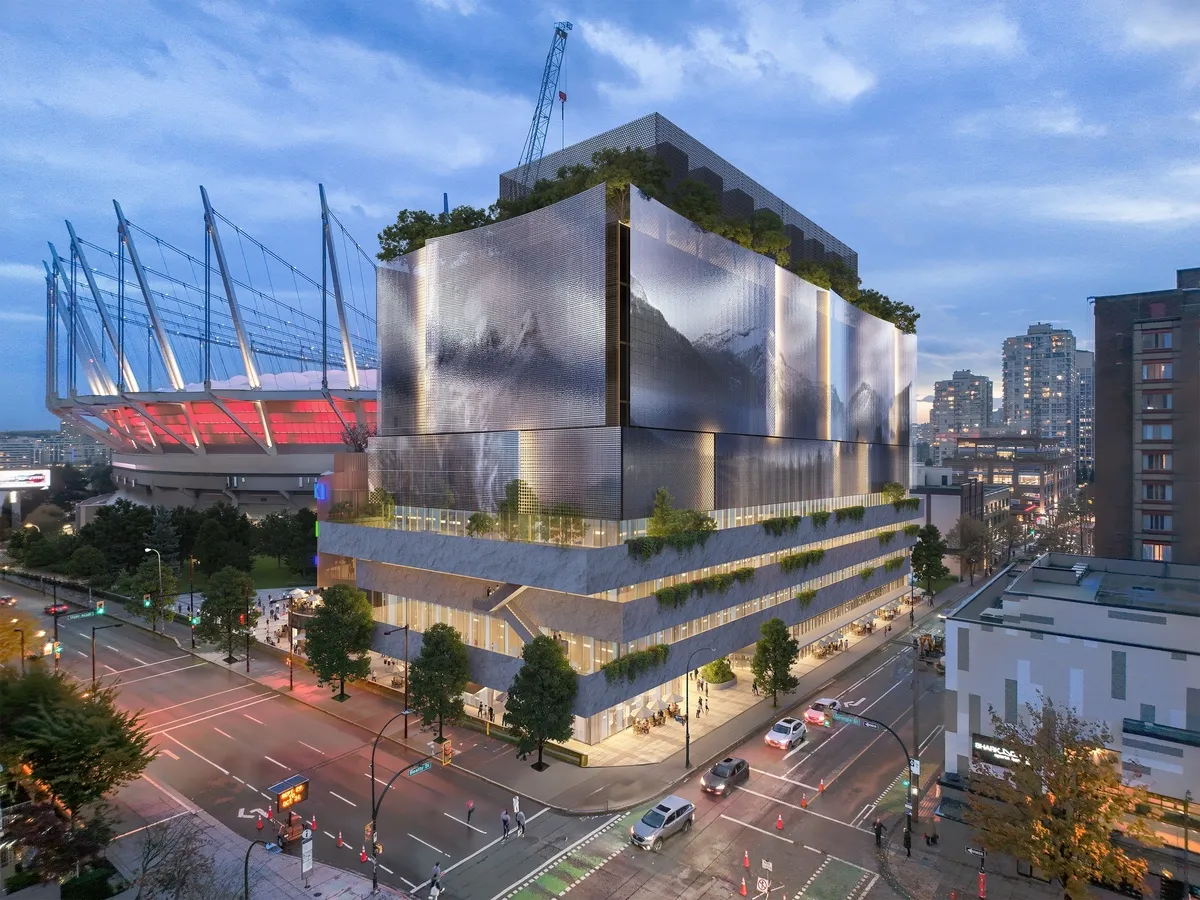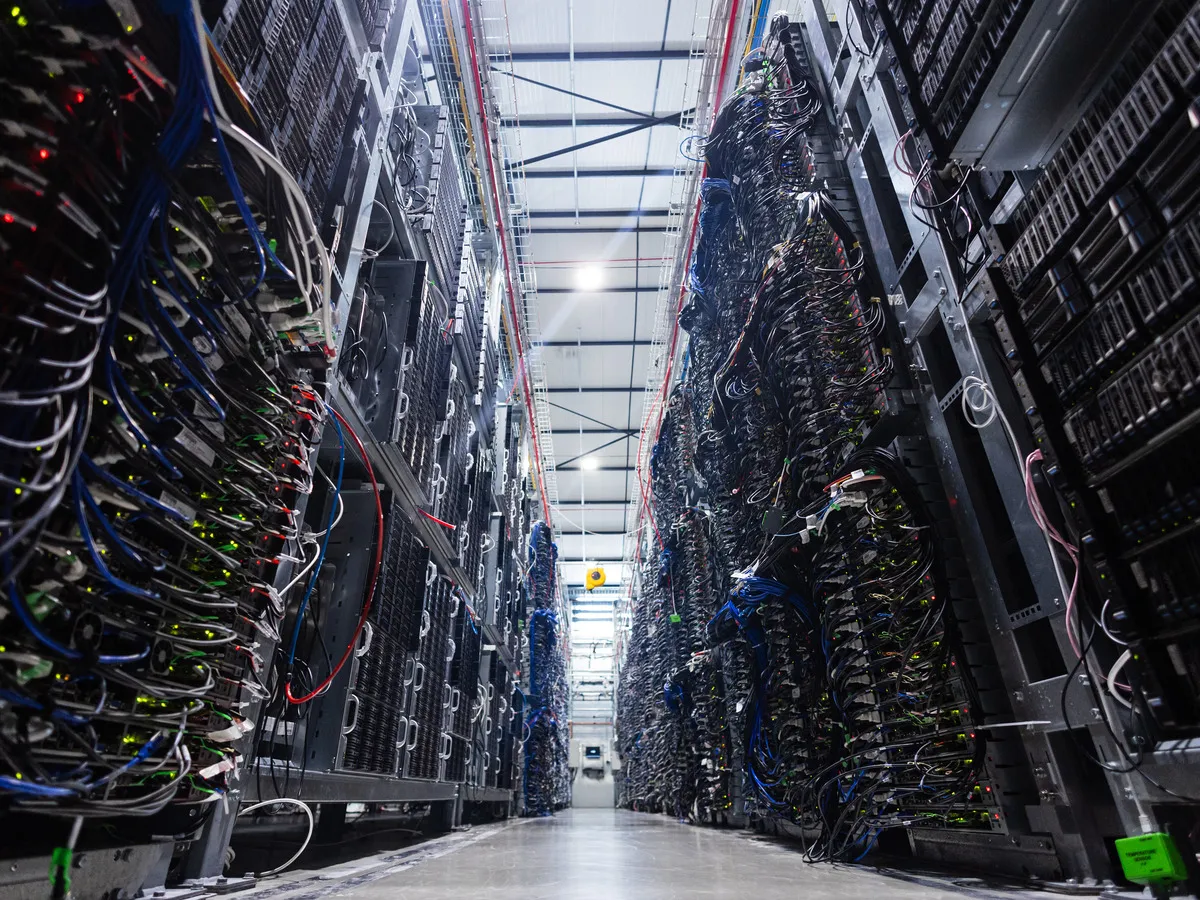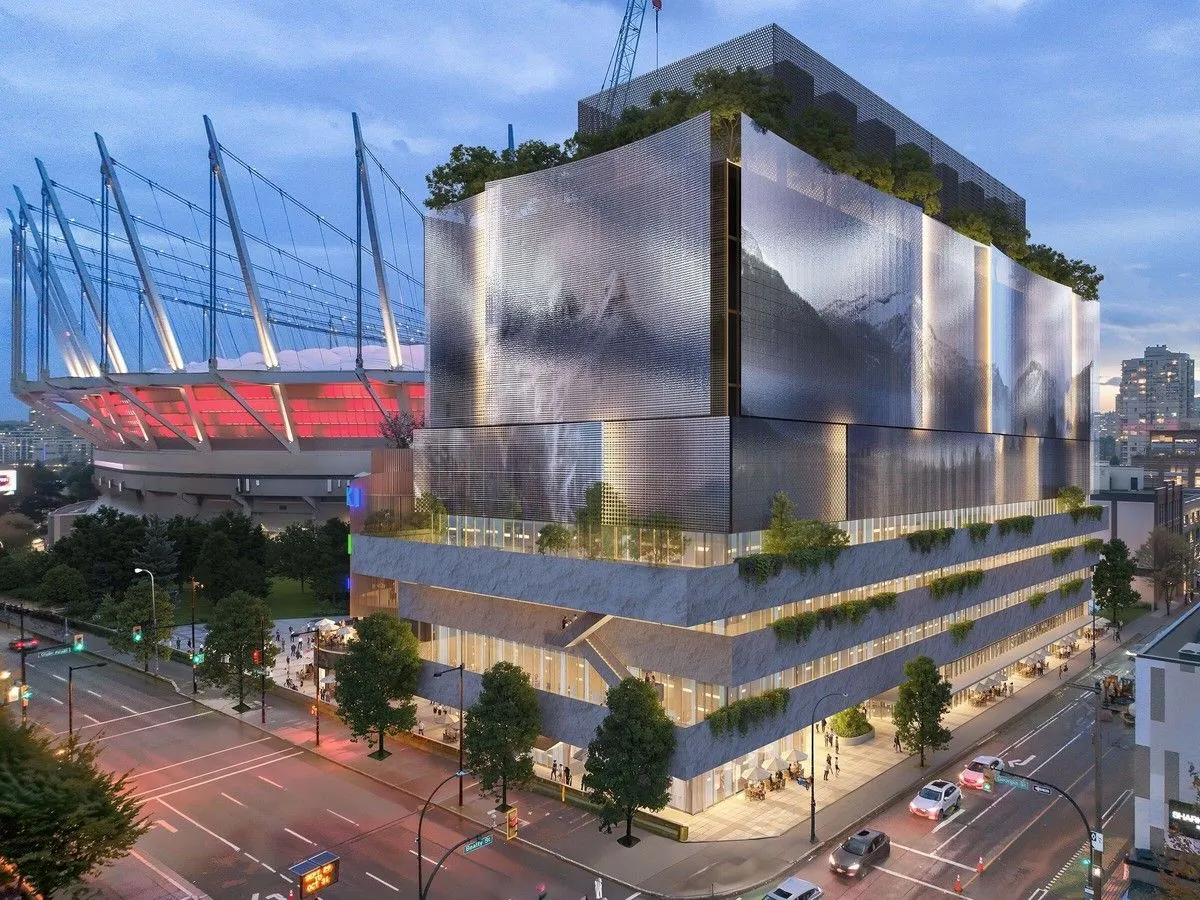
Skip to Content News Archives Economy Energy Oil & Gas Renewables Electric Vehicles Mining Commodities Agriculture Real Estate Mortgages Mortgage Rates Finance Banking Insurance Fintech Cryptocurrency Work Wealth Smart Money Wealth Management Investor Personal Finance Family Finance Retirement Taxes High Net Worth FP Comment Executive Women Puzzmo Newsletters Financial Times Business Essentials More Innovation Information Technology FP500 Podcasts Small Business Lives Told Tails Told Shopping Financial Post Store Obituaries Place a Notice Advertising Advertising With Us Advertising Solutions Postmedia Ad Manager Sponsorship Requests Classifieds Place a Classifieds ad Working Profile Settings My Subscriptions Saved Articles My Offers Newsletters Customer Service FAQ News Economy Energy Mining Real Estate Finance Work Wealth Investor FP Comment Executive Women Puzzmo Newsletters Financial Times Business Essentials HomeInnovationNewsB.C.'s new AI centres: 5 things to know about how they'll work and what they'll costVancouver and Kamloops will soon be home to new AI data centres. Here's what will happen inside, who they'll serve and the impact on localsLast updated 1 day ago You can save this article by registering for free here. Or sign-in if you have an account.Telus AI Factory rendering. Telus is advancing work with the government of Canada on a proposed Sovereign AI Factory cluster under the federal enabling large-scale sovereign AI data centres initiative — a program designed to build the sovereign, high-performance AI compute infrastructure Canada needs to compete in the global AI economy.Artificial Intelligence, or AI, is increasingly creeping its way into our everyday lives, from online searches, to navigation assistants, to our kids’ homework.Subscribe now to read the latest news in your city and across Canada.Exclusive articles from Barbara Shecter, Joe O'Connor, Gabriel Friedman, and others.Daily content from Financial Times, the world's leading global business publication.Unlimited online access to read articles from Financial Post, National Post and 15 news sites across Canada with one account.National Post ePaper, an electronic replica of the print edition to view on any device, share and comment on.Daily puzzles, including the New York Times Crossword.Subscribe now to read the latest news in your city and across Canada.Exclusive articles from Barbara Shecter, Joe O'Connor, Gabriel Friedman and others.Daily content from Financial Times, the world's leading global business publication.Unlimited online access to read articles from Financial Post, National Post and 15 news sites across Canada with one account.National Post ePaper, an electronic replica of the print edition to view on any device, share and comment on.Daily puzzles, including the New York Times Crossword.Create an account or sign in to continue with your reading experience.Access articles from across Canada with one account.Share your thoughts and join the conversation in the comments.Enjoy additional articles per month.Get email updates from your favourite authors.Create an account or sign in to continue with your reading experience.Access articles from across Canada with one accountShare your thoughts and join the conversation in the commentsEnjoy additional articles per monthGet email updates from your favourite authorsSign In or Create an AccountorIt can be seen as an important tool for the future. But the technology also raises concerns about the loss of privacy, proprietary rights and jobs, and even difficulty sleeping and other health woes from the low-frequency buzz from the buildings.So, what should we know about the three new AI centres in Vancouver and Kamloops? While announcing them on Monday, the federal government and Telus said they would be “sovereign” centres that will keep Canadians’ data in our country, at a time of increasing political tensions with the U.S.Breaking business news, incisive views, must-reads and market signals. Weekdays by 9 a.m.By signing up you consent to receive the above newsletter from Postmedia Network Inc.A welcome email is on its way. If you don't see it, please check your junk folder.The next issue of Posthaste will soon be in your inbox.We encountered an issue signing you up. Please try againPostmedia News has covered how a Vancouver company will help address the significant environmental impacts of these facilities, which consume high rates of electricity and volumes of water for cooling, as well as expel a significant amount of heat byproduct that escapes into the air.Here are five other things you should know about the centres:Telus says organizations can use these “high-performance compute facilities” to build AI models from scratch, customize or fine-tune existing models for a specific need, and run their AI models in live applications.“This is the same class of technology infrastructure that powers the world’s most advanced AI systems,” said Chris Madan, a Telus vice-president in charge of the AI centres. “The fundamental difference from other providers is that Telus is 100 per cent Canadian owned and operated, and every layer of the infrastructure — the facilities, the networks, the hardware, the data and IP — is protected under Canadian jurisdiction.”Organizations of every size, including large enterprises, public institutions, small startups and researchers.Customers rent compute capacity from the centres, rather than owning the hardware themselves. The infrastructure will support training new AI models, allow Canadian researchers to build proprietary AI from the ground up, and keep the intellectual property and economic value of that work in this country, Madan said.A smaller data centre called M3 is expected to open in Vancouver’s Mount Pleasant neighbourhood by the end of 2026, and continue to expand over the next two years. It will be integrated into the city’s energy grid, which will capture the heat byproduct generated by the burning of electricity in the centres and use it to heat homes. Artist’s rendering of the Mount Pleasant site (centre). Credit: TelusA larger data centre is scheduled to be built by 2029 at 150 West Georgia St., the current home of Vancouver company Creative Energy, which runs a downtown underground pipe network that delivers energy to 215 buildings. That network will also capture the AI centre’s heat byproduct, and use it to heat homes. By 2032, the centre’s capacity is expected to scale to more than 100 megawatts of electricity — which the Canadian Climate Institute says is roughly equivalent to charging 350,000 electric vehicles a year.The Kamloops “AI Factory” will be in an expansion of Telus’s existing data centre, and is expected to go online later this year. It will be powered by GPUs, or graphics processing units used to train AI models, from the powerhouse American technology company Nvidia, Madan said.According to a new report, two out of every five British Columbians worry that the growth of AI has negatively impacted their careers, with university graduates feeling the strain more than those with high school diplomas.When asked about squaring its support for the new centres against the potential for British Columbians being replaced by computers, the provincial Ministry of Jobs said in an email that AI “should be used to enhance work, not replace it.” The province offers grants to eligible residents for training in several AI-related programs.Madan acknowledged that job stability “is a genuine concern for many Canadians,” but argued the new AI centres will create more opportunities beyond the 1,000 construction workers hired to build them, and the 525 employees who will work in them. He predicted the centres would be “growth catalysts” in the surrounding communities, but didn’t elaborate on the types of spinoff jobs that could be created.He also noted that many Canadian tech workers moved to Silicon Valley in the past, but may be encouraged to stay in Canada now with access to this new AI infrastructure.We couldn’t get clear answers to questions as to who is paying to build the centres, and who will ultimately own them.B.C. isn’t supplying any money, a provincial government spokesperson said. One of the province’s roles is to provide the power to run the facilities through B.C. Hydro.The federal government and the City of Vancouver haven’t yet answered questions that were submitted by Postmedia on Tuesday morning.Telus said it continues to work with Ottawa on the details of being the first project selected under the federal sovereign AI data centre initiative. The negotiations include “options ranging from direct funding to anchor tenancy arrangements,” Madan said. Join the Conversation This website uses cookies to personalize your content (including ads), and allows us to analyze our traffic. Read more about cookies here. By continuing to use our site, you agree to our Terms of Use and Privacy Policy.
B.C.'s new AI centres: 5 things to know about how they'll work and what they'll cost
Vancouver and Kamloops will soon be home to new AI data centres. Here's what will happen inside, who they'll serve and the impact on locals.
1,369 words~6 min read