By now, the global discourse on artificial intelligence has moved far beyond the realm of science fiction. AI is no longer a futuristic abstraction. It is shaping economies, governance systems, education, medicine, defence, banking, media, and even the democratic process itself. Across the world, nations are racing to develop national AI frameworks and policies that will guide how this powerful technology is deployed, regulated, and governed.
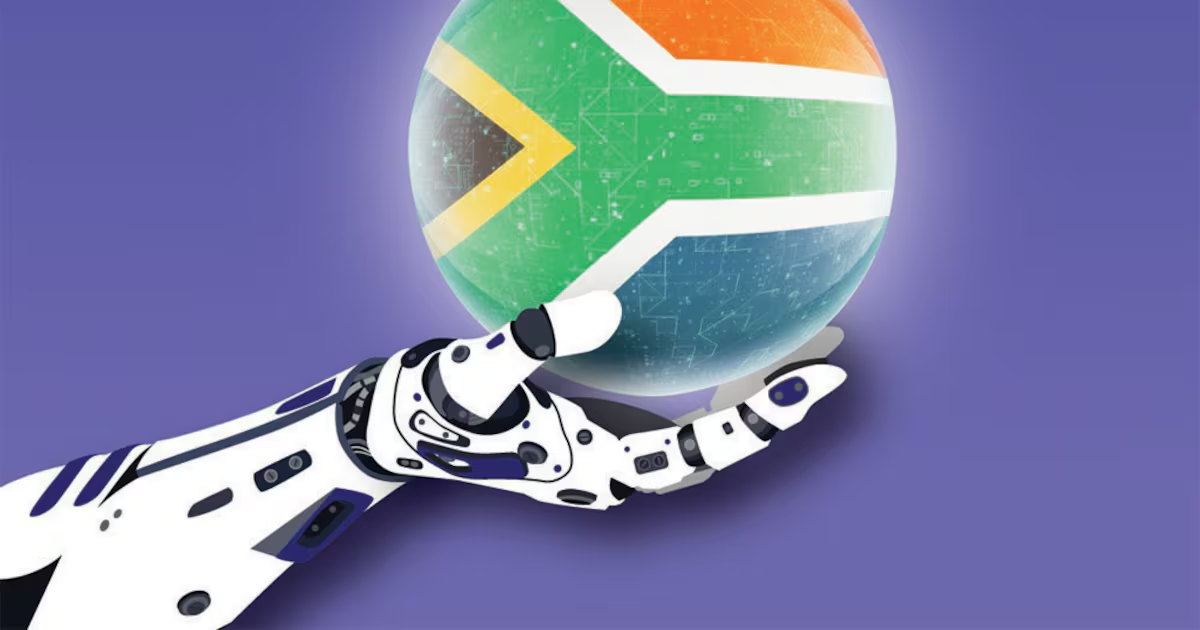
It is therefore both significant and instructive that the Government of South Africa recently withdrew its proposed national artificial intelligence framework after concerns emerged regarding questionable references and citations contained in the document, references reportedly suspected to have been inaccurately generated through AI tools.
What happened in South Africa is not merely a policy embarrassment. It is, in my respectful view, a defining moment in the global conversation around the ethical and responsible use of AI.
More importantly, it is also a remarkable demonstration of leadership, humility, accountability, and institutional honesty.
The South African government deserves commendation, not condemnation, for acknowledging the error and withdrawing the document for reassessment by an independent panel of experts.