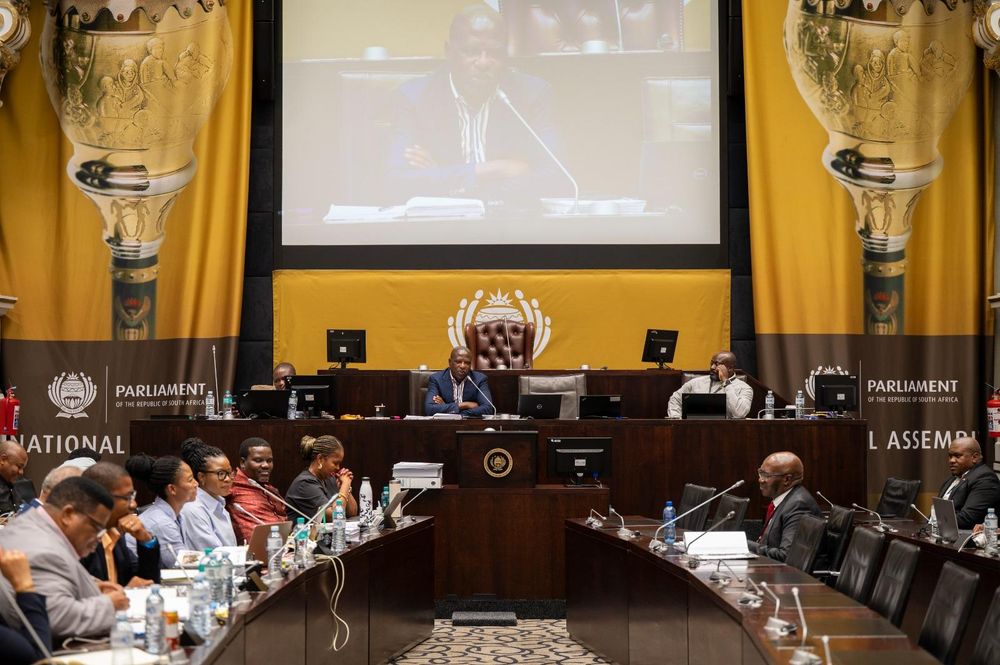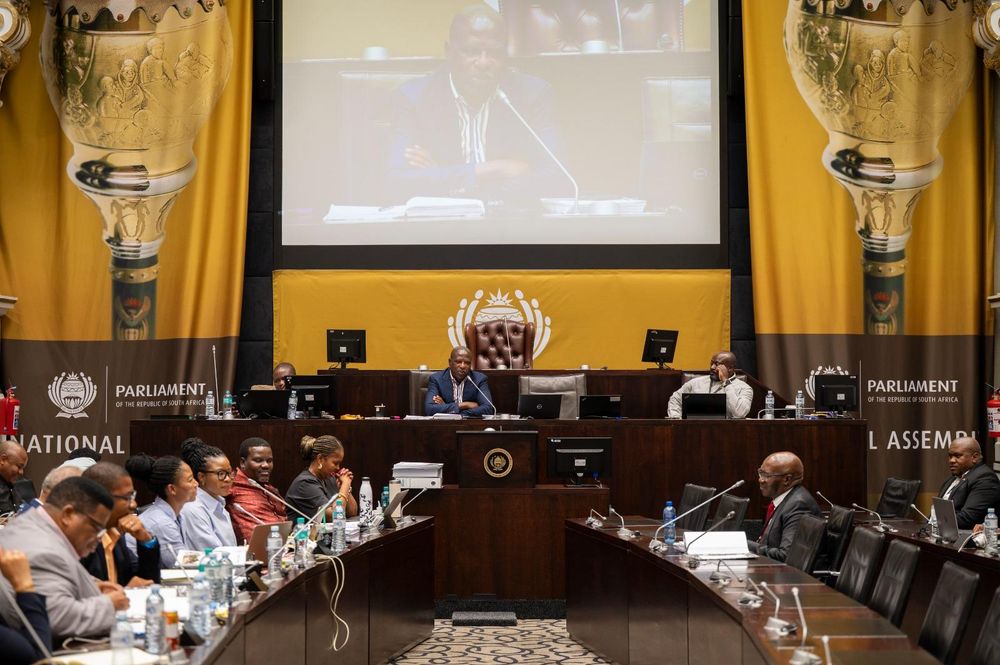
Norman Arendse, the evidence leader of the parliament ad hoc committee investigating allegations of corruption in the criminal justice system, has presented a report detailing findings from evidence presented before the committee.The committee met on Thursday evening to receive a presentation of the draft report from evidence leaders. Committee members will study the report for a week and make its findings and recommendations. Arising from the evidence presented by several witnesses, Arendse announced key credible assessments made.He said that in the matter of suspended police minister Senzo Mchunu’s December 31 2024 letter to disband the political killings task team (PKTT), “we conclude that on his own evidence he issued the directive using the word ‘immediately’ but was unable to reconcile the subsequent resistance to that meaning with the ordinary meaning of his own letter”, Arendse said.Arendse said what stood out from the evidence of multiple witnesses, including suspended national police commissioner Gen Fannie Masemola, was that they were not consulted about the directive and only found out about it through social media.President Cyril Ramaphosa also confirmed he was not consulted and did not approve the disbandment. Meanwhile, Mchunu’s statement to the portfolio committee of police in March 2025 was that the president was consulted and was “in agreement” with the disbandment of the PKTT. The committee established Mogotsi ran the minister’s ANC branding campaign in 2017. The committee made it clear to Mogotsi that he was not truthful about the nature of his relationship with the minister.— Norman Arendse SC, evidence leader“That was found to be unfounded,” Arendse said. The minister said a short meeting was conducted, but no minutes of it were provided.Arendse said the committee will examine the credibility of Mchunu’s reasons for issuing the disbandment letter, which, in his testimony, he said was due to various factors, including alleged abuse by PKTT members to suspects and budgetary constraints.“Whether the directive was [beyond] the minister’s powers under the constitution is a matter reserved by the committee. A credible evidentiary basis exists for the inference that the disbandment was influenced by PKTT success in assisting the Gauteng counter-intelligence operation to unmask a criminal syndicate involved in law enforcement officials, not by the operational or budgetary reasons advanced.”The report then examined the alleged corrupt relationship between Mchunu and alleged political fixer Brown Mogotsi and alleged criminal syndicate member Vusimusi “Cat” Matlala.Arendse noted that Mchunu initially told the police portfolio committee in March 2025 that he did not know Mogotsi, but when he appeared before the ad hoc committee after that, he confirmed twice that he knew him. “The committee established Mogotsi ran the minister’s ANC branding campaign in 2017. The committee made it clear to Mogotsi that he was not truthful about the nature of his relationship with the minister.”Matlala was also a central figure in the alleged criminal syndicate. Some key facts established from his testimony were that he had an extensive criminal history spanning 25 years as well as admitting to bribing former police minister Bheki Cele.Matlala’s evidence is not credible in material. He was characterised as a participant rather than a victim of the alleged corrupt network.— ArendseHe admitted making cash payments totalling R500,000 to Cele on two occasions as a facilitation fee to get the police to stop its operations against him. He conceded the payments were illegal and amounted to bribery. However, Cele was not given the opportunity to address the bribery allegations as he testified before Matlala.Matlala also admitted the appointment of his sister as a director of Medicare 24 Tshwane District, the company that was awarded a police service healthcare irregular tender in 2024, was a front. The evidence leaders also noted that Matlala maintained a close relationship with a known manufacturer of illegal narcotics, Jerry Boshoga, for two years without reporting the illegal activity to authorities and admitted loaning Boshoga about R1m.Another contentious matter on Matlala’s evidence was the revelation that he travelled in a convoy with about six vehicles and about 14 personal protectors from the former Special Task Force and SANDF special forces personnel at a cost of about R2m a month, raising concerns about infiltration in the criminal justice system.Another big item before the committee was the R360m health-care tender awarded to Matlala by SAPS in 2024 despite the company not having a track record of rendering medical services between 2018 and 2024. Failures were discovered in the awarding of the tender. The bid adjudication committee conceded that there should have been a disqualification. There were allegations of failure of due diligence facing Matlala in the media when the tender was awarded. The contract was signed regardless.“Matlala’s evidence is not credible in material,” Arendse said. “He was characterised as a participant rather than a victim of the alleged corrupt network. His admissions to bribing Cele and his sister’s fronting of the company and his association with a narcotics manufacturer mean that this warrants a continued referral to the National Prosecuting Authority, the Investigating Directorate Against Corruption (IDAC) and the Special Investigating Unit.”On Matlala’s admissions, Arendse said: “These admissions independently justify continued criminal investigation and prosecution.”The evidence recorded a serious and multilayered institutional crisis.— ArendseThe evidence leader recommended the former chair of the bid adjudication committee, Lt-Gen Molefe Fani, be referred to IDAC for further investigation and prosecution for the breaches of the Public Finance Management Act “in that he signed off on the awarding of the tender under delegation from the national commissioner in the face of glaring procurement lapses by both the bid evaluation committee and the bid adjudication committee”.Fani was assessed to have abdicated his responsibility as the bid adjudication chair, he said.Masemola’s evidence was credible and consistent on the constitutional framework and operational impact of the directive, said Arendse. While Ramaphosa did not explicitly sanction the disbandment, Arendse noted that his response — establishing the Madlanga commission, placing Mchunu on special leave and appointing an acting minister — was constitutionally permitted. However, the evidence still reveals a pattern of passive executive oversight in the police portfolio, an issue the committee may wish to address in their recommendations.”Several other measures were recommended by the committee, including: vetting across all senior SAPS officials;continuation and capacitation of the PKTT and an establishment of a similar capacity in Gauteng; the institution of the multidisciplinary prosecution-guided model;expanding the mandate of IDAC to address systemic issues;fully operationalising the role of the inspecting judge; anddigital docket management, body cameras and data-driven policing. Areas not fully explored during proceedings were the infiltration of correctional services and the judiciary by criminal elements.In conclusion, Arendse said: “The evidence recorded a serious and multilayered institutional crisis.”TimesLIVE
Ad hoc committee draft report details ‘serious, multilayered institutional crisis’
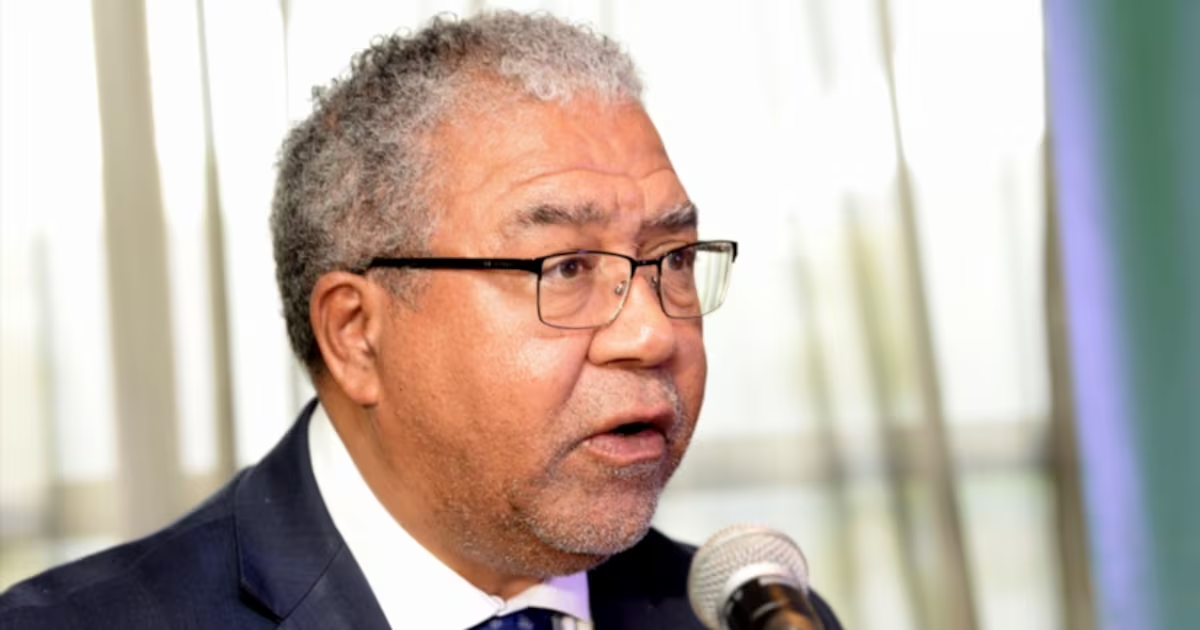
Evidence leader Norman Arendse presents draft report detailing findings from evidence presented before the committee investigating allegations of corruption in the criminal justice system
1,099 words~5 min read