AP, NEW YORK
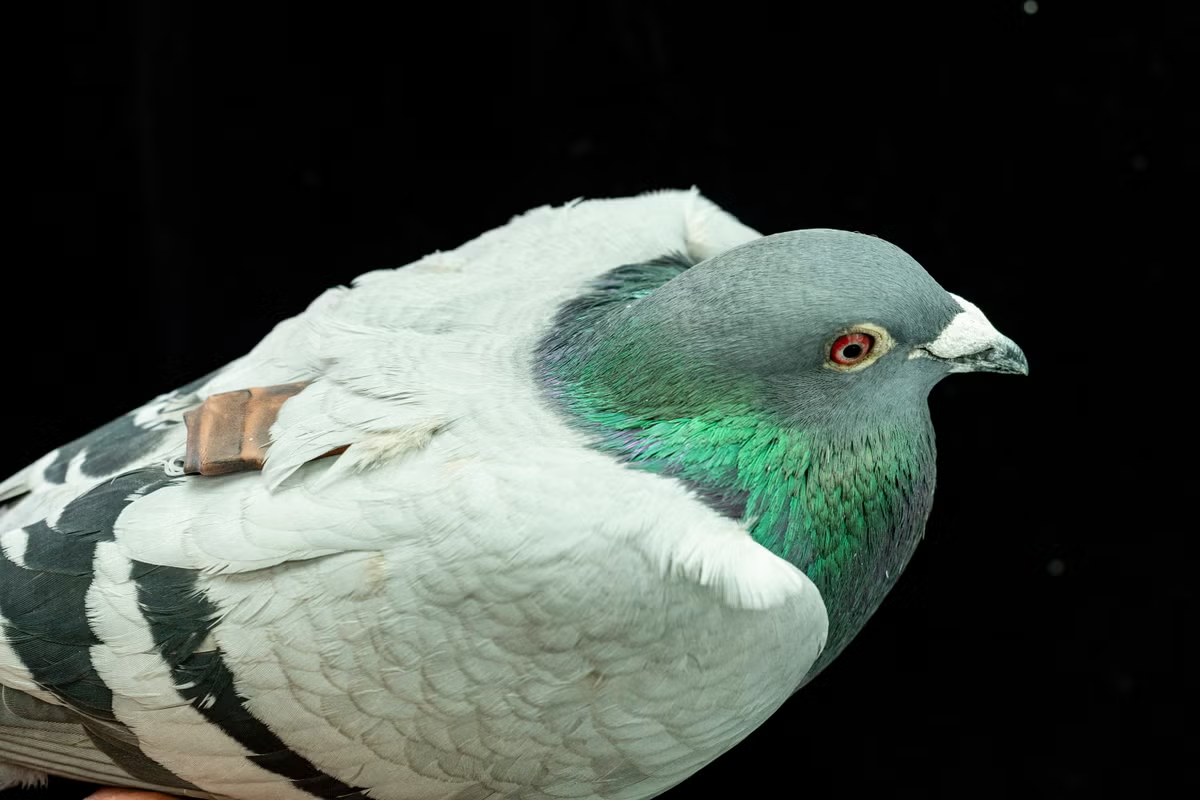
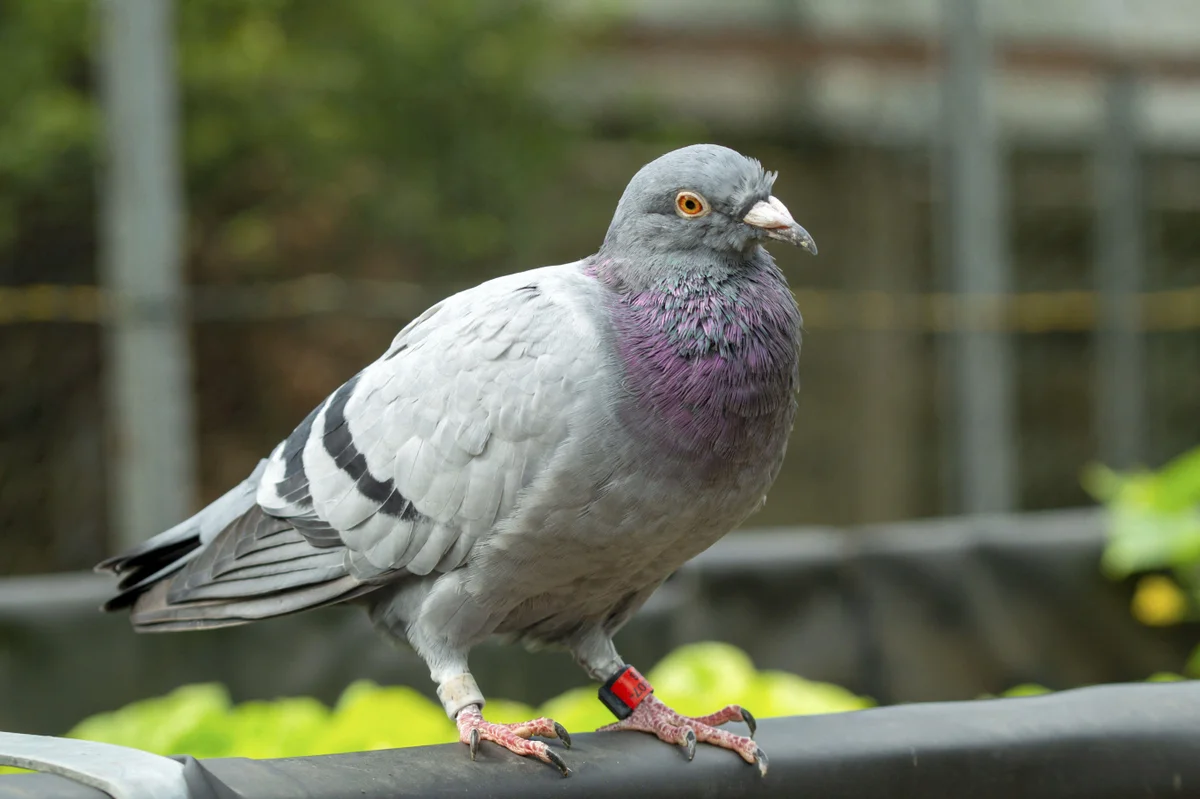
A surprising gut feeling may help pigeons find their way home.Animals use various techniques to navigate, including following the stars and remembering key landmarks. Birds, fish and turtles orient themselves using Earth’s magnetic field as a compass, but it is not yet clear how exactly they do this.Pigeons are a well-known group of frequent flyers that can traverse hundreds of kilometers in a single day. For thousands of years, humans have used them to carry news, notes and military messages.
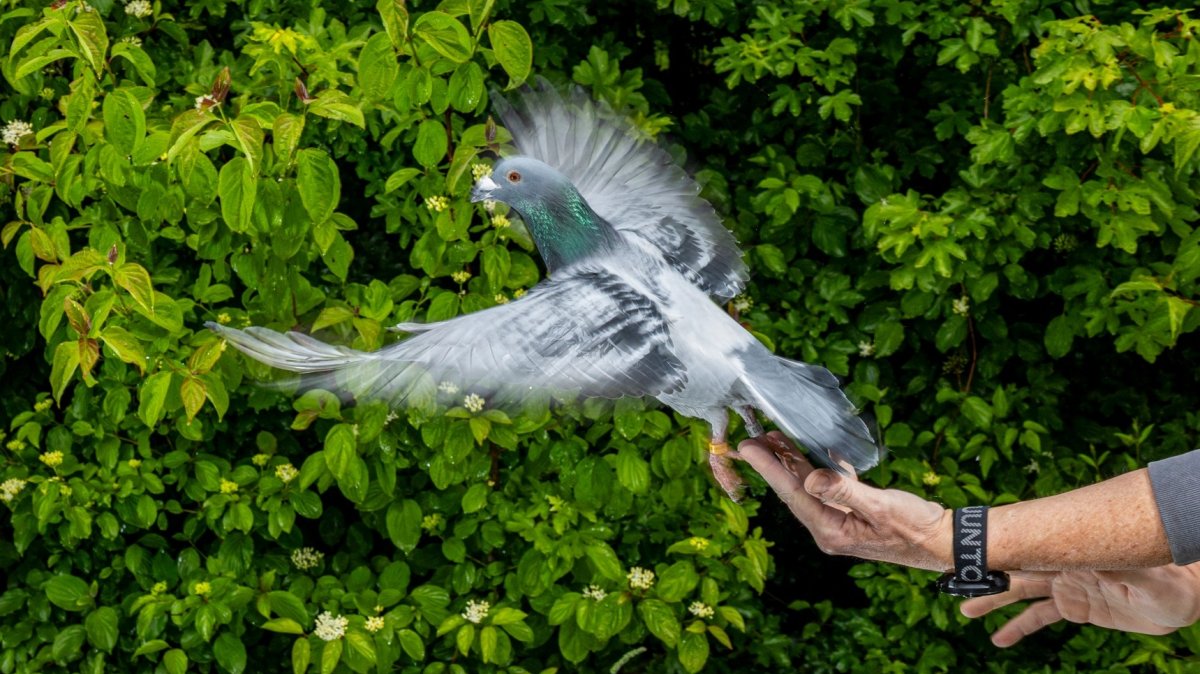
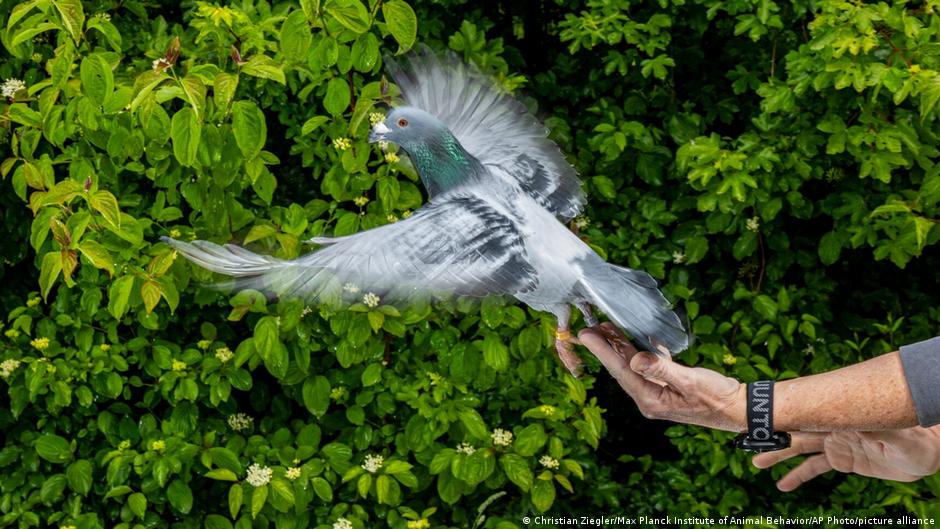
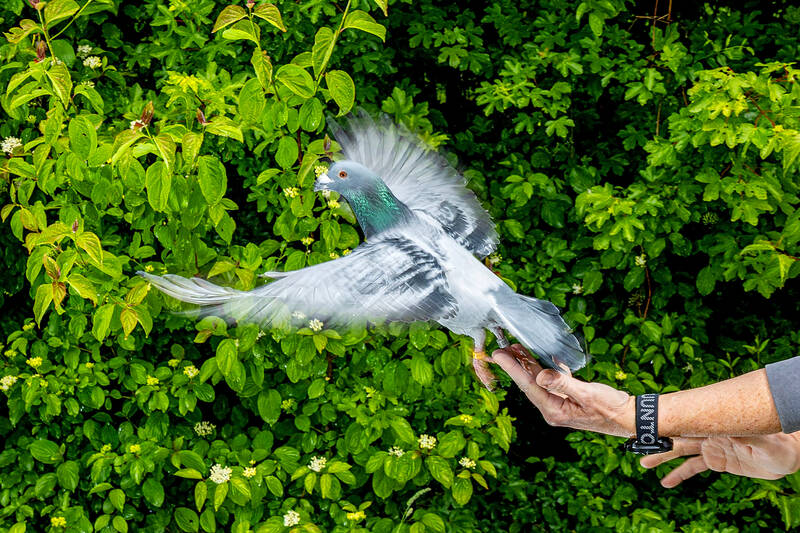
A scientist releases a homing pigeon in Konstanz, Germany, earlier this month.
Scientists have long tried to untangle how pigeons travel without getting lost. Some think the birds detect magnetic cues using light-sensitive molecules in their eyes, while others suggest it happens in the beak or inner ear.“The magnetic sense has been this mystery for almost 100 years,” Max Planck Institute of Animal Behavior Department of Migration Director Martin Wikelski said.
In a new study, Wikelski and other researchers decided to draw back the curtain on pigeons’ navigational secrets. They searched for magnetic clues in the birds’ organs and found a strong signal in an unexpected place: the liver.Specialized immune cells in the pigeon’s liver break down red blood cells and store iron. When scientists temporarily stripped pigeons of those immune cells and let them fly, the birds “just couldn’t find their way,” University of Bonn professor Christian Kurts said. That suggested the iron-rich liver cells might play a role in their sense of direction.The birds’ magnetic compasses only got scrambled on overcast days. That is because they also use the sun as a navigational guide.Scientists have previously wondered whether immune cells could be involved in magnetic sensing, but the new study published on Thursday in the journal Science is the first to present a full-fledged theory.“I would never have guessed it, but once it was explained to me, it makes sense,” said University of Massachusetts Boston behavioral ecologist Albert Kao, who had no role in the study.The immune cells are near nerve fibers in the liver. That might be how they transmit their “magnetic sense” to the brain “and help the pigeons to navigate,” study coauthor Clivia Lisowski said.The researchers think other birds and animals such as mice could operate using a similar magnetic GPS, but outside experts said more work is needed to verify that pigeons navigate this way and to firm up how these signals get to the brain. While the researchers found the strongest magnetic signal in the pigeons’ livers, such immune cells have also been spotted in other areas, including the beak and spleen.It is possible this magnetic puzzle does not have a single answer, veterinary pathologist Simon Spiro and biologist Hal Drakesmith wrote in an accompanying editorial. The birds could use different techniques to sense magnetic fields depending on the task, be it traveling long distances or finding a specific destination, they said.