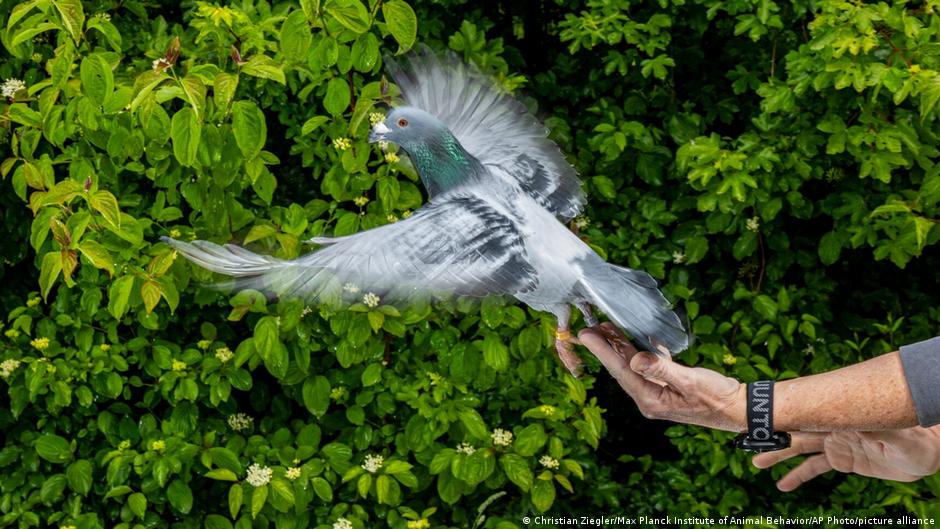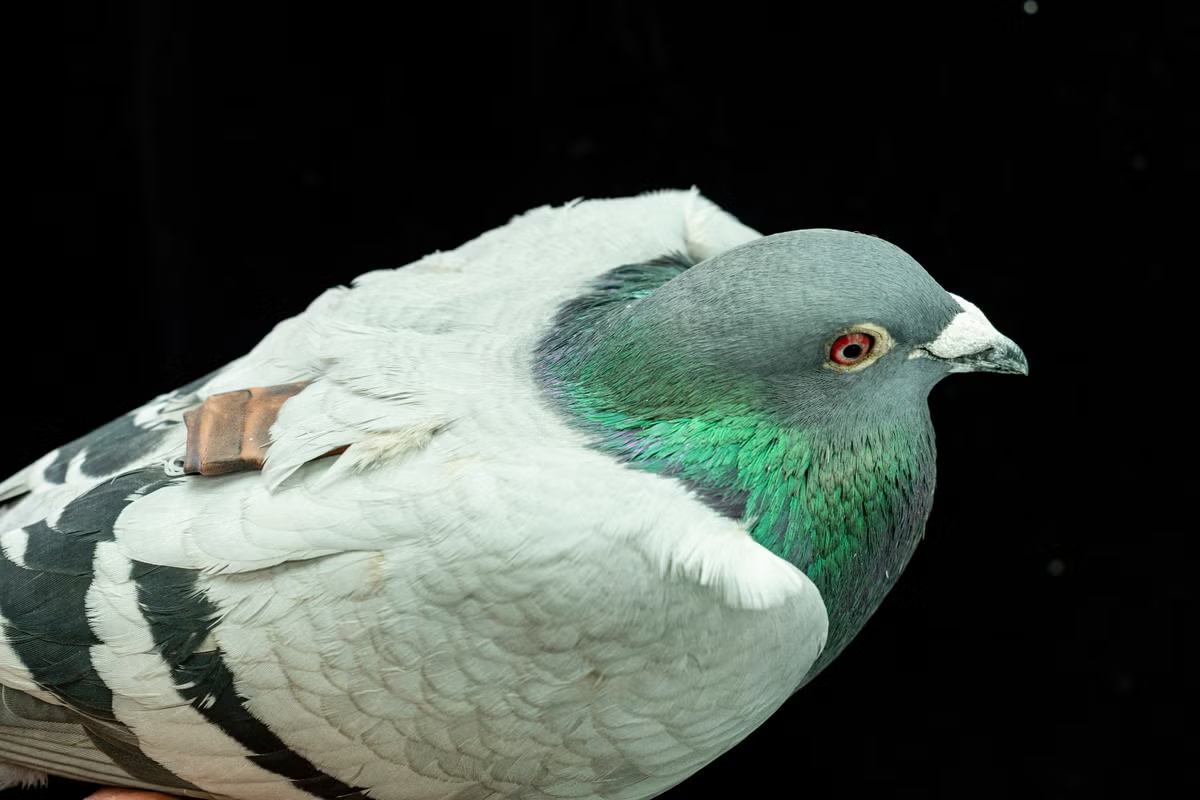
How pigeons can travel hundreds of miles and still find their way home has puzzled scientists for decades. New research suggests the answer may lie in an unexpected place: the liver.
According to a study published in Science, pigeons may use specialized immune cells in their livers to detect Earth's magnetic field, providing them with an internal navigation system.
Researchers found that these cells, called macrophages, accumulate iron while breaking down old red blood cells. The iron gives the cells unique magnetic properties that could allow them to respond to the planet's magnetic field. When the cells were removed, pigeons struggled to find their way home, pointing to a previously unknown role in navigation.
"We didn't expect immune cells to act like sensors for magnetic fields at all. Our results reveal a previously unknown mechanism for magnetic perception in animals," says Prof. Christian Kurts, Director at the Institute of Molecular Medicine and Experimental Immunology at the University Hospital Bonn, and one of the study's co-senior authors.
"What looks like a 'gut feeling' in bird navigation may actually have a physical basis," adds Prof. Martin Wikelski, Director at the Max Planck Institute of Animal Behavior and the other co-senior author of the study.