Bloomberg
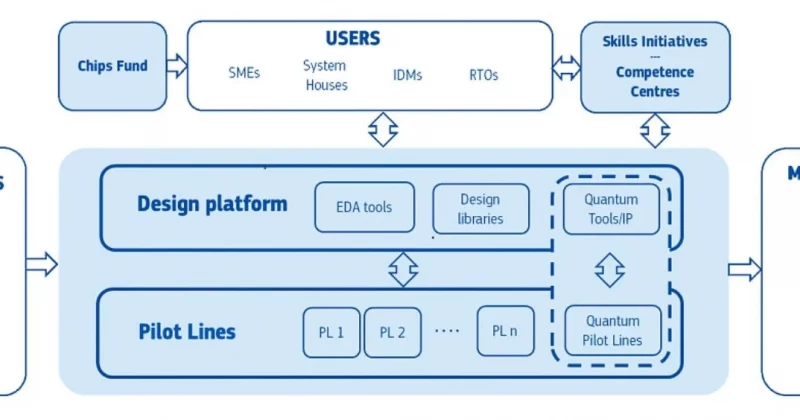
The EU is making a fresh attempt to revive its faltering semiconductor industry via a rebooted Chips Act, an effort expected to require 120 billion euros (US$140 billion) in public-private investment by 2035, according to draft plans.The upcoming Chips Act 2.0 would focus on practical ways to bolster local demand for EU-made chips, after the 2023 law failed to grow the bloc’s market share.One strategic project under consideration is a new 30 billion euros foundry for artificial intelligence (AI) semiconductors and advanced 3-nanometer chips, funded by the EU’s executive arm, the European Commission, individual member states and private companies, according to the plans.
A person walks past the EU Commission headquaters in Brussels, Belgium, yesterday.
The commission is also set to matchmake companies in sectors such as telecommunications, defense and automotive with chip suppliers that would develop technology tailored to their needs, according to the documents.The plans are due to be presented to lawmakers next week and could still change.
“While the initial Chips Act has been predominantly supply-driven, the Chips Act 2.0 places greater emphasis on demand-side measures,” the proposal reads.The EU would fund its investments through existing grants under the Horizon Europe and Digital Europe Program until 2028. Future funding would need to be confirmed in the EU’s next budget, which remains under negotiation.The first Chips Act, presented amid a global semiconductor shortage, was intended to double the EU’s share of chips production to 20 percent through increased research and development spending and relaxing restrictions on expenditure by member states. The plan has fallen short, with the bloc losing ground to the US and Asia in AI chip production.The new law is a pillar of the EU’s technology sovereignty strategy, a vast plan to reduce the continent’s dependencies on China and the US by investing in local champions and favoring EU-made tech products such as chips or cloud services over foreign alternatives.The law would allow the EU to continue funding the design of cutting-edge chips as well as cut some bureaucratic processes for semiconductor-related projects deemed as critically important to the European technology ecosystem. When those projects span more than one member state, the commission can designate them as “strategic projects,” preventing non-EU companies from participating unless explicitly exempted.