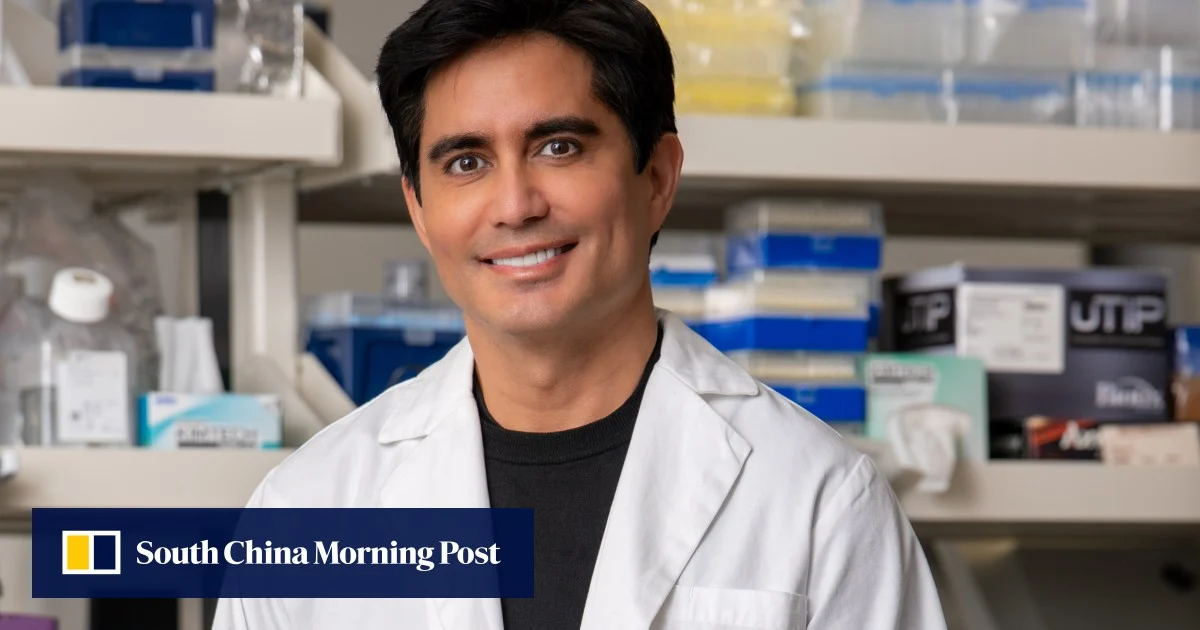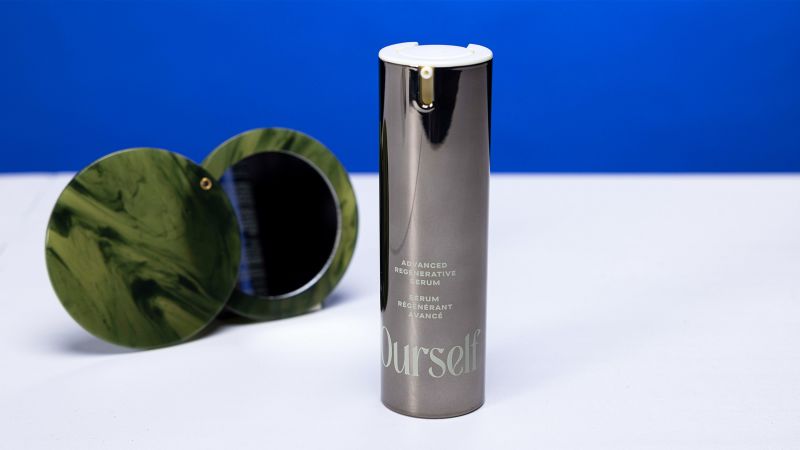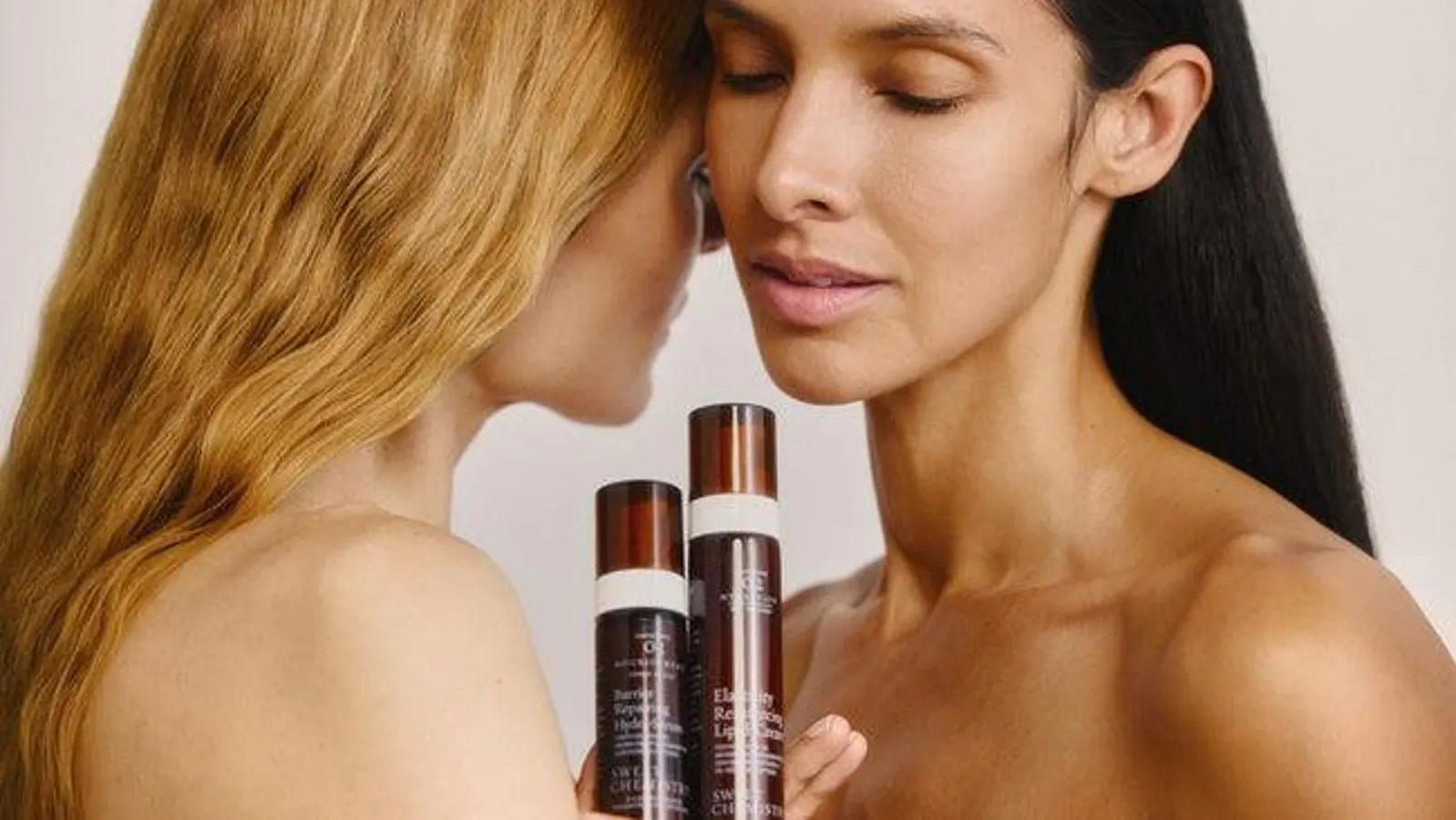
Models with Sweet Chemistry skincare productsSweet ChemistryPeople in the beauty industry often joke that they aren’t saving lives, but in the case of Sweet Chemistry, they actually are. At first glance you’d assume the company is one of many skincare brands fueled by cutting-edge science. But the technology that drives the formulas has the potential to save millions of lives. Sweet Chemistry is owned by Xylex Bio, a regenerative medicine company whose biomedicine technology, derived from extracellular matrix peptides, regenerates damaged organs. In other words, organs that aren’t in good enough shape to be transplanted to humans can be fixed with this technology, meaning that a lung that once would have been discarded can now be donated to someone in need. Their ultimate goal is to make the organ transplant waitlist obsolete. “This is an opportunity to put our brand to work because just like other brands, we claim social responsibility to make a difference with our work, which is quite beautiful,” says Alec Batis, CEO & Chemist, Co-founder, Sweet Chemistry. “The name Sweet Chemistry is the science, but it's also the energy between people. The idea was even though we are a science brand, we can support other forms of beauty that aren't just purely looking pretty.”Sweet Chemistry was founded by the scientists at Xylex Bio as a means to fund the parent company’s research. The researchers were looking for a partner with a CV firmly rooted in the beauty world. When they met Batis, a former L'Oreal executive, he was the rare person to have a background in both cosmetic chemistry and marketing. He started as a cosmetic chemist at L’Oreal in the 1990s and moved to marketing a few years later, eventually heading up marketing at NARS. Initially they approached Batis as a potential consultant, hoping he could help bring their technology to market. Sweet Chemistry Hydra SerumSweet Chemistry“I came from the lab so I understood technology, and L'Oreal switched me to marketing back then, because they thought I had the ability to take complex science and make it palatable for the consumer,” Batis says. “When I saw what they were doing here, which was so far removed from the science that I had seen in the industry, I was so impressed with the work they were doing that I decided to invest.”The Sweet Chemistry headquarters in Brooklyn is not your average beauty office—it’s a working research lab where drug discovery work happens with actual scientists. “We've been focused on science for how we can generate or regenerate different human tissues that may have lost function or quality due to damage, disease, age or other factors,” says John O’Neill, PhD, Chief Scientific Officer and Co-Founder of Xylyx Bio. “We are, in fact, a team of scientists and doctors. This was my graduate student work for six or seven years at Columbia University Medical Center. We work across the four organs that are routinely transplanted: lung, liver, kidney and heart. That's why we have teams dedicated in those areas. This core group of people has been working together for close to 15 years now.”Every year thousands of people die while waiting for an organ transplant due to the chronic shortage. “There are a lot of people living with chronic disease who are never even added to the waitlist because of how restrictive the criteria to even be on the list and stay on the list is, and how that list is defined, and age is another factor,” O’Neill says. “By making more organs available, we may be able to loosen some of these criteria. Right now, only about one in five donor lungs are usable for transplantation. Our goal is to try and grow that number, to grow the pool of donor organs that can be safely transplanted, and the lungs, unfortunately, are extremely fragile. They're susceptible to injury, and so the majority of lungs that are donated can't be used.”The Sweet Chemistry skincare collectionSweet ChemistryEvery day 17 people who are waitlisted die. “It's not quite one an hour, but it's close,” O’Neill says. “If you think about how restrictive the waitlist actually is, the fact is this number is actually far greater than 17.” That’s why Sweet Chemistry started a GoFundMe with a requested donation of $17, which is also very doable. Last year, Xylex lost a $900,000 NIH diversity grant when the government cut funding for medical research. They plan to replace those lost funds through Sweet Chemistry’s influencer campaigns promoting the brand’s social impact and through sales.“Rather than trying to build organs from scratch, our approach on the organ bioengineering side is to fix up the thousands of organs that are being thrown away,” O’Neill says. “At the time of donation, if the donor organ isn't more or less in pristine condition, it's just not used. Surely you've suffered a bruise or some sort of acute injury; what happened? You're not bleeding now, so with the right time and conditions, you can recover from these types of injuries. Let's use bruising as the conceptual type of injury. A lot of donor organs just go to the morgue with the equivalent of bruises, so we create the conditions and environment that enable us to rehabilitate those organs. In 2020 was the first time that we showed the feasibility of doing this with the actual organs that were being discarded; we intercepted them for research.”Currently Sweet Chemistry is raising money to conduct the first human trial with Xylex Bio. In 2020, Xylex reached a milestone when they were able to take a damaged donor lung that was refused by all the transplant surgeons across the US and rehabilitate it. Currently, three out of four organs are not suitable for transplant.Sweet Chemistry Hydra CreamSweet Chemistry Much of Xylex’s research applies to anti-aging. “Wound healing and changes to tissue maintenance and repair share a lot in common with processes in aging and changes to tissues with age,” O’Neill says. At the heart of every Sweet Chemistry formula is Matrikynes, a unique patent-pending peptide that is used in Xylex's research to regenerate and remodel organs. When Batis was thinking of consulting, he asked the scientists for a sample of the peptides that they used in the clinicals. “What they didn't know was that I had just gone through seven gastrointestinal surgeries to save my life—colostomies, ostomies, the whole bit—and I'm great and I'm happy, but I was butchered. I had dark purple scars. I applied it to just one side of the scars. Four weeks later, I pulled my pants down in front of the Xylex board to show the difference on that side.” Those results are what convinced Batis to become a partner. Batis was so impressed that he invested his life savings in the brand. “I enjoyed the meaning behind the work that they were doing here in general,” he says. “I thought after all my experience this would be a nice way for me to feel good about working in the beauty industry and bring something really meaningful on top of pretty skin. Whether it be a lung or skin, for life or for beauty, that tissue engineering part is the underlying technological theme stemming from the extracellular matrix and what it does. Skin is just another organ.” The before and after photos of Alec Batis's scars when treated with Sweet Chemistry's Matrikynes complexSweet ChemistryWhat also sets Sweet Chemistry’s skincare apart is the high amounts of active ingredients in their formulas. Brands often use what’s called “marketing levels” of an ingredient, the bare minimum to include it in the ingredient list, but not enough to be efficacious and make a difference in skin. “This is no secret and I'm not myth busting, but every marketer and product development person has to decide which ingredients are for story and which ingredients are functional,” Batis says. “Ceramides are expensive, so that's often story. A lot of the antioxidants are usually story. On the ingredient list, under 1% you can put ingredients in any order, so a marketing level ingredient can end up in the middle and still look good.” To maximize efficacy, Sweet Chemistry reduced the water from 80% to 50% so they could add 30% active ingredients. Every ingredient on their labels is at a functional level. Batis says, “I'm going to encourage other brands to join. We should get away from marketing levels altogether as an industry.”Models with Sweet Chemistry skincareSweet ChemistrySweet Chemistry launched with a tight edit, but Batis has a 10-year plan of about 40 products. “My idea is for every skin type, there's a certain method to a holistic view of healthy skin,” he says. “It's 10 years of specific products that will cover everyone's needs. We're not trend driven. Our ingredients have to be clinically-proven long-term.” Sweet Chemistry recently expanded to Violet Grey, and that’s just the beginning of their plan for healthier skin that goes more than skin deep. For O’Neill, Sweet Chemistry is deeply personal. “Due to an experience I had when I was much younger, with a loved one who was listed for organ transplant and nearly passed away waiting to receive an organ, this was a terrible ordeal,” he says. “After many years, he finally was fortunate enough to get a double lung transplant. He survived 11 years post-op, so I saw firsthand the impact that this had. It went from ‘I hope to just live another couple of months to see my oldest son graduate high school’ to see his youngest daughter graduate nursing school, and he met his grandkids. What has motivated me and driven me through most of my life is the impact that this kind of work can have. There are extraordinary needs in those areas. It is incredibly hard to move the needle, given the complexity of what's involved. This has been many years in the making.”
This Research-Driven Skincare Brand Erases Signs Of Aging—And Save Lives
The science behind Sweet Chemistry provides the technology for impressively efficacious anti-aging skincare products—and the potential to save thousands of lives by healing organs.
1,643 words~7 min read