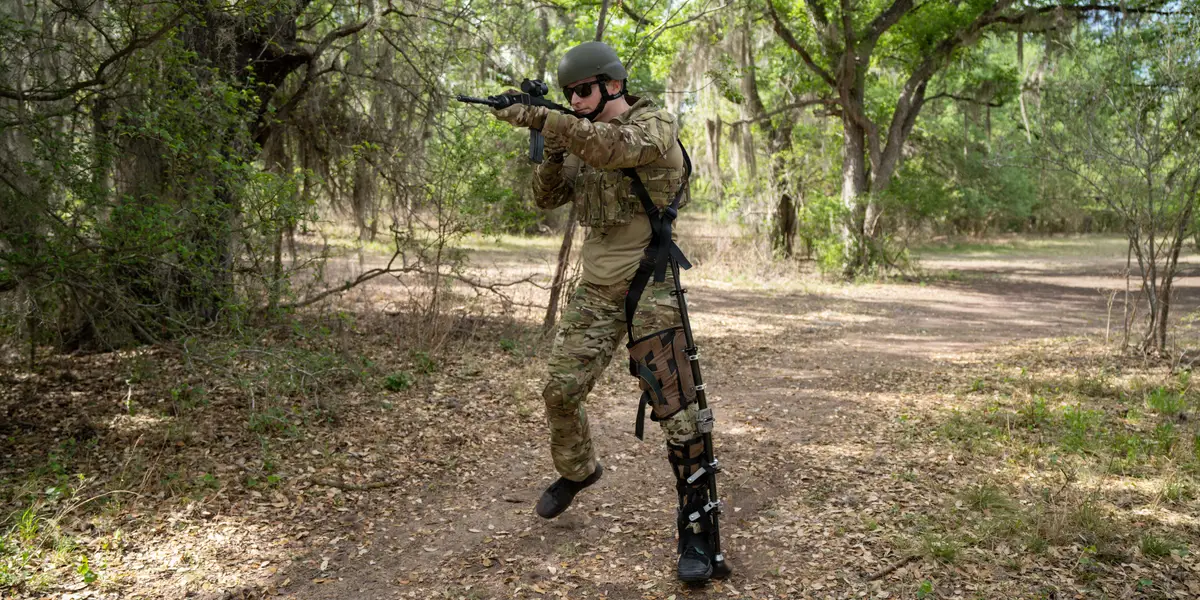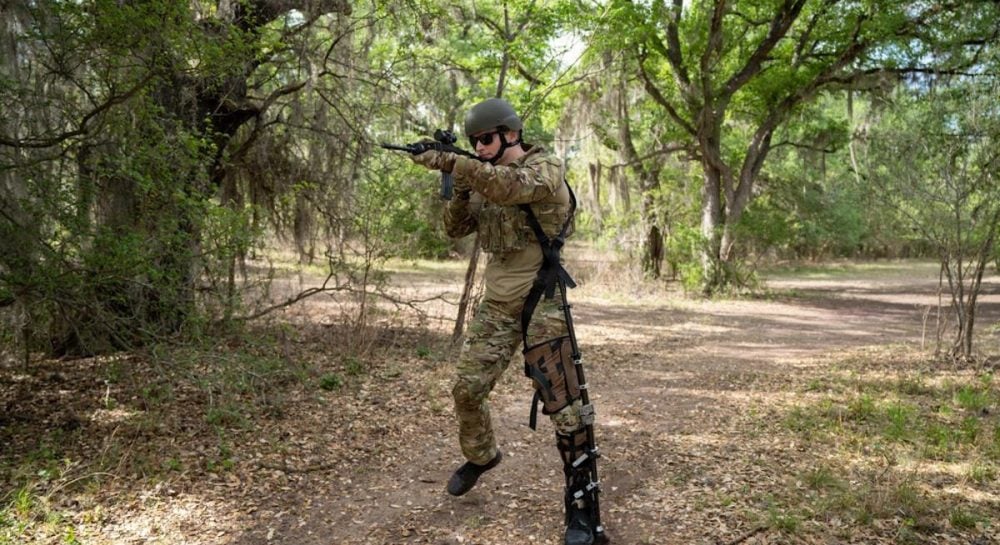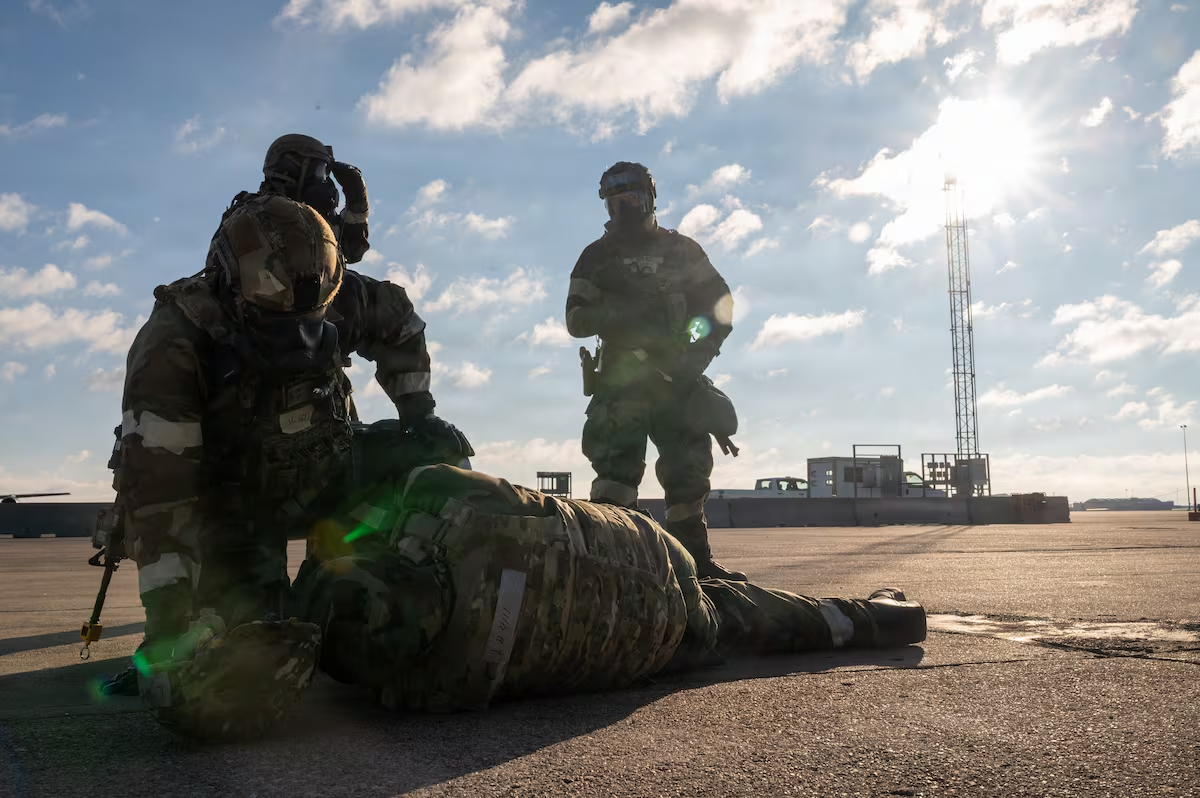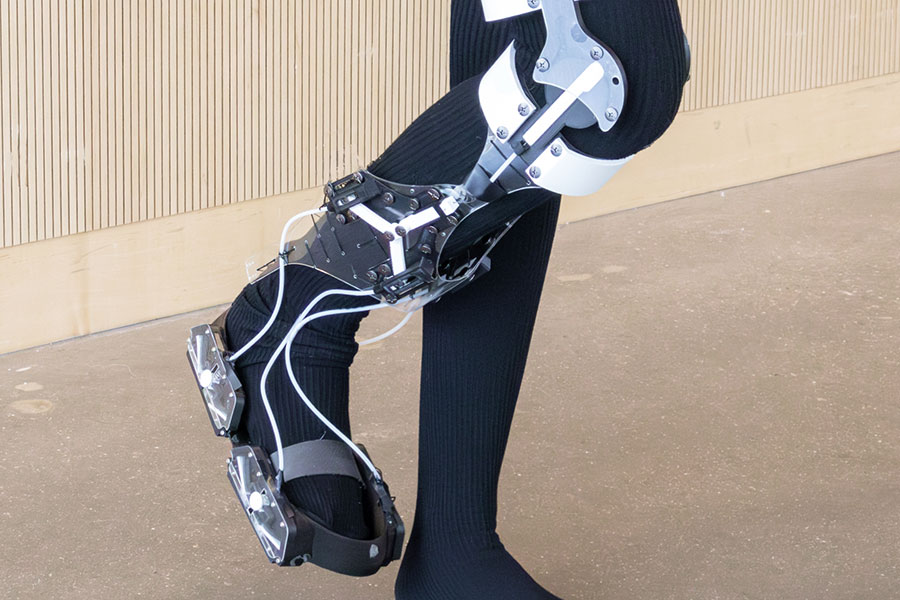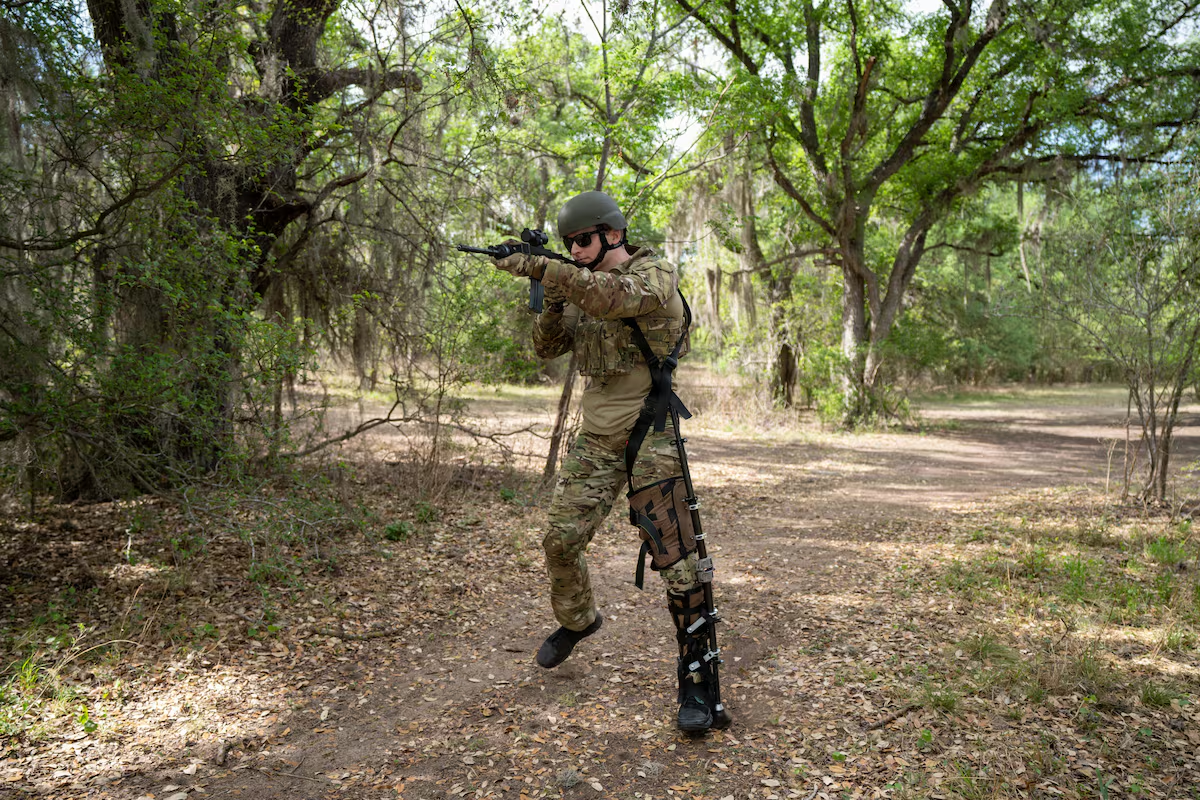
The IBEX system stabilizes lower-leg injuries while bearing a person’s body weight when evacuation is unavailable. (EACE Military Performance Lab)Some battlefield wounds are inherently deadly. Others, like tibia or ankle fractures, become deadly when a wounded soldier cannot send firepower downrange. The U.S. Army Medical Research and Development Command is looking to change that with its new Intrepid Battlefield EXoskeleton, or IBEX, system, a shoulder-to-foot brace that can be worn to allow injured troops to stand, walk and shoot when evacuation is impossible or delayed. The device was designed to make an injured soldier more self-sufficient, so they can move themselves to safety instead of relying on the two-to-four additional troops it takes to carry a victim on a litter. The goal, the Army said in a release Wednesday, is to keep more soldiers firing until help arrives. “In combat, troops suffer tibia fractures, torn knee ligaments, high-grade ankle sprains, and foot fractures; these are the most common but survivable battlefield injuries,” said Dr. Lee Childers, a senior scientist at Brooks Army Medical Center in San Antonio, Texas. “The IBEX enables more walking wounded, which means more warfighters putting bullets downrange while providing a smaller target for enemy drones to attack,” he said.Figure A: Anterior view of the IBEX Mk2 prototype. Figure B: The Mark II prototype packed up and wrapped inside the thigh corset.
Army develops exoskeleton for lower-limb injuries on the battlefield
The Army is developing a new exoskeleton that allows injured troops to stand, walk and shoot when evacuation is impossible or delayed.
466 words~2 min read