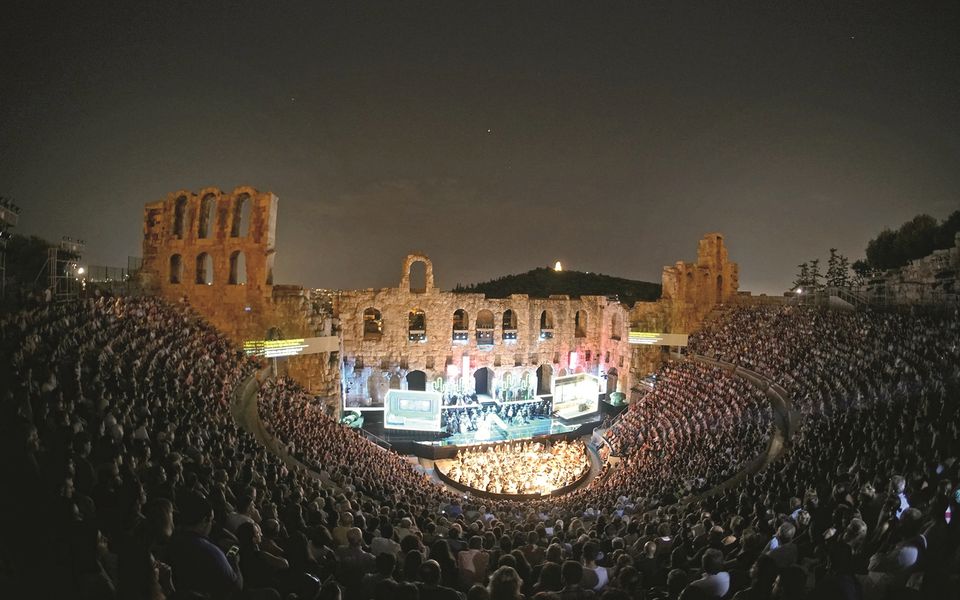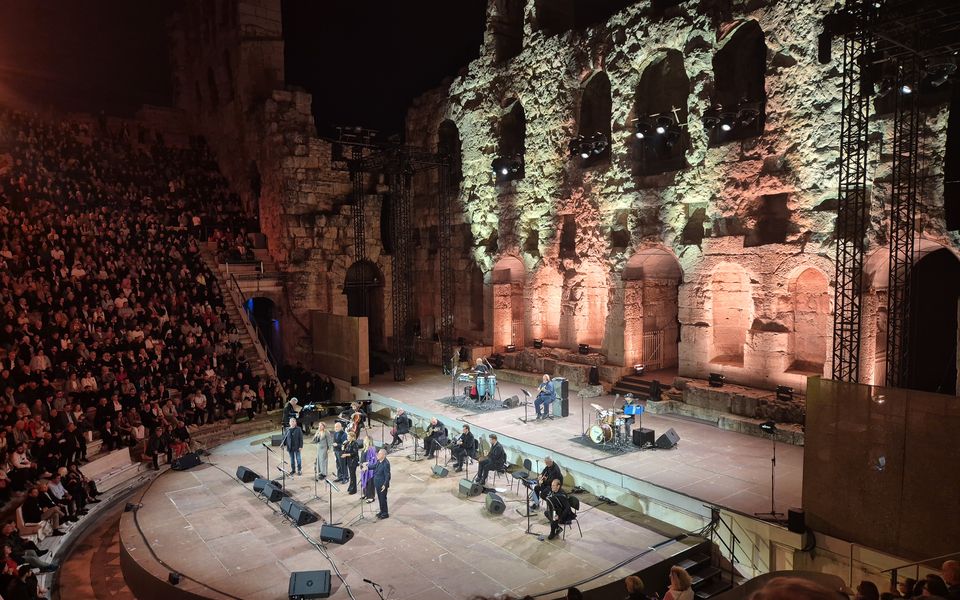
Researchers studying the acoustic behavior of the ancient Herod Atticus Theater in Athens will soon measure the vibrations caused by sound frequencies imperceptible to humans, as part of a broader restoration program commissioned by the Culture Ministry and carried out by the National Technical University of Athens.
Before the Roman-era theater closes for three years of repairs, June concerts will be monitored with geophones that record the “maximum particle velocity” of sound vibrations. Earlier measurements taken during performances found airborne noise levels exceeded the venue’s 90-decibel limit, reaching 100 to 110 decibels.
Researchers also found that speaker towers strain the southern wall of the stage. “We are interested not so much in what humans hear, but mainly in what the monument hears,” architect Ioannis Timagenis said.
Researchers hope to establish maximum safety thresholds for airborne noise and create an unprecedented acoustic regulation translating vibrations into frequency-by-frequency decibel limits for preservation.
Commissioned by the wealthy Athenian benefactor Herodes Atticus, the theater was built in 161 AD on the southwest slope of the Acropolis.