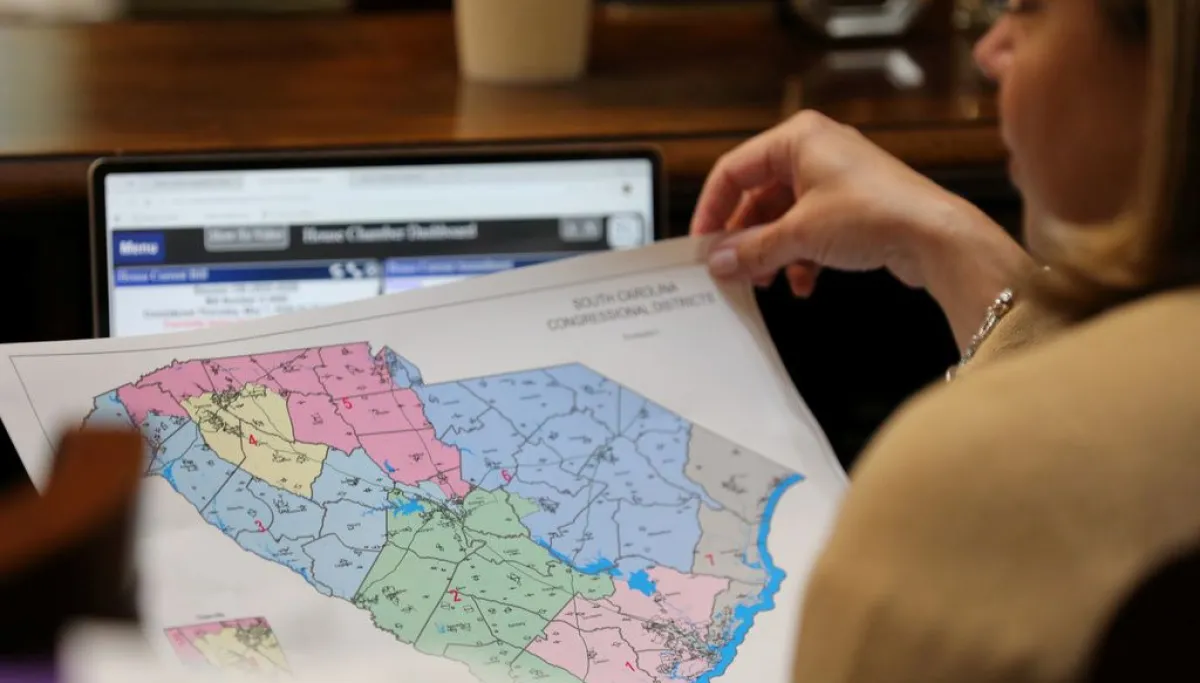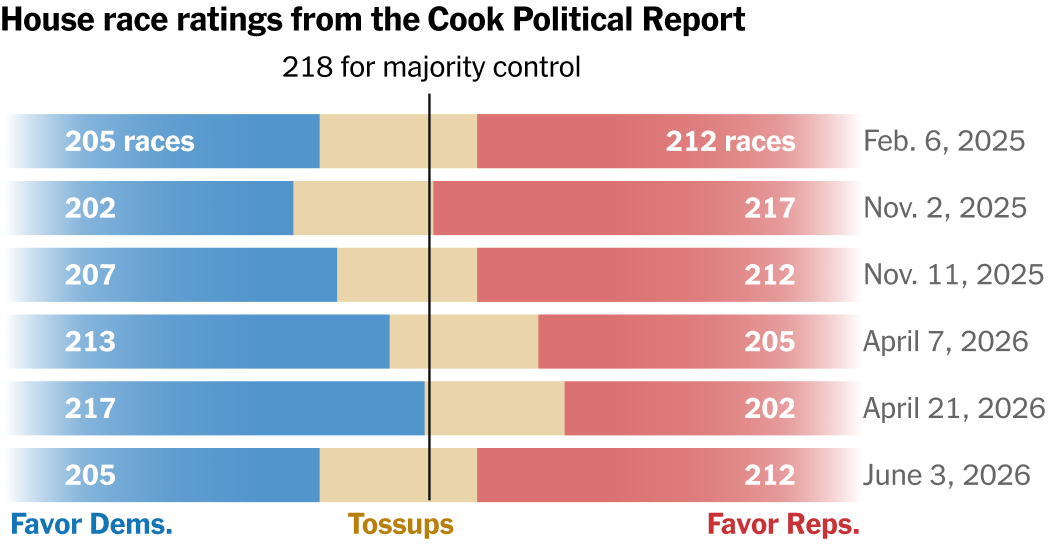
It’s an age-old question: What happens when an unstoppable force meets an immovable object? This year’s midterm elections may provide the political world’s answer.Democrats are hoping to ride a blue wave to control of Congress. By historical standards, they should be able to. The party that controls the White House has lost House seats in all but two midterm elections since 1938. The only exceptions were during the unpopular impeachment of President Bill Clinton and the aftermath of the 9/11 terrorist attacks.The last time Republicans enjoyed a trifecta — that is, control of the presidency and both houses of Congress — Democrats gained 41 House seats. That was in 2018, President Donald Trump’s first midterm election year.
A lot has changed since 2018 and Trump’s first, nonconsecutive term, however. A wave election usually involves not just a bad national political environment for the party in power, but also one in which that party has a number of seats that are particularly ripe for takeover by the opposition.
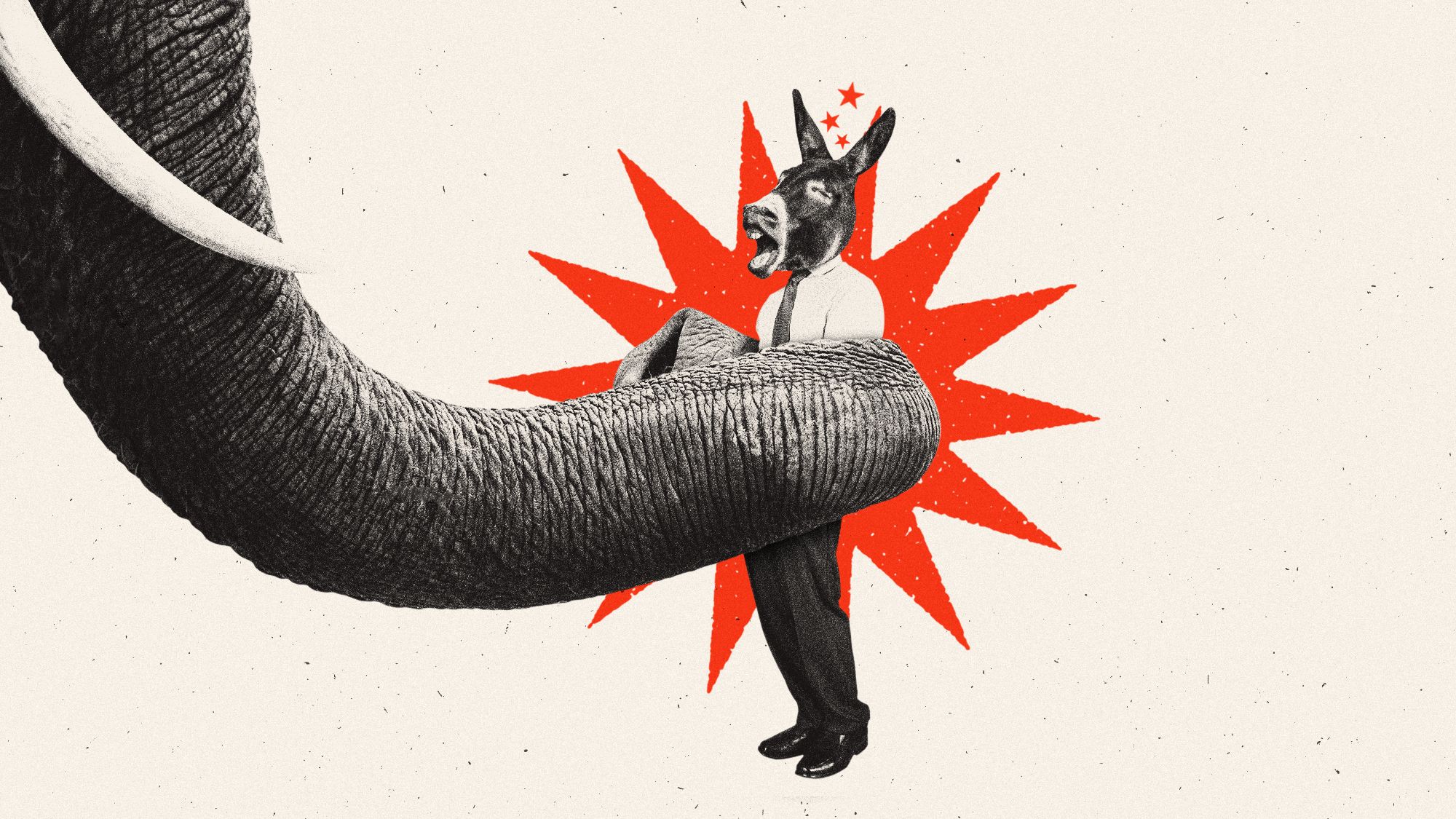
(Illustration by Dean MacAdam for the Washington Examiner)
National political conditions are certainly bad for Republicans, perhaps the worst since 2006 or 2008. The reasons are similar: an unpopular war in the Middle East and a bad economy. This time, the economic malaise isn’t a recession or financial markets meltdown but a partial reversal of progress on inflation due to a spike in energy prices caused by dueling blockades of the Strait of Hormuz as the current main front in the Iran war.