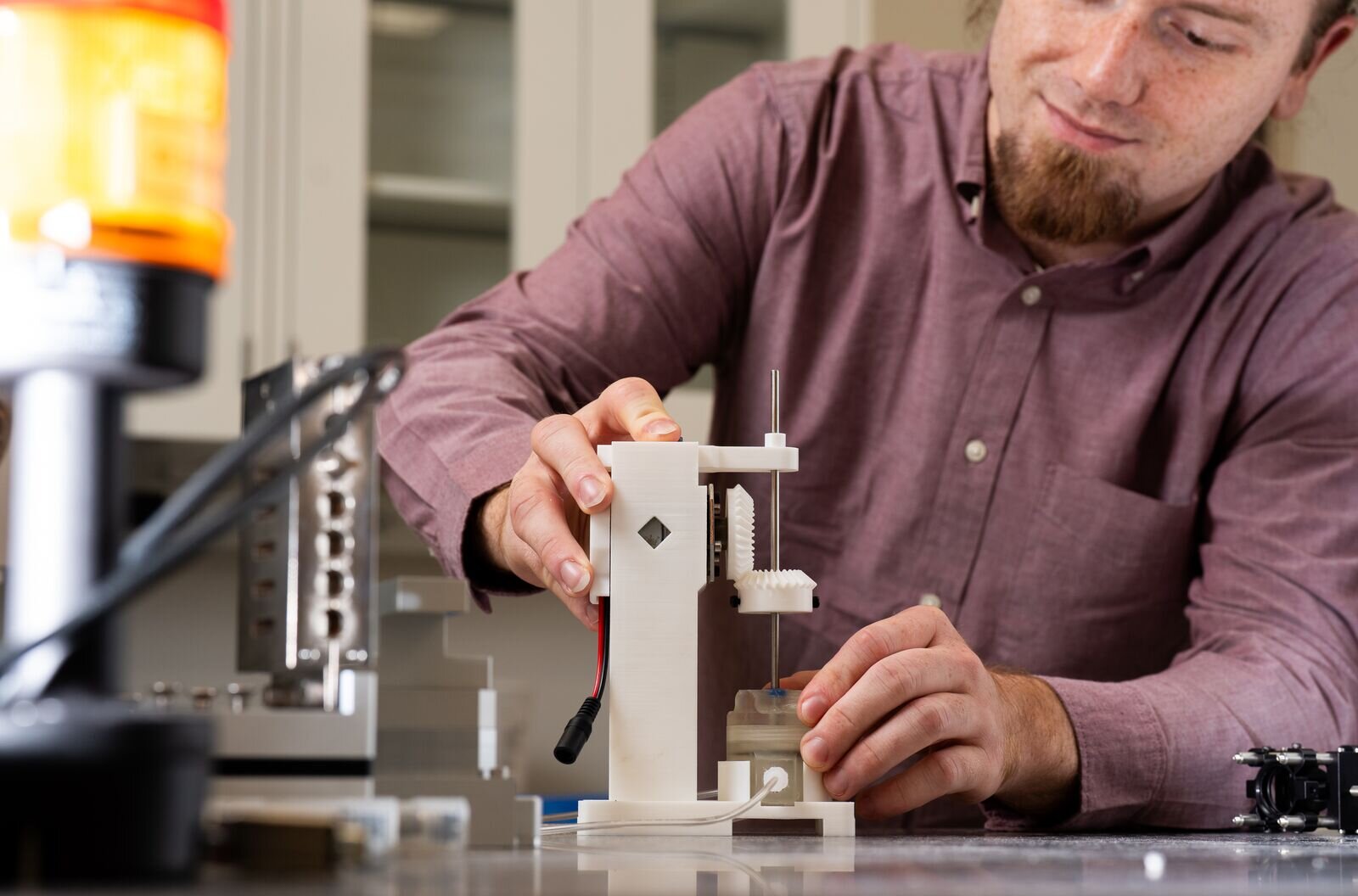
Andrew Ritchhart, a materials scientist, handles lab equipment. He and his colleagues are working to reduce the need for manual lab work like this using automation. Credit: Andrea Starr | Pacific Northwest National Laboratory
A research team at the Department of Energy's Pacific Northwest National Laboratory has deployed AI agents with the potential to accelerate the recovery of critical minerals from real-world industrial waste in days instead of the months or years required for manual experimentation.
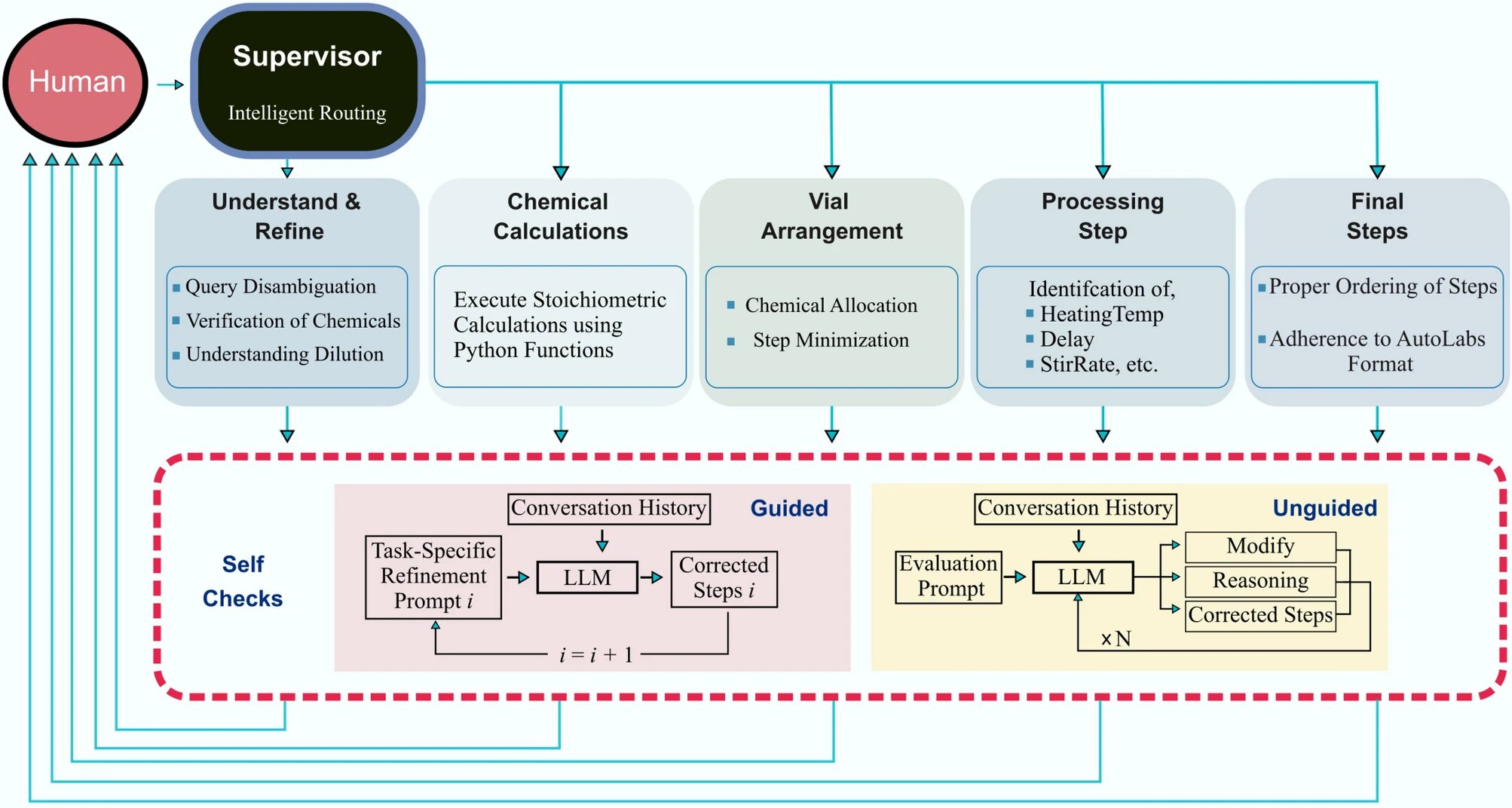
The team, led by PNNL materials scientist Elias Nakouzi, created a semi-autonomous lab tied to a series of specially designed AI agents to accomplish their goal. The system, named Computer Intelligence for Critical Elements Recovery and Optimization (CICERO), evaluates not only the best method for purifying the desired element, but also provides a first assessment of whether the method is economically feasible and scalable. The researchers reported their results in the journal Materials Horizons.
"We connected a liquid-handling robot, a sample handling device, and two analytical instruments and created an AI-aided workflow that quickly isolated critical minerals from industrial samples," said Nakouzi. "These industrial feedstocks are a complex soup of chemicals. Developing an effective method to isolate one element from the soup can take months or years. We have reduced that time to days with CICERO."