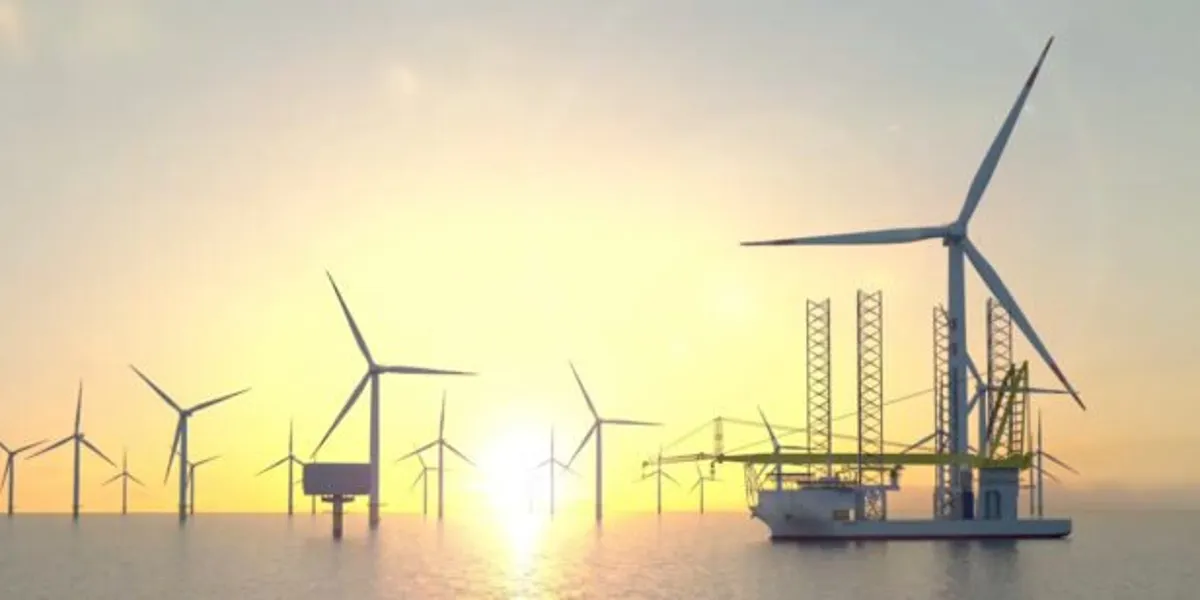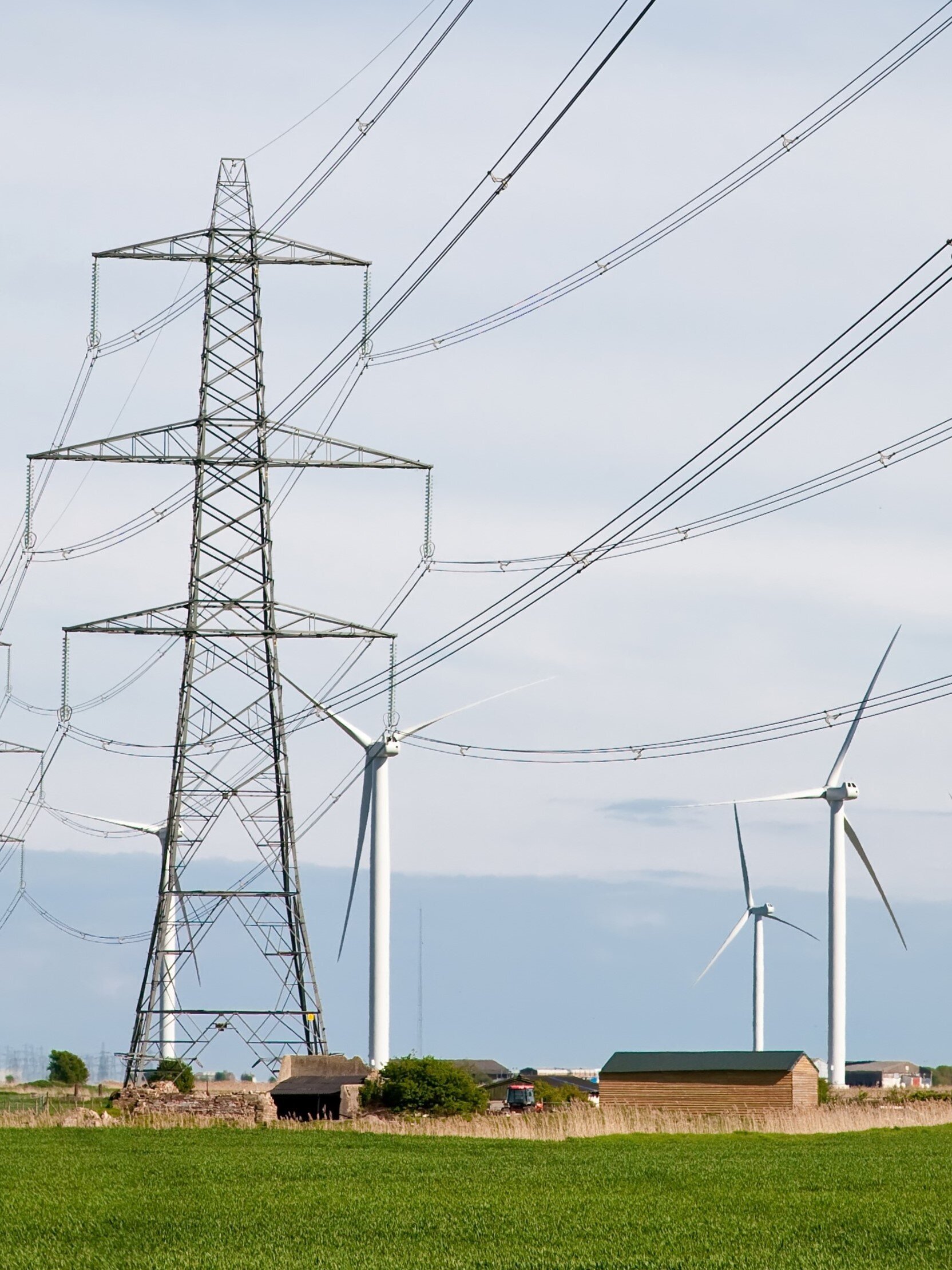
A windfarm and transmission lines in East Sussex, England, United Kingdom. Credit: David Iliff
One of the key challenges to climate-neutral power generation is addressing the risk of unpredictable power surges from renewables. Even with advanced turbine design or battery storage, a gust of wind or changing atmospheric conditions can cause a sudden spike in power output. This overgeneration can rapidly escalate up to volatile, potentially dangerous grid-wide surges and blackouts as generators become larger and more efficient, farms increase in size and number, and renewables take up an increasing fraction of total power production.
In a paper published in PRX Energy, researchers from the Nonlinear and Non-equilibrium Physics Unit at Okinawa Institute of Science and Technology (OIST) present a new statistical framework for predicting power fluctuations of individual wind turbines, wind farms, and groups of farms, as well as voltage fluctuations of entire grids, using existing geospatial information.
With this, energy policymakers, engineers, and grid operators have a powerful tool for understanding and predicting the risks associated with the turbulent behavior of wind power generation.