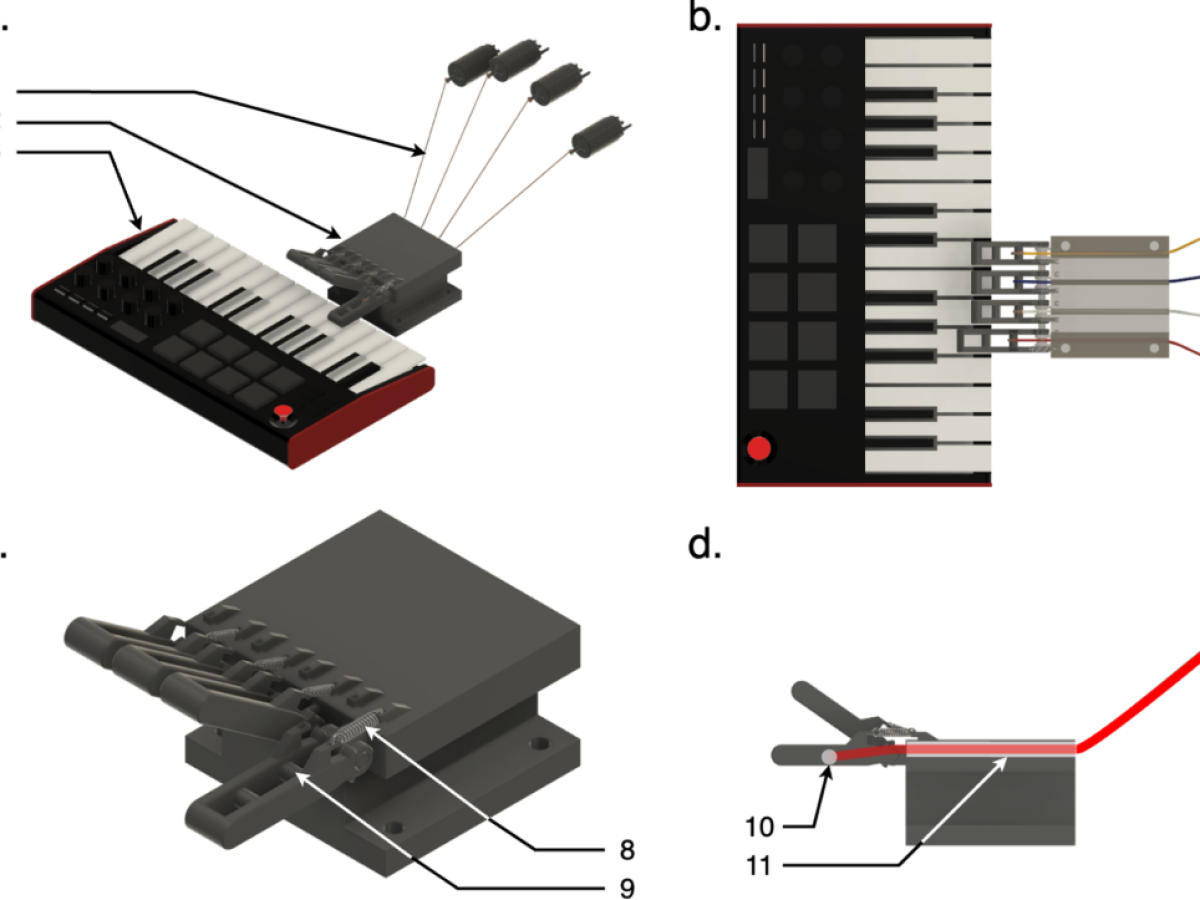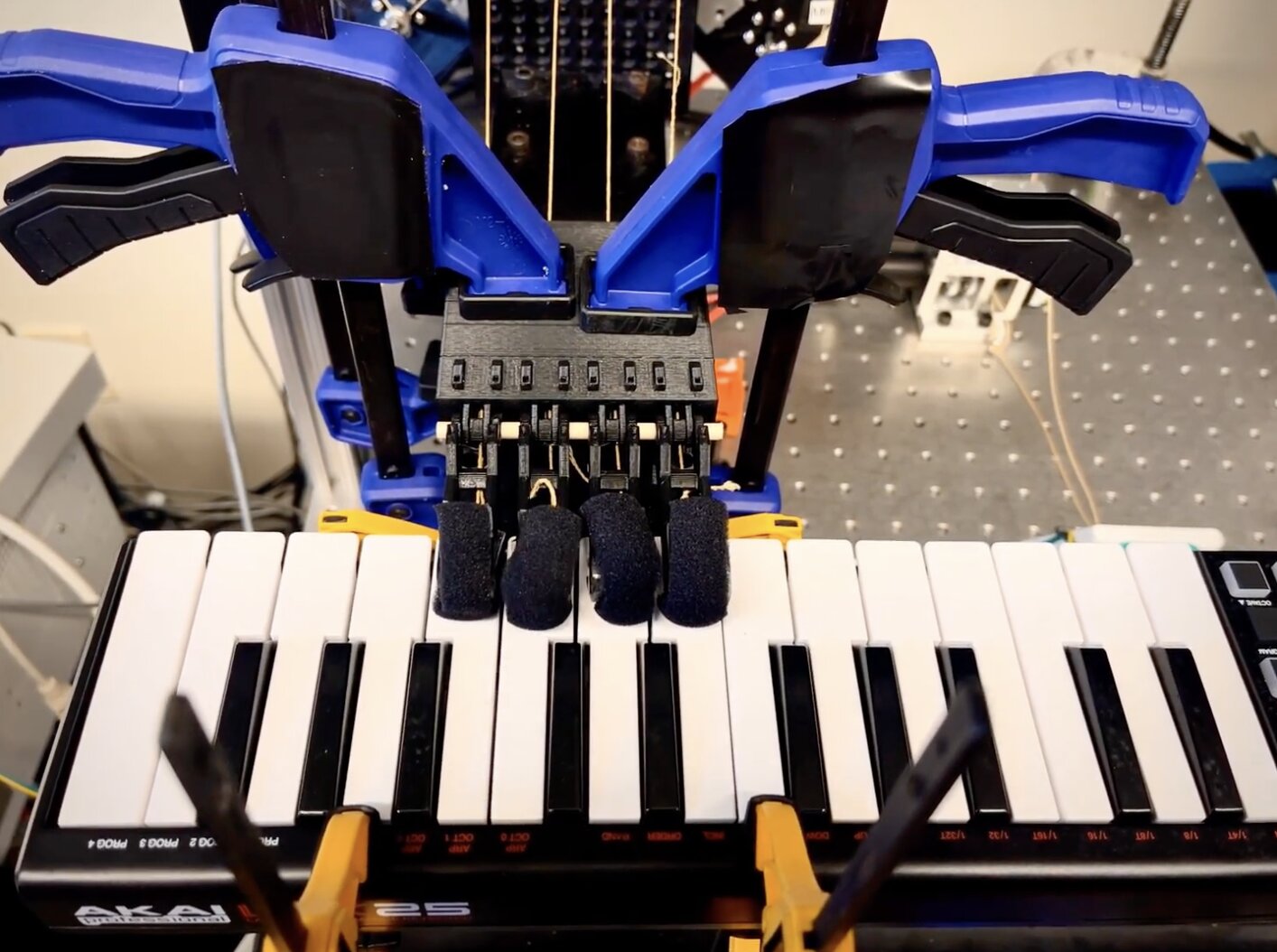
The 'Musician Hand' uses four tendon-driven fingers controlled by small electric motors designed to mimic the mechanics of the human hand. Neural networks analyze the sound of a melody and convert it into the motor commands needed to reproduce it. Credit: USC Viterbi School of Engineering
Scientists at the USC Viterbi School of Engineering have developed a robotic hand that can hear a melody once and play it back after just two minutes of self-taught practice on a keyboard, without relying on sheet music or preprogrammed scores.
No weeks of training, no large datasets—just two minutes of random doodling on the keys, like any child would.
The hand grew so capable that it "auditioned" before two musical judges who listened to its performance blindly, alongside those of four human pianists. The judges sometimes could not distinguish among them.
The system, called the Musician Hand, was created by Hesam Azadjou, a doctoral candidate at USC Viterbi and the USC Alfred E. Mann School of Pharmacy and Pharmaceutical Sciences, under the direction of Francisco Valero-Cuevas, professor of biomedical engineering, aerospace and mechanical engineering at USC Viterbi and corresponding author of the study.