(Image/Midjourney)
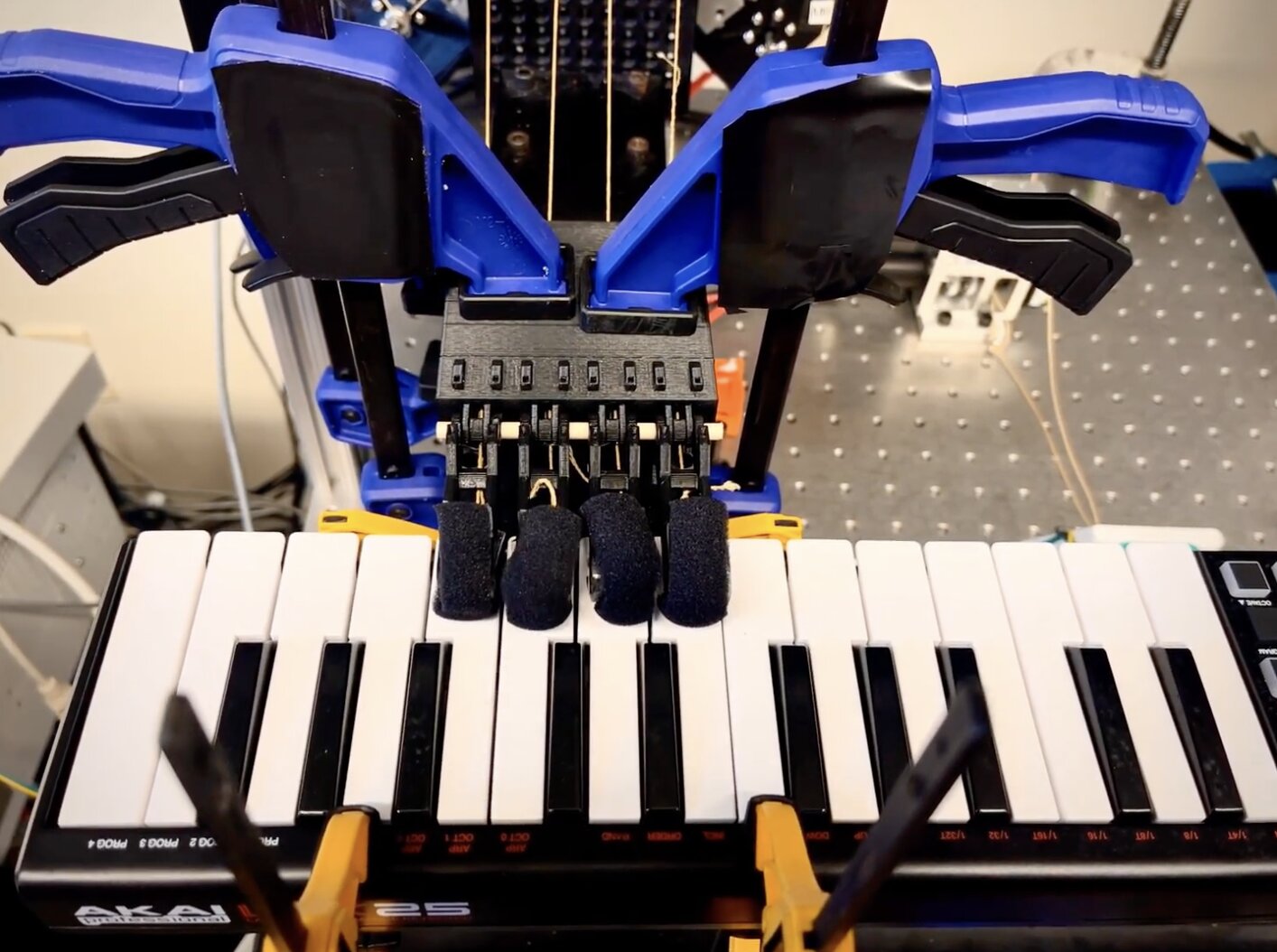
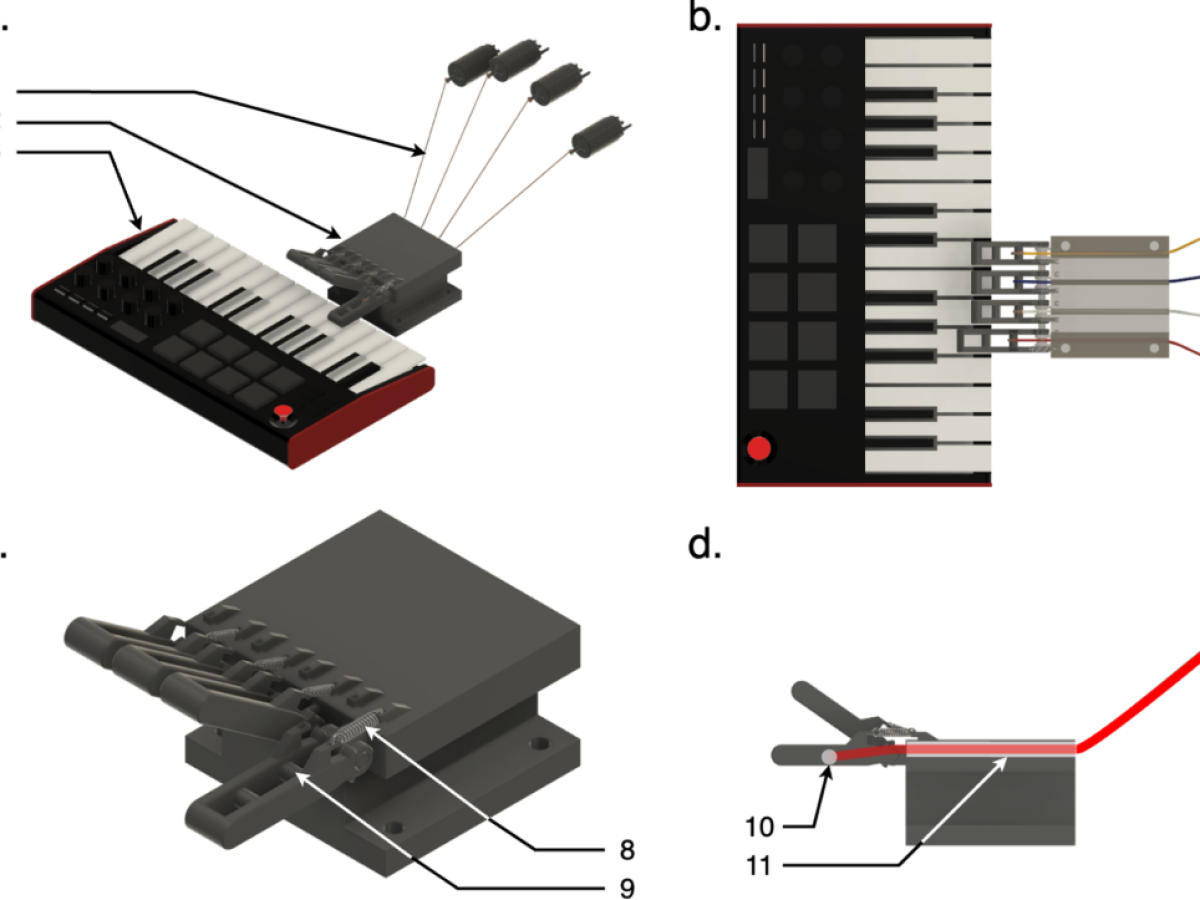
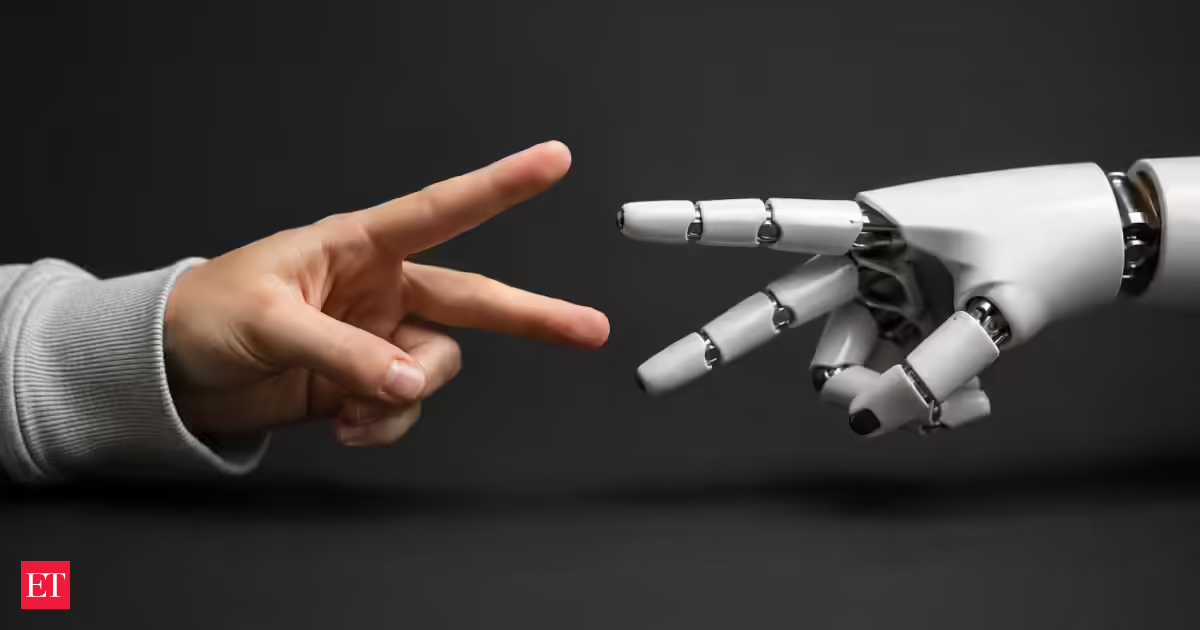
In a neuro-robotics lab at the USC Viterbi School of Engineering, a small mechanical hand heard a melody and played it back.
No weeks of training. No massive datasets. Just two minutes of random doodling on the keys—like any child would.
The hand got so good at playing that it “auditioned” before two musical judges who listened to its performance, blindly, alongside those of four human pianists. The judges sometimes couldn’t distinguish among them.
The system is called the Musician Hand. It was built by Hesam Azadjou, a Ph.D. candidate in the Valerolab.org of the Alfred E. Mann Department of Biomedical Engineering, under the direction of his adviser, Francisco Valero-Cuevas, professor of biomedical engineering, biokinesiology and physical therapy, mechanical engineering, electrical and computer engineering, and of computer science at USC. Ali Marjaninejad, who completed his Ph.D. in biomedical engineering under the direction of Valero-Cuevas, contributed to the design of the methodology and formal analysis of the results.